Glycated High-Density Lipoproteins Reduce Endothelial Phenotypic Expression of Monocyte-Derived Multipotential Cells in Early Type 2 Diabetes
Felipe Massó-Rojas, Luis Felipe Montaño-Estrada, Araceli Páez-Arenas, Juan Gabriel Juárez-Rojas, Aida Medina-Urrutia, Rafael Nambo-Venegas, Emma Rodríguez-Maldonado, Esteban Jorge-Galarza

TL;DR
In early type 2 diabetes, glycated high-density lipoproteins reduce the ability of monocyte-derived cells to develop into endothelial cells, which could worsen vascular health.
Contribution
This study shows that HDL glycation in type 2 diabetes impairs endothelial differentiation of monocyte-derived cells, independent of HDL composition.
Findings
T2D patients had higher early and advanced glycation products in HDL compared to normoglycemic and prediabetic individuals.
HDL from T2D patients reduced CD14+/KDR+ expression in MOMCs compared to HDL from normoglycemic and prediabetic individuals.
Advanced glycation end products in HDL inversely correlated with endothelial cell expression in MOMCs.
Abstract
Background: High-density lipoproteins (HDL) exert protective effects on the endothelium, which are impaired in type 2 diabetes (T2D). Although monocyte-derived multipotential cells (MOMCs) can be differentiated into the endothelial lineage, it remains unclear whether HDL glycation, size, and composition could affect MOMCs differentiation. Methods: Twenty normoglycemic (49 years, 35% male), 20 prediabetic (52 years, 35% male), and 20 newly diagnosed T2D participants (51 years, 50% male) were recruited. HDL were isolated from each study group. The size, composition, and early, intermediate, or advanced glycation products of HDL were determined. CD14+ MOMCs were isolated from healthy volunteers and incubated with HDL from each group. Endothelial phenotypic expression was assessed by CD14+/KDR+ expression. Results: Compared with normoglycemic and prediabetic individuals, T2D patients had…
Genes, proteins, chemicals, diseases, species, mutations and cell lines named across the full text — each resolved to its canonical identifier and authoritative record.
Click any figure to enlarge with its caption.
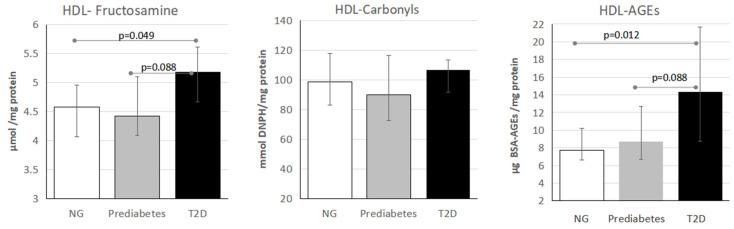 Figure 1
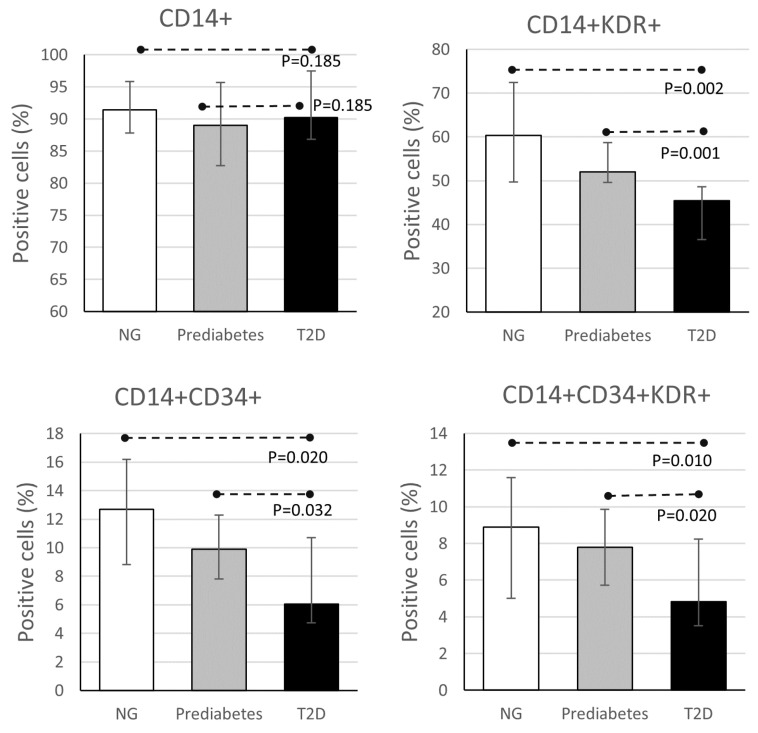 Figure 2
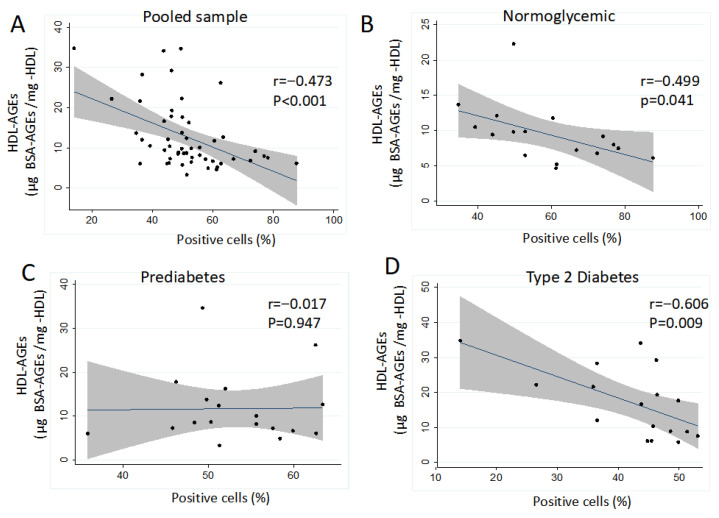 Figure 3
Peer Reviews
No public reviews on file for this paper yet. If you reviewed it on a platform where reviews are public (OpenReview, ICLR, NeurIPS, ICML), you can paste yours below so the community can read it here.
Videos
No videos yet. Explain this paper in a talk, walkthrough, or lecture? Add one.
Taxonomy
TopicsAdvanced Glycation End Products research · Adipokines, Inflammation, and Metabolic Diseases · Inflammation biomarkers and pathways