A Broad-Band Self-Powered Photodetector Based on a MoTe2/Bi2Te3 Heterojunction for Optical Imaging and Bias-Controlled Signal Modulation
Shaoxiong Du, Kunle Li, Weijie Li, Jiahui Feng, Yunwei Sheng, Lili Tao, Zhaoqiang Zheng, Wei Song, Yu Zhao

TL;DR
A new self-powered photodetector using a MoTe2/Bi2Te3 heterojunction shows broad light detection and fast response, suitable for optical imaging and signal modulation.
Contribution
A MoTe2/Bi2Te3 heterojunction is demonstrated with broad spectral response and bias-controlled signal modulation for self-powered photodetection.
Findings
The device shows a photovoltaic response from 405 to 1550 nm with a responsivity of 1.38 A/W at 532 nm.
Under reverse bias, responsivity increases to 36.22 A/W with fast rise and decay times of 32 ms and 33 ms.
The device enables optical imaging and bias-controlled signal modulation due to its optical switching ratios.
Abstract
Self-powered photodetectors are highly demanded in applications but often suffer from limited spectral absorption, slow response speed, and high dark currents. Two-dimensional van der Waals heterostructures have emerged as promising candidates owing to their designable structures and excellent performance. Herein, we construct a MoTe2/Bi2Te3 heterostructure and investigate its photoelectric properties. At zero bias, it exhibits a broad photovoltaic response ranging from 405 to 1550 nm. Benefiting from the interfacial built-in electric field, it achieves a responsivity of 1.38 A/W and a detectivity of 1.90 × 10¹² Jones at 532 nm and retains 174.56 mA/W and 2.4 × 10¹¹ Jones at 1060 nm, together with a low dark current of 1.6 × 10⁻¹² A. Upon a reverse bias of −1 V and 532 nm laser illumination at an intensity of 19.0 W/m2, the responsivity is further boosted to 36.22 A/W, accompanied by…
Genes, proteins, chemicals, diseases, species, mutations and cell lines named across the full text — each resolved to its canonical identifier and authoritative record.
Click any figure to enlarge with its caption.
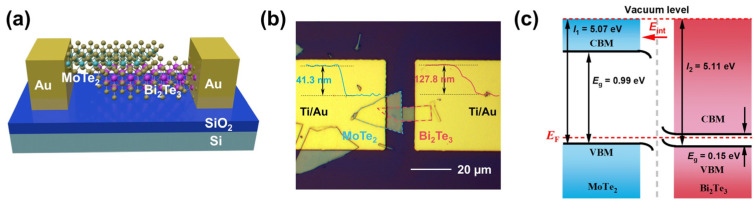 Figure 1
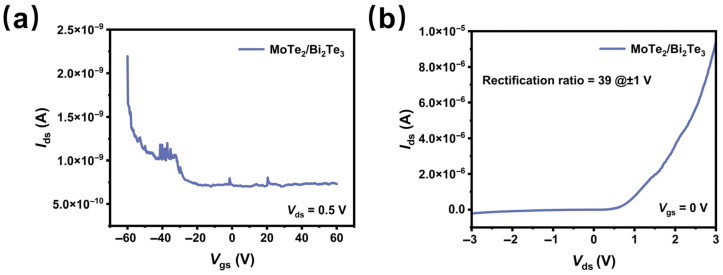 Figure 2
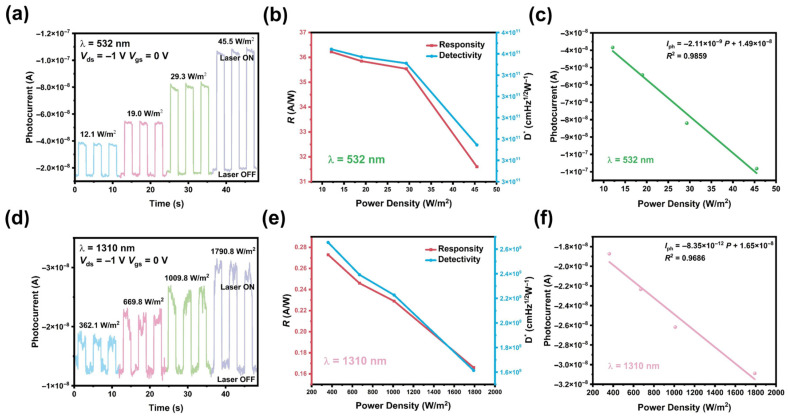 Figure 3
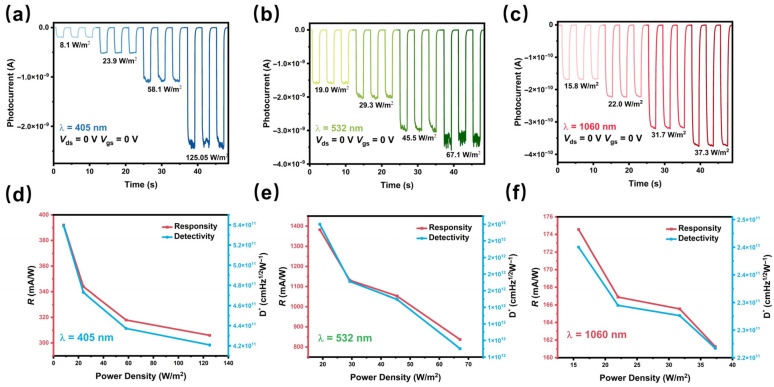 Figure 4
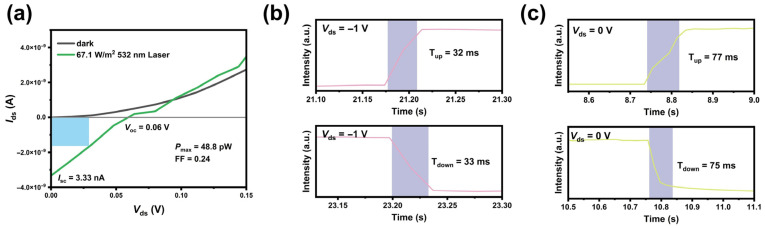 Figure 5
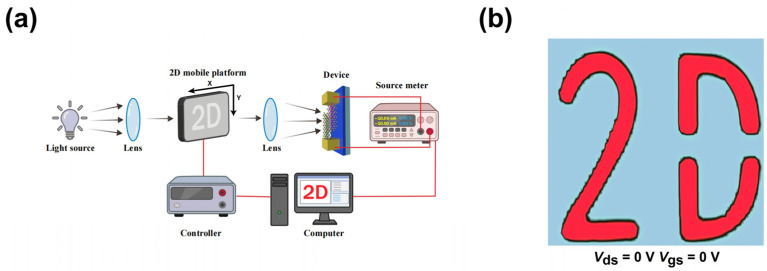 Figure 6
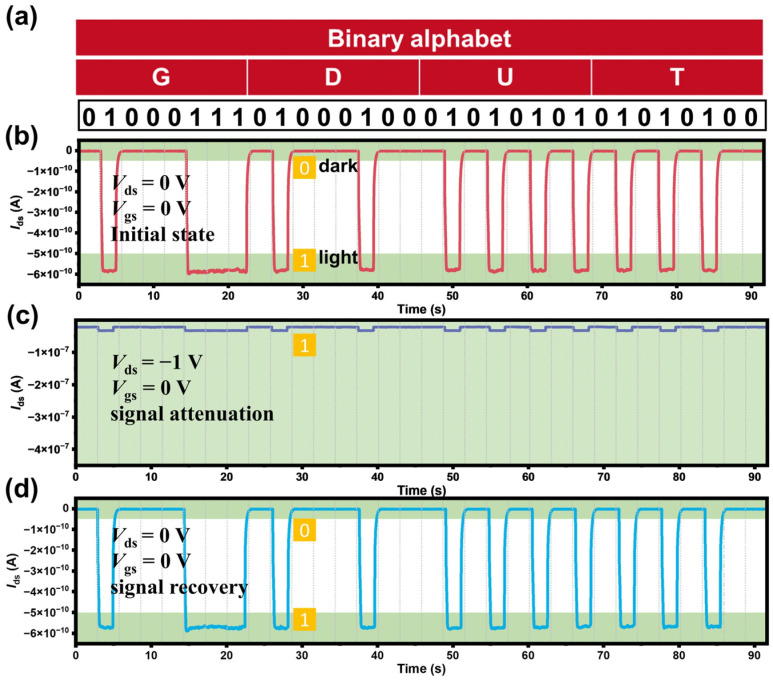 Figure 7
Peer Reviews
No public reviews on file for this paper yet. If you reviewed it on a platform where reviews are public (OpenReview, ICLR, NeurIPS, ICML), you can paste yours below so the community can read it here.
Videos
No videos yet. Explain this paper in a talk, walkthrough, or lecture? Add one.
Taxonomy
Topics2D Materials and Applications · Topological Materials and Phenomena · Graphene research and applications