Assessment of Congestion in Heart Failure Using VExUS: Current Evidence, Limitations and Clinical Perspectives
Cosmina-Georgiana Ponor, Maria-Ruxandra Cepoi, Marilena Renata Spiridon, Ionuț Tudorancea, Amelian Mădălin Bobu, Minerva Codruta Badescu, Alexandru Dan Costache, Sandu Cucută, Irina-Iuliana Costache-Enache

TL;DR
VExUS is a new ultrasound method to assess congestion in heart failure patients, which could improve treatment decisions but needs more testing.
Contribution
VExUS integrates IVC and Doppler data to semi-quantitatively assess congestion in heart failure.
Findings
Higher VExUS grades correlate with elevated filling pressures and renal dysfunction in heart failure.
VExUS may guide diuretic therapy and monitor congestion when combined with lung ultrasound and biomarkers.
Operator dependency and lack of large trials limit VExUS adoption in clinical practice.
Abstract
Background: Systemic venous congestion is a key driver of organ dysfunction in heart failure (HF), yet accurate non-invasive quantification remains challenging. Recognizing residual congestion is critical, since it predicts HF readmissions and mortality. Traditional assessments (physical exam, jugular venous pressure, inferior vena cava [IVC] size) are imprecise. The Venous Excess Ultrasound Score (VExUS) is a semi-quantitative point-of-care ultrasound (POCUS) protocol that integrates IVC diameter with Doppler flow patterns in the hepatic, portal and intrarenal veins to grade systemic venous overload. Methods: We conducted a narrative review of literature (2018–2025) regarding the usefulness of VExUS in HF, covering congestion pathophysiology, clinical evidence (hemodynamic correlations, organ dysfunction, outcomes), potential applications, integration with lung ultrasound,…
Genes, proteins, chemicals, diseases, species, mutations and cell lines named across the full text — each resolved to its canonical identifier and authoritative record.
Click any figure to enlarge with its caption.
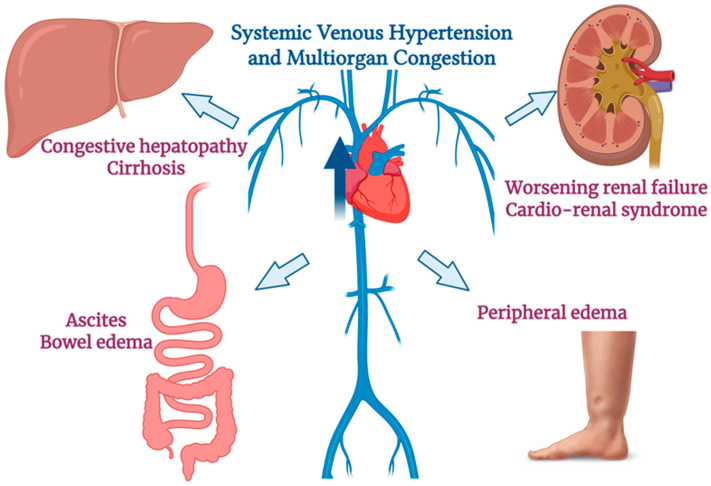 Figure 1
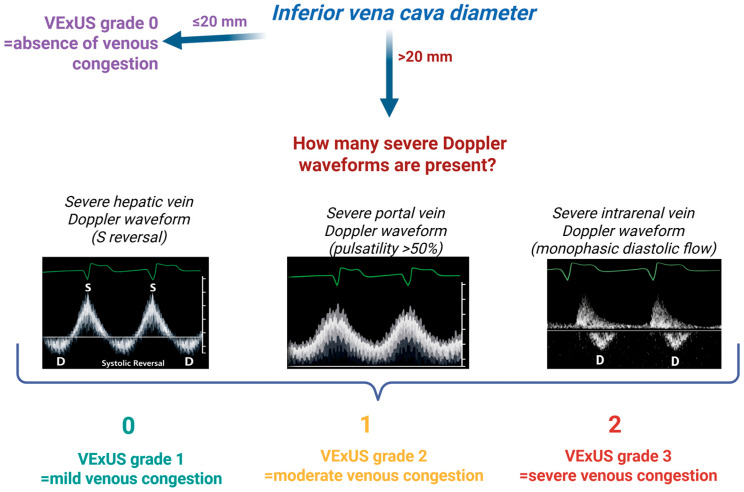 Figure 2
Peer Reviews
No public reviews on file for this paper yet. If you reviewed it on a platform where reviews are public (OpenReview, ICLR, NeurIPS, ICML), you can paste yours below so the community can read it here.
Videos
No videos yet. Explain this paper in a talk, walkthrough, or lecture? Add one.
Taxonomy
TopicsHemodynamic Monitoring and Therapy · Ultrasound in Clinical Applications · Heart Failure Treatment and Management