Bounding Box-Guided Diffusion for Synthesizing Industrial Images and Segmentation Maps
Emanuele Caruso, Francesco Pelosin, Alessandro Simoni, Oswald Lanz

TL;DR
This paper introduces a new method for generating realistic industrial images and segmentation maps using a diffusion model guided by bounding boxes, reducing the need for costly real data.
Contribution
A novel diffusion-based pipeline for generating industrial datasets with enriched bounding-box representations to improve segmentation accuracy.
Findings
The proposed method improves defect consistency and spatial accuracy compared to layout-conditioned generative methods.
Quantitative metrics show the effectiveness of the approach in downstream segmentation tasks.
Diffusion-based synthesis bridges the gap between synthetic and real industrial data.
Abstract
Synthetic dataset generation in Computer Vision, particularly for industrial applications, is still underexplored. Industrial defect segmentation, for instance, requires highly accurate labels, yet acquiring such data is costly and time-consuming. To address this challenge, we propose a novel diffusion-based pipeline for generating high-fidelity industrial datasets with minimal supervision. Our approach conditions the diffusion model on enriched bounding-box representations to produce precise segmentation masks, ensuring realistic and accurately localized defect synthesis. Compared to existing layout-conditioned generative methods, our approach improves defect consistency and spatial accuracy. We introduce two quantitative metrics to evaluate the effectiveness of our method and assess its impact on a downstream segmentation task trained on real and synthetic data. Our results…
Genes, proteins, chemicals, diseases, species, mutations and cell lines named across the full text — each resolved to its canonical identifier and authoritative record.
Click any figure to enlarge with its caption.
 Figure 1
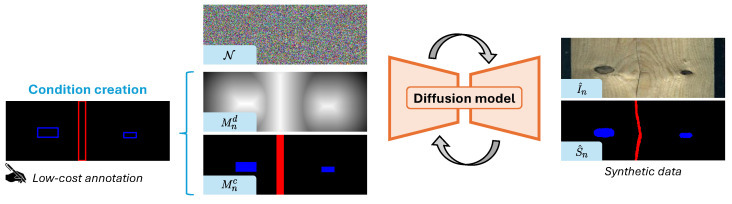 Figure 2
 Figure 3
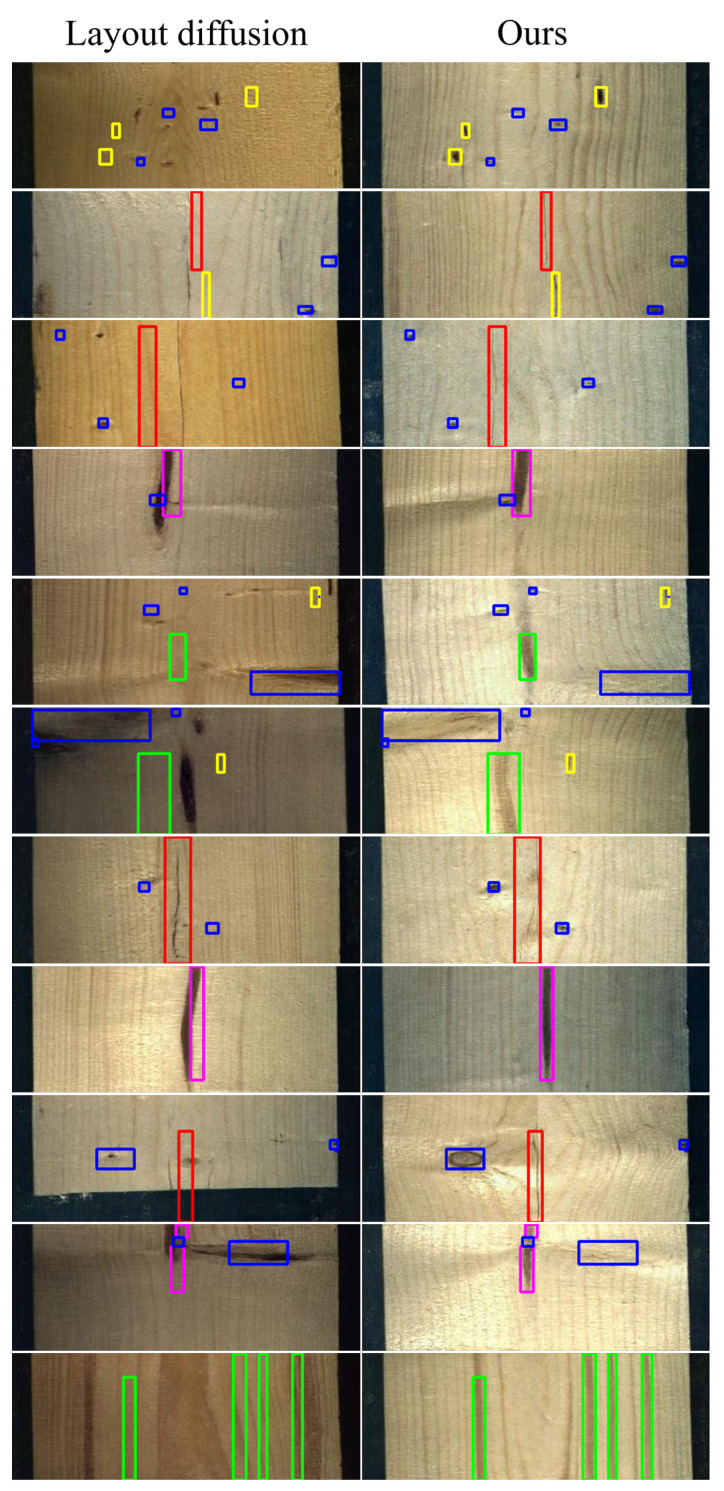 Figure 4
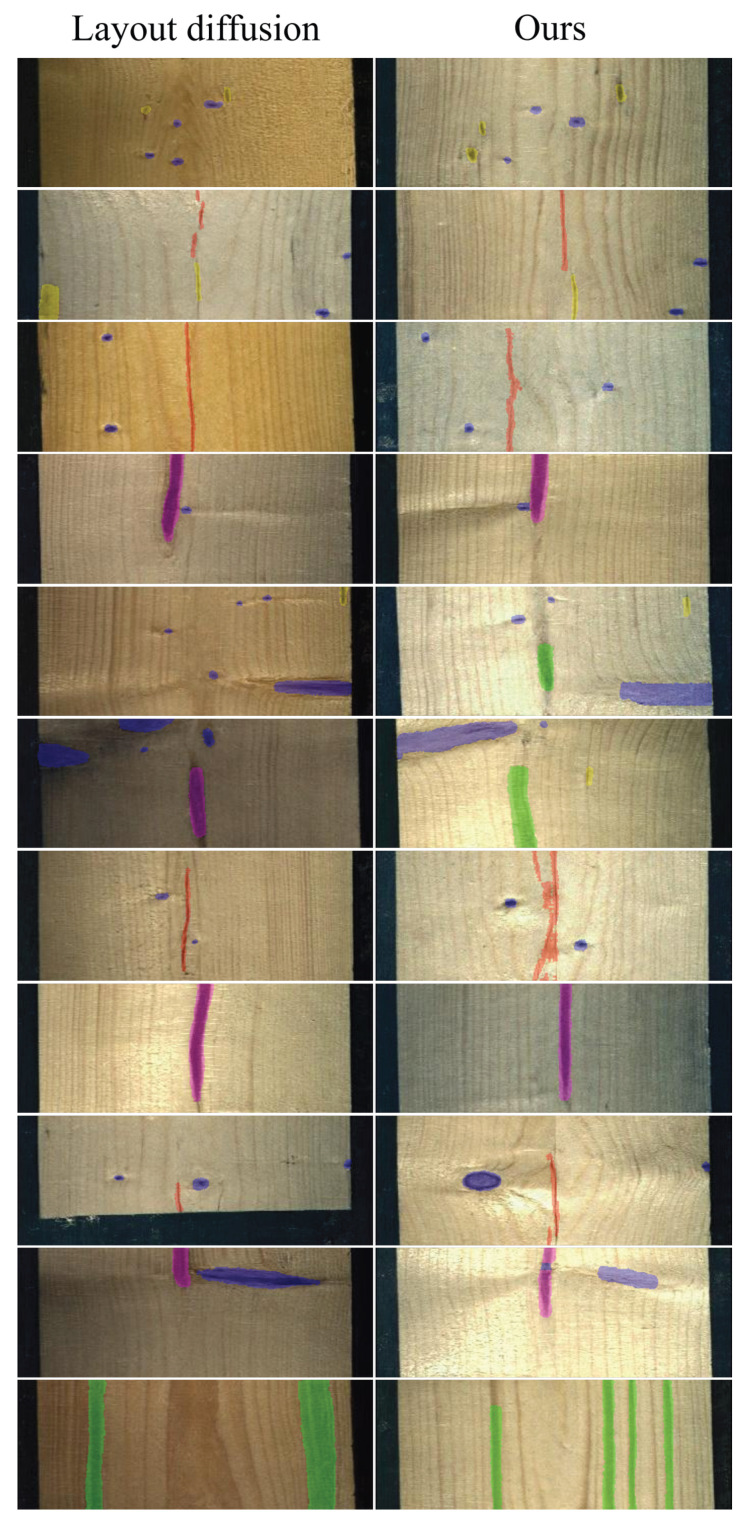 Figure 5
Peer Reviews
No public reviews on file for this paper yet. If you reviewed it on a platform where reviews are public (OpenReview, ICLR, NeurIPS, ICML), you can paste yours below so the community can read it here.
Videos
No videos yet. Explain this paper in a talk, walkthrough, or lecture? Add one.
Taxonomy
TopicsGenerative Adversarial Networks and Image Synthesis · Advanced Neural Network Applications · Industrial Vision Systems and Defect Detection