Predictors of Prolonged Hospitalization in Pyogenic Tenosynovitis of the Hand: A Retrospective Cohort Study Focused on Length of Stay
Cristian-Sorin Hariga, Florin-Vlad Hodea, Vladut-Alin Ratoiu, Eliza-Maria Bordeanu-Diaconescu, Madalina-Olivia Radu-Adamesteanu, Razvan Nicolae Teodoreanu, Cristian-Radu Jecan, Andreea Grosu-Bularda

TL;DR
This study identifies patient factors like comorbidities and immunosuppression that predict longer hospital stays for hand infections requiring surgery.
Contribution
The study introduces a clinically meaningful threshold for prolonged hospitalization in hand septic tenosynovitis, focusing on patient vulnerability factors.
Findings
Comorbidities and immunosuppressive status were significantly associated with prolonged hospitalization.
Age, sex, time to presentation, and microbiological culture positivity were not linked to longer stays.
Patients had an average of 2.5 outpatient follow-up visits, indicating ongoing care needs after discharge.
Abstract
Background and Objectives: Septic tenosynovitis of the hand remains a surgical emergency associated with significant morbidity and healthcare resource utilization. While prior studies have focused primarily on diagnostic features, microbiology, and functional outcomes, factors influencing prolonged hospitalization remain insufficiently characterized. Length of stay (LOS) represents a pragmatic, patient- and system-centered outcome that may reflect disease burden and treatment complexity. To identify clinical, demographic, and treatment-related factors associated with prolonged hospitalization in patients treated surgically for septic tenosynovitis of the hand, using LOS ≥ 6 days as a clinically meaningful threshold. Materials and methods: A retrospective cross-sectional study was conducted including 38 adult patients treated surgically for acute septic tenosynovitis of the hand at a…
Genes, proteins, chemicals, diseases, species, mutations and cell lines named across the full text — each resolved to its canonical identifier and authoritative record.
Click any figure to enlarge with its caption.
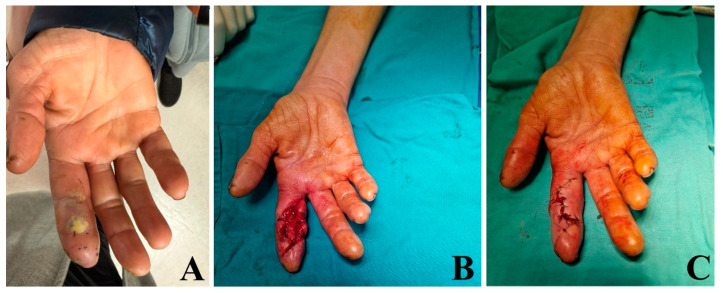 Figure 1
Peer Reviews
No public reviews on file for this paper yet. If you reviewed it on a platform where reviews are public (OpenReview, ICLR, NeurIPS, ICML), you can paste yours below so the community can read it here.
Videos
No videos yet. Explain this paper in a talk, walkthrough, or lecture? Add one.
Taxonomy
TopicsRabies epidemiology and control · Orthopedic Surgery and Rehabilitation · Orthopedic Infections and Treatments