Identification of Patients with Reinke’s Edema Through Biomechanical Voice Analysis
Isabel Cardoso López, Walter Orlando Tenesaca Pintado, Ángel Rodríguez Paramás, Roberto Fernández-Baillo Gallego de la Sacristana

TL;DR
This study shows that biomechanical voice analysis can help identify women with Reinke’s edema, a vocal fold condition, without needing direct laryngeal exams.
Contribution
The study introduces biomechanical voice analysis as a novel screening method for Reinke’s edema with high sensitivity and specificity.
Findings
Decreased F0 (Pr01), increased mucosal wave (Pr20), shortened closure phase (Pr04), and mass effect (Pr22) are key indicators of Reinke’s edema.
Screening using F0 decrease and mucosal wave increase achieves 92% specificity and 77% sensitivity compared to the control group.
The same screening method shows 93% specificity and 77% sensitivity when distinguishing Reinke’s edema from other vocal fold pathologies.
Abstract
Background and objectives: Reinke’s edema is a benign disease of the vocal folds caused by smoking and excessive vocal effort that usually leads to chronic dysphonia, especially in women. Diagnosis requires direct evaluation of the vocal folds using videolaryngoscopy. Biomechanical analysis of the voice makes it possible to obtain from a sound sample a set of parameters that describe the pattern of voice production associated with the specific architecture of each vocal fold. The objective is to identify the characteristic vocal production pattern in Reinke’s edema while analyzing the validity of this methodology for screening the pathology. Methods: The study was performed with a sample of 175 women, from 26 to 74 years old, separated into 3 groups: Control Group, 52 participants; Reinke’s edema Group, 26 patients; Vocal Fold Pathology—no Reinke’s edema, 97 patients. All the patients…
Genes, proteins, chemicals, diseases, species, mutations and cell lines named across the full text — each resolved to its canonical identifier and authoritative record.
Click any figure to enlarge with its caption.
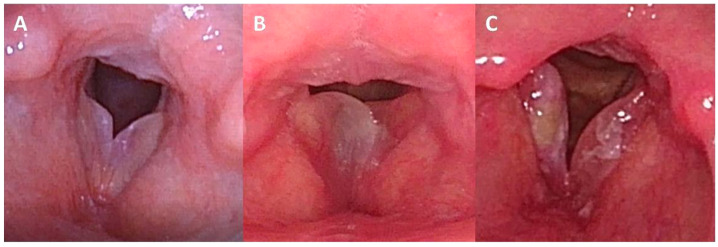 Figure 1
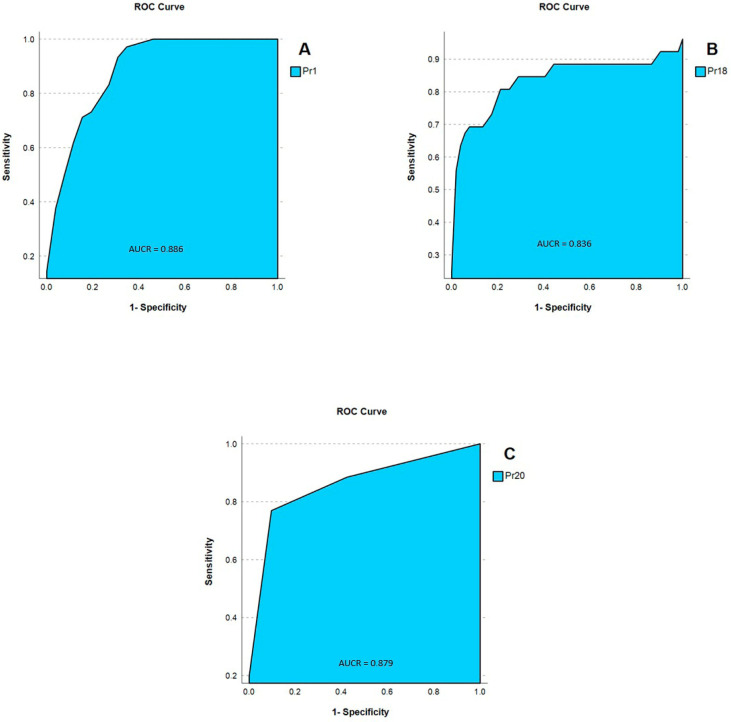 Figure 2
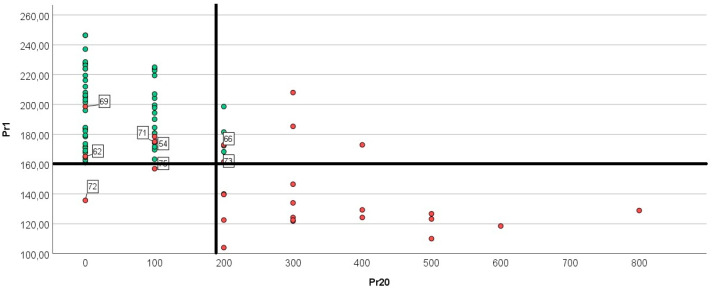 Figure 3
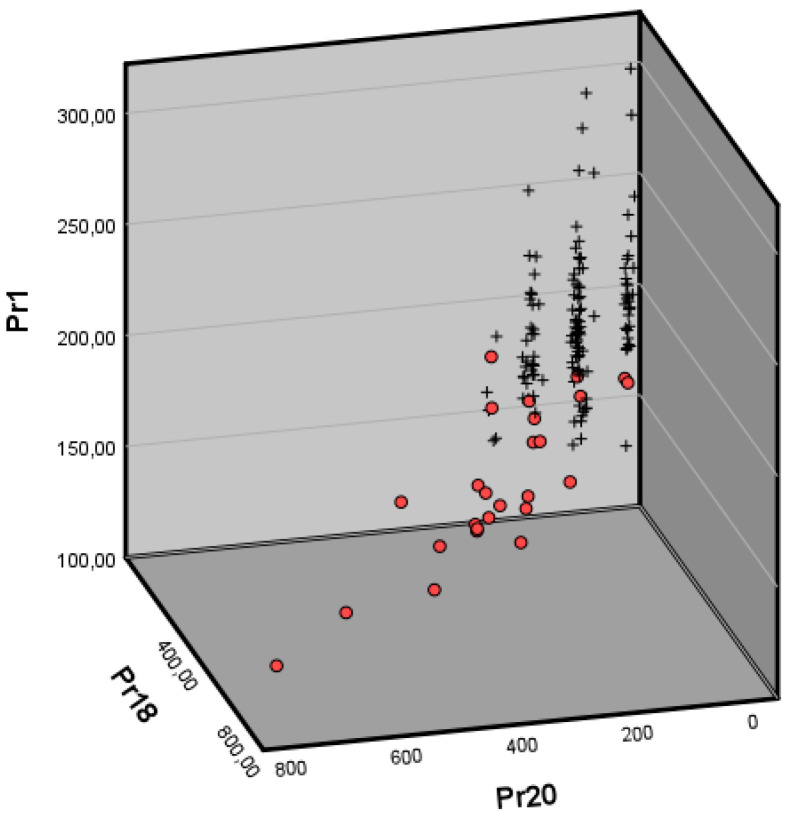 Figure 4
Peer Reviews
No public reviews on file for this paper yet. If you reviewed it on a platform where reviews are public (OpenReview, ICLR, NeurIPS, ICML), you can paste yours below so the community can read it here.
Videos
No videos yet. Explain this paper in a talk, walkthrough, or lecture? Add one.
Taxonomy
TopicsVoice and Speech Disorders · Respiratory and Cough-Related Research · Medical research and treatments