Expression of ERK1/2, p38, and JNK in Normal Kidney Development and CAKUT
Ivona Letica, Petar Todorović, Patricija Bajt, Nikola Pavlović, Nela Kelam, Marjana Jerković Raguž, Ivanka Mikulić, Ludvig Letica, Sandra Kostić, Katarina Vukojević, Anita Racetin

TL;DR
This study examines how specific proteins involved in kidney development differ in normal and abnormal fetal kidneys, offering insights into the causes of congenital kidney defects.
Contribution
The study reveals distinct expression patterns of ERK1/2, p38, and JNK in normal and CAKUT-affected fetal kidneys, linking them to specific developmental phases and anomalies.
Findings
ERK1/2 expression increased in late development in normal kidneys but was reduced in hypoplastic kidneys.
p38 showed early upregulation in dysplastic kidneys and late elevation in horseshoe kidneys.
JNK was significantly upregulated in horseshoe kidneys during specific developmental phases.
Abstract
Background and Objectives: Mitogen-activated protein kinases (p38, JNK, ERK1/2) regulate key cellular processes essential for kidney development. Disruptions in these signaling pathways can lead to congenital anomalies of the kidney and urinary tract (CAKUT), a major cause of pediatric kidney disease. This study investigates and compares the expression of these molecules in normal fetal kidneys and CAKUT-affected tissues. Materials and Methods: Forty-three human fetal kidney samples, including controls and specimens with horseshoe, hypoplastic, and dysplastic kidneys, were analyzed across developmental phases 2–4 using immunofluorescence. Quantitative image analysis and statistical comparisons were performed between developmental stages and phenotypes. Results: ERK1/2 expression increased during late development in control kidneys but was significantly reduced in hypoplastic kidneys.…
Genes, proteins, chemicals, diseases, species, mutations and cell lines named across the full text — each resolved to its canonical identifier and authoritative record.
Click any figure to enlarge with its caption.
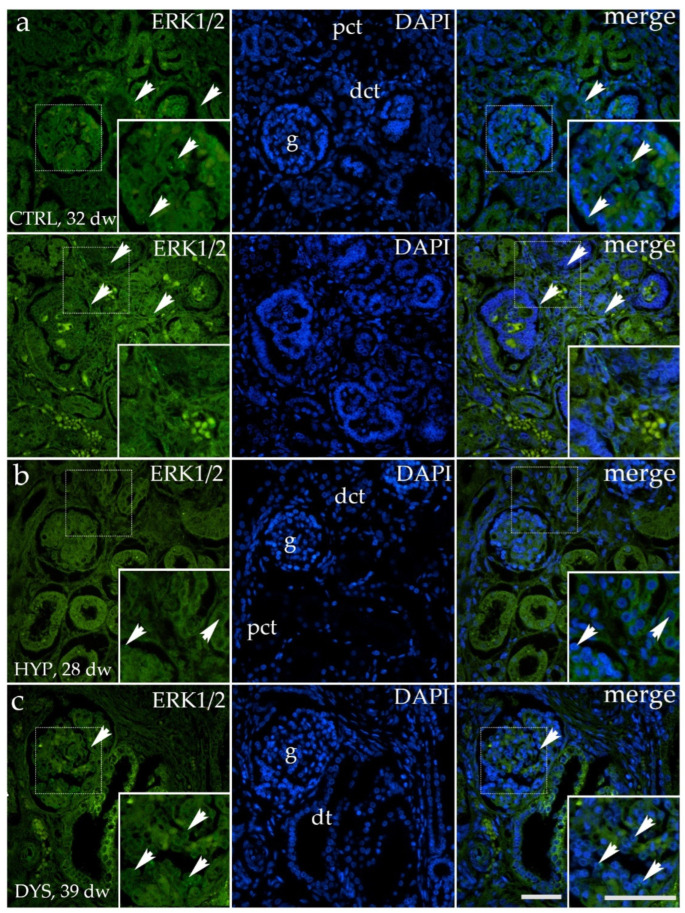 Figure 1
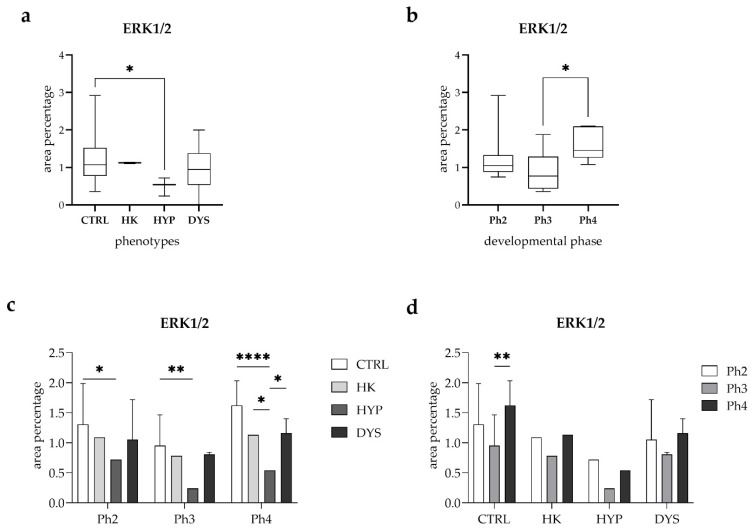 Figure 2
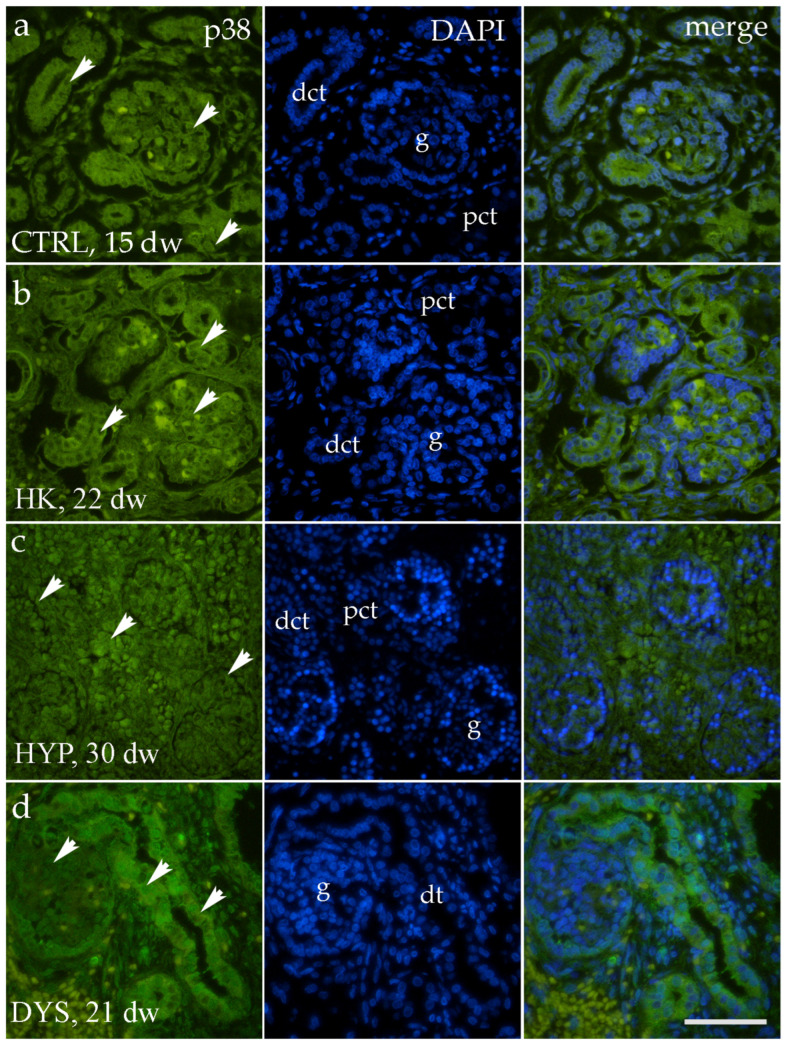 Figure 3
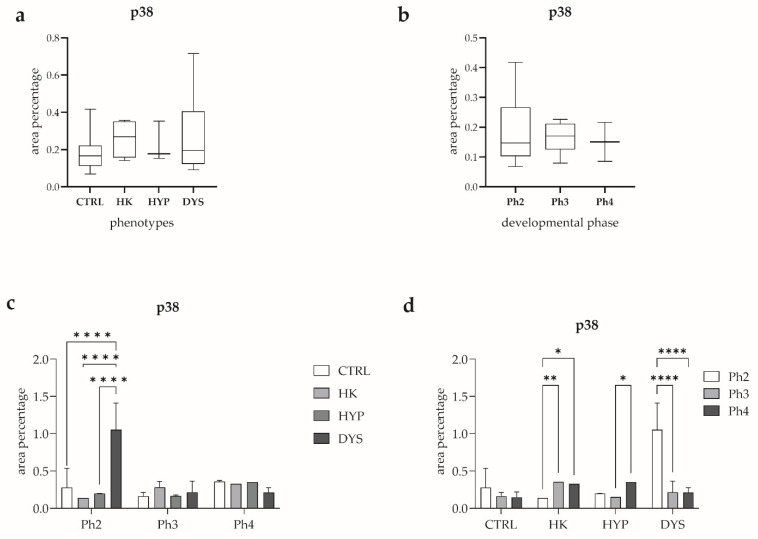 Figure 4
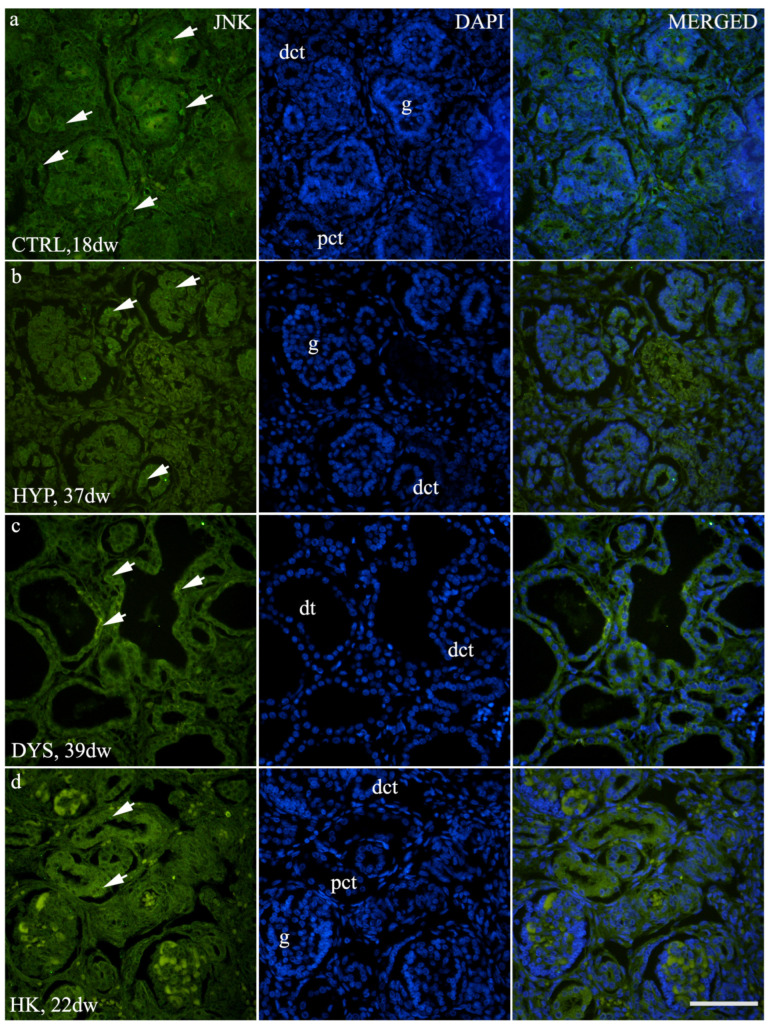 Figure 5
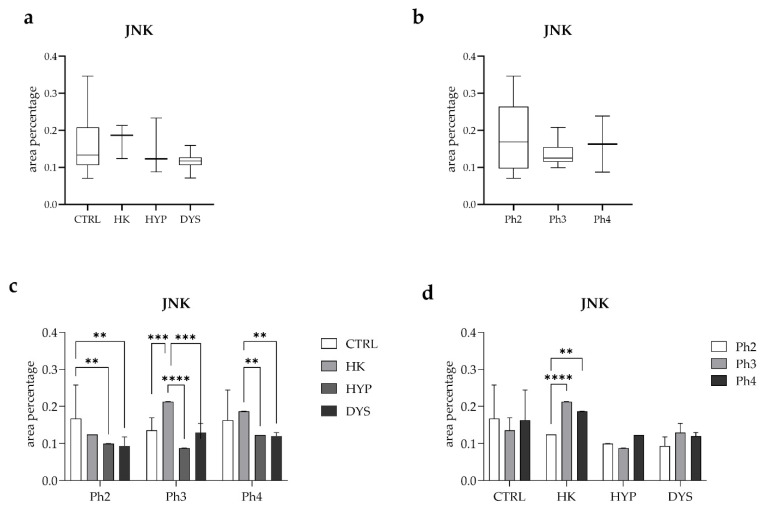 Figure 6
Peer Reviews
No public reviews on file for this paper yet. If you reviewed it on a platform where reviews are public (OpenReview, ICLR, NeurIPS, ICML), you can paste yours below so the community can read it here.
Videos
No videos yet. Explain this paper in a talk, walkthrough, or lecture? Add one.
Taxonomy
TopicsRenal and related cancers · Renal cell carcinoma treatment · Genetic and Kidney Cyst Diseases