Asymmetric Supercapacitor Based on Biomass-Derived Carbon Electrodes Functionalized with NdFeB
Ahmad Reshad Delawary, Constantin Bubulinca, Natalia E. Kazantseva, Petr Saha, Quoc Bao Le, Ram K. Gupta, Rudolf Kiefer

TL;DR
This paper explores using brewery waste to create high-performance supercapacitor electrodes with enhanced energy storage capabilities.
Contribution
The novel use of brewery-derived carbon combined with PANI and NdFeB to create efficient asymmetric supercapacitors.
Findings
Biomass-derived AC combined with PANI achieved 173.7 F/g capacitance with high cycle retention.
NdFeB-functionalized AC showed 127 F/g capacitance and over 99% retention after cycling.
The asymmetrical cell demonstrated 70% efficiency, highlighting the potential of biowaste in energy storage.
Abstract
Supercapacitors (SCs) are highly attractive energy storage devices, and modern research is focused on using waste materials to reduce environmental impact. This study processed biowaste from local brewery production to produce a highly specific mesoporous activated carbon (AC) for SC electrode scaffolds. Polyaniline (PANI) was synthesized and incorporated into the AC scaffold, thereby enhancing performance. The AC and PANI combination (ACP) achieved a specific capacitance of 173.7 F/g at 1 A/g, with 92% retention after 5000 cycles. Using NdFeB (ACN) particles, the anode showed a specific capacitance of 127 F/g and over 99% retention. An asymmetrical ACN//ACP cell demonstrated promising performance with 70% efficiency. This study highlights the potential of using biowaste for high-performance SC electrodes and the effective synergy between AC and PANI.
Genes, proteins, chemicals, diseases, species, mutations and cell lines named across the full text — each resolved to its canonical identifier and authoritative record.
Click any figure to enlarge with its caption.
 Figure 1
 Figure 2
 Figure 3
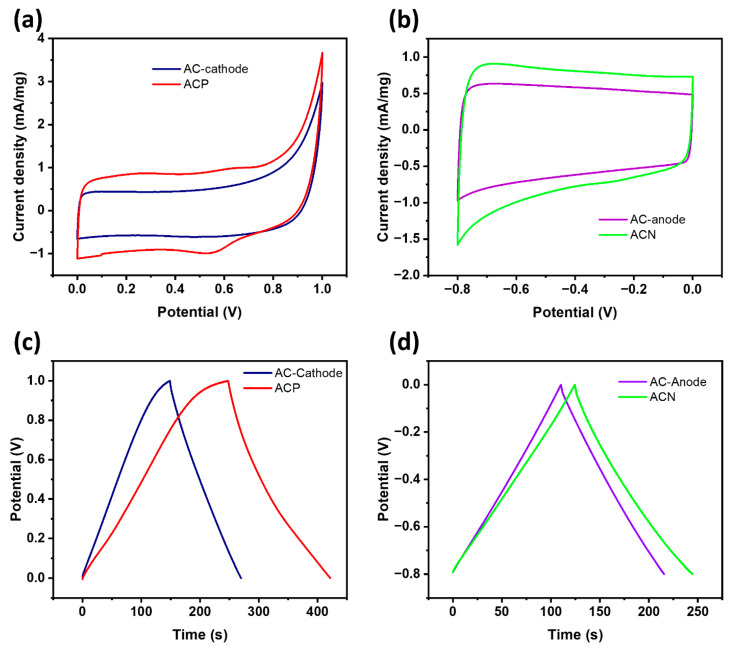 Figure 4
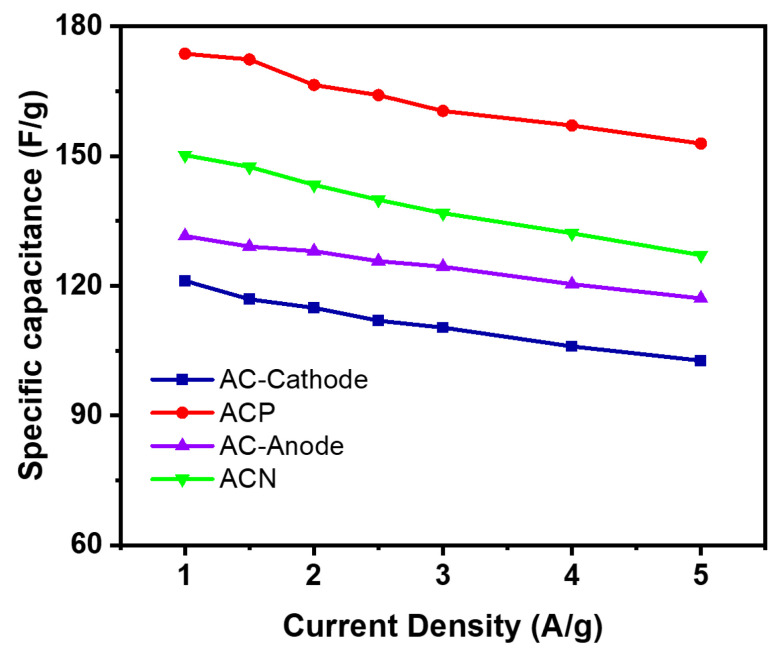 Figure 5
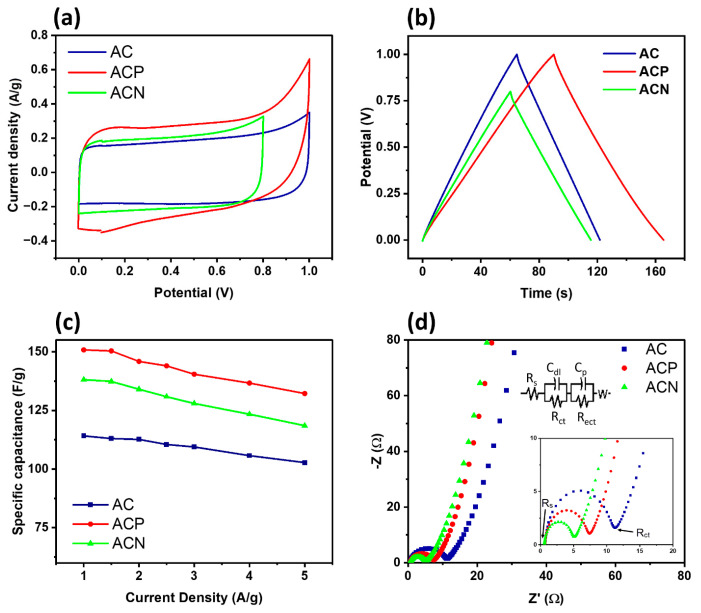 Figure 6
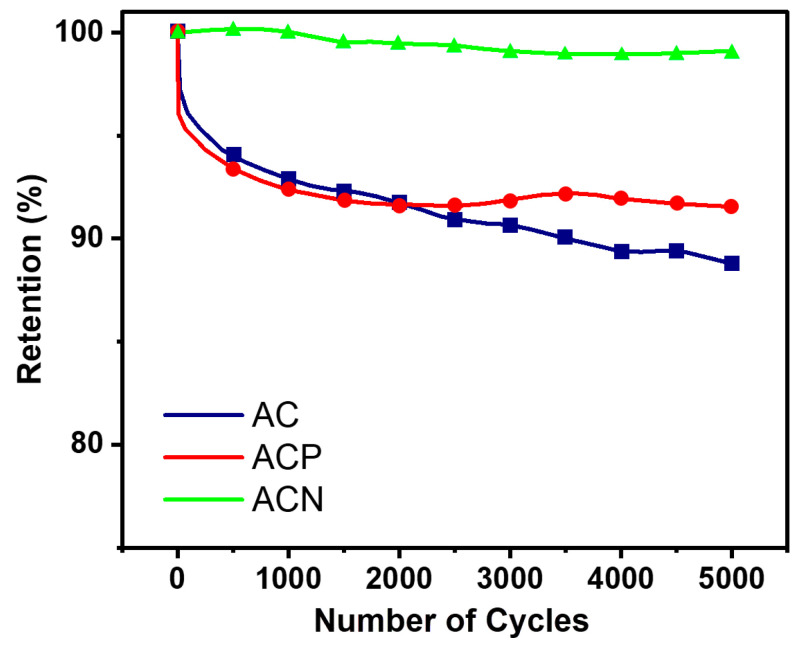 Figure 7
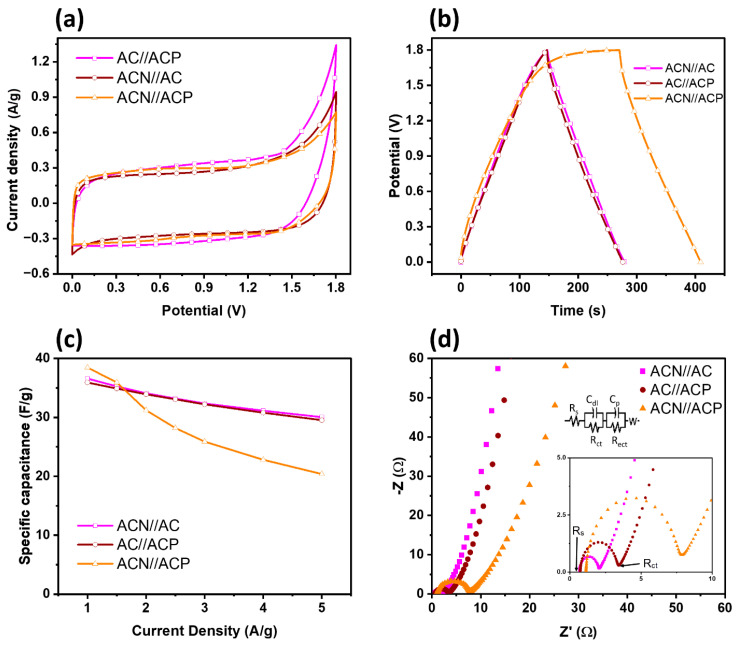 Figure 8
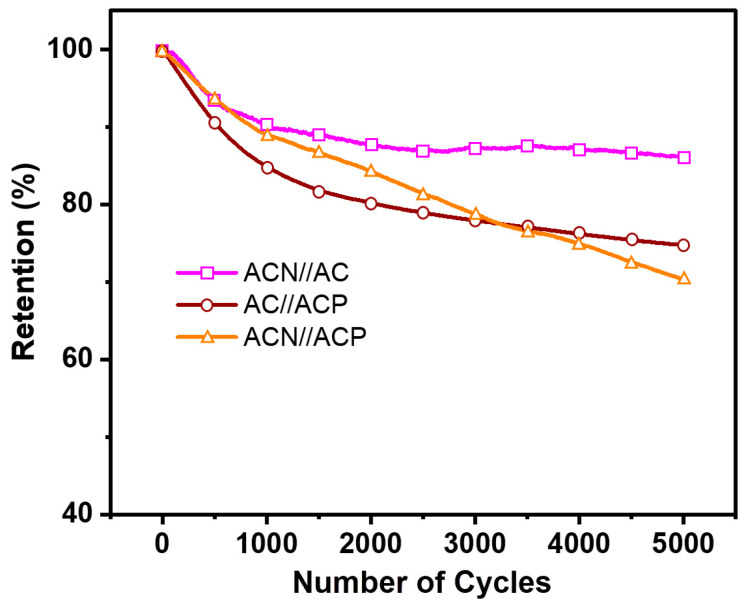 Figure 9
Peer Reviews
No public reviews on file for this paper yet. If you reviewed it on a platform where reviews are public (OpenReview, ICLR, NeurIPS, ICML), you can paste yours below so the community can read it here.
Videos
No videos yet. Explain this paper in a talk, walkthrough, or lecture? Add one.
Taxonomy
TopicsSupercapacitor Materials and Fabrication · Adsorption and biosorption for pollutant removal · Microbial Fuel Cells and Bioremediation