Physiological Functions of Side-Chain-Retaining Sterols in the Brain and Their Roles in Neurodegenerative Diseases
Yoshimitsu Kiriyama, Akira Nakatsuma, Hiroshi Tokumaru, Hisayo Sadamoto, Hiromi Nochi

TL;DR
This review explores how certain cholesterol-related molecules in the brain affect brain function and contribute to diseases like Alzheimer's and Parkinson's.
Contribution
Highlights the physiological roles and disease relevance of side-chain-retaining sterols in the brain.
Findings
Side-chain-retaining sterols regulate lipid transport, inflammation, and amyloid clearance via nuclear receptors.
These sterols influence synaptic function through membrane receptors like NMDA receptors.
Dysregulation of these sterols is linked to Alzheimer’s and Parkinson’s diseases.
Abstract
Although the brain comprises only 2% of total body weight, it contains approximately 23% of the total cholesterol of the body. In the brain, cholesterol plays a critical role as a structural component of cell membranes and myelin sheaths. However, the blood–brain barrier restricts cholesterol influx from the systemic circulation into the brain. As a result, the brain synthesizes cholesterol de novo and regulates its metabolism independently. Desmosterol, a cholesterol precursor produced during cholesterol biosynthesis, and cholesterol metabolites, 24S-hydroxycholesterol and chenodeoxycholic acid, are sterols with structurally retained side chains. These side-chain-retaining sterols have traditionally been regarded as intermediates in the cholesterol synthesis process or as metabolites for cholesterol excretion, but accumulating evidence indicates that they also function as…
Genes, proteins, chemicals, diseases, species, mutations and cell lines named across the full text — each resolved to its canonical identifier and authoritative record.
Click any figure to enlarge with its caption.
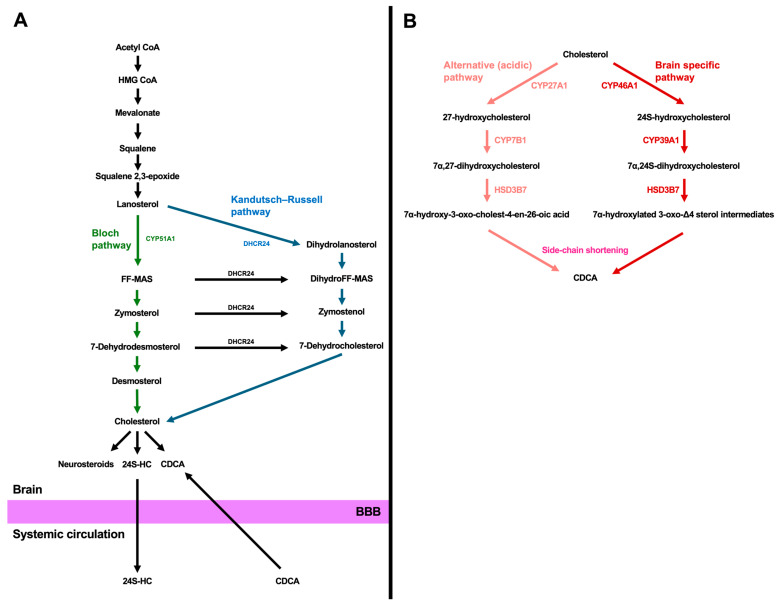 Figure 1
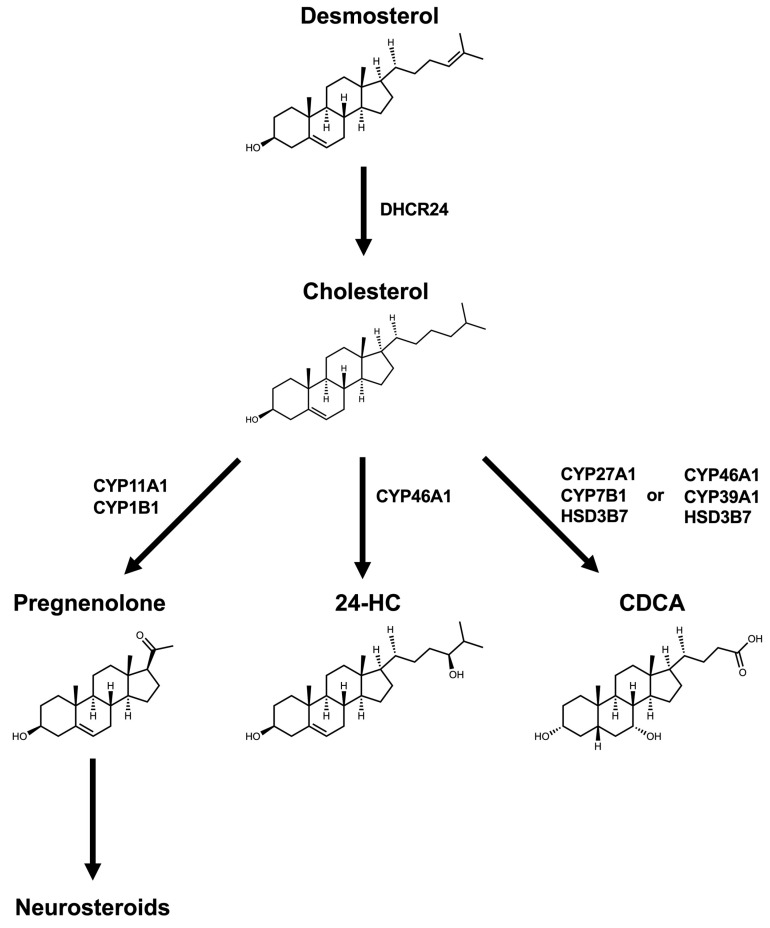 Figure 2
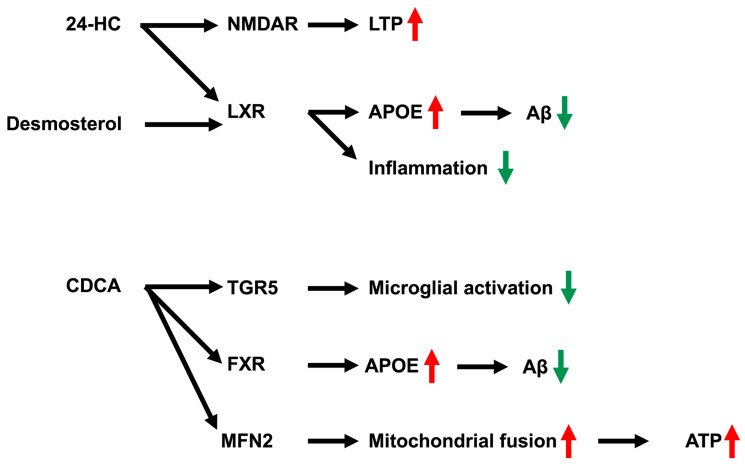 Figure 3
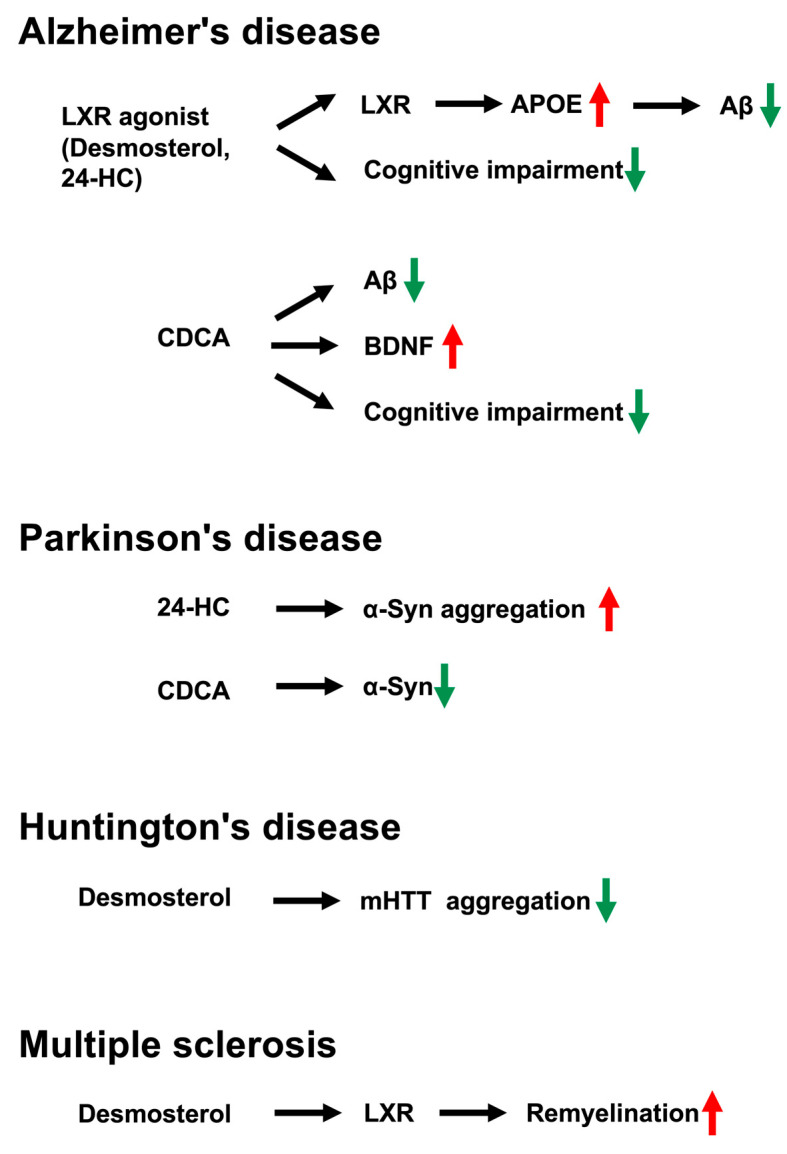 Figure 4
Peer Reviews
No public reviews on file for this paper yet. If you reviewed it on a platform where reviews are public (OpenReview, ICLR, NeurIPS, ICML), you can paste yours below so the community can read it here.
Videos
No videos yet. Explain this paper in a talk, walkthrough, or lecture? Add one.
Taxonomy
TopicsCholesterol and Lipid Metabolism · Peroxisome Proliferator-Activated Receptors · Fatty Acid Research and Health