A High-Efficiency CRISPR–Cas9 Ribonucleoprotein Genome Editing System in Aspergillus fijiensis Enabled by Microhomology-Mediated End Joining
Zhenchun Duan, Shuangfei Zhang, Xueduan Liu

TL;DR
This paper introduces an efficient CRISPR–Cas9 system for editing the genome of Aspergillus fijiensis, a fungus important for industry, by leveraging microhomology-mediated repair.
Contribution
The study introduces a high-efficiency CRISPR–Cas9 RNP system for A. fijiensis using microhomology-mediated end joining for precise genome editing.
Findings
Using 5 bp microhomology arms in donor templates shifted repair from NHEJ to MMEJ, enabling precise edits in 92% of transformants.
A protoplast regeneration protocol with osmotic stabilization improved transformation efficiency in A. fijiensis.
RNP delivery alone produced frequent indels, but MMEJ donors enabled targeted insertions and deletions.
Abstract
Aspergillus fijiensis is an industrially important filamentous fungus, whose genetic analysis has been limited by the absence of species-specific tools. This study establishes an optimized CRISPR–Cas9 genome editing platform for A. fijiensis, from protoplast preparation to DNA repair pathway engineering. Antibiotic screening first identified hygromycin B and 5-FOA (5-fluoroorotic acid) as effective positive and counter-selection markers. A high-efficiency protoplast regeneration protocol was developed depending on specific osmotic stabilization and mycelial competence. Evaluation of a plasmid-based CRISPR system revealed that while autonomous replication was feasible, gene editing was constrained by low efficiency and a predominant bias toward NHEJ (non-homologous end joining). We implemented a Cas9–sgRNA RNP (ribonucleoprotein) delivery approach, with RNP delivery alone producing…
Genes, proteins, chemicals, diseases, species, mutations and cell lines named across the full text — each resolved to its canonical identifier and authoritative record.
Click any figure to enlarge with its caption.
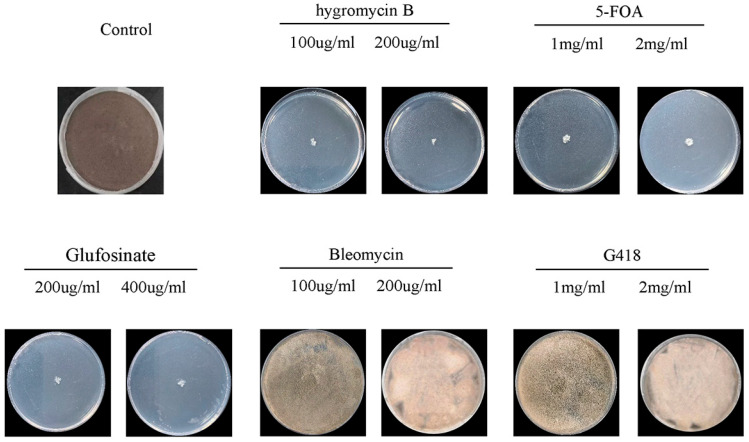 Figure 1
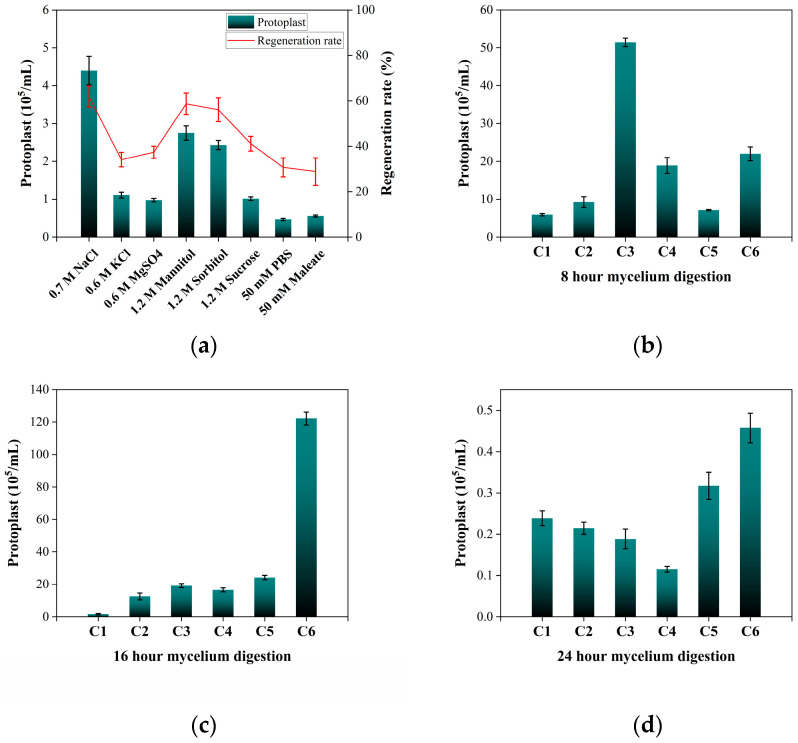 Figure 2
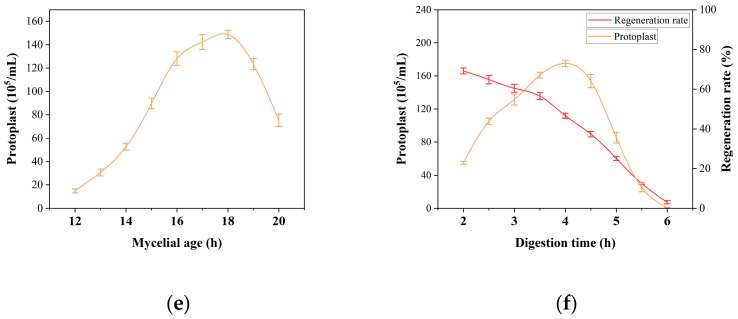 Figure 3
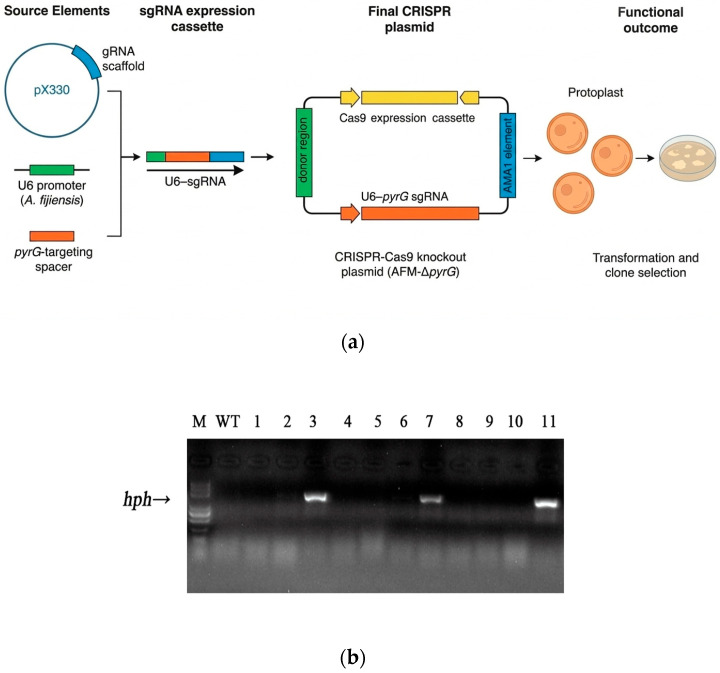 Figure 4
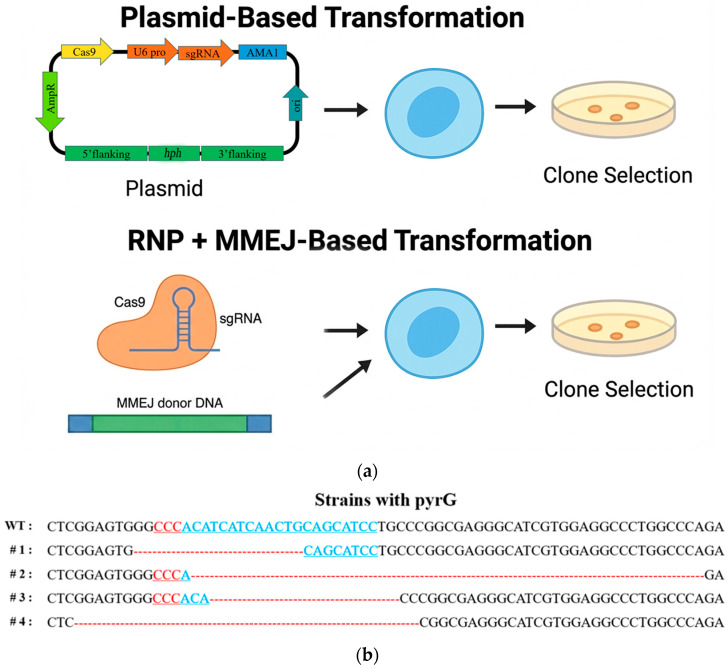 Figure 5
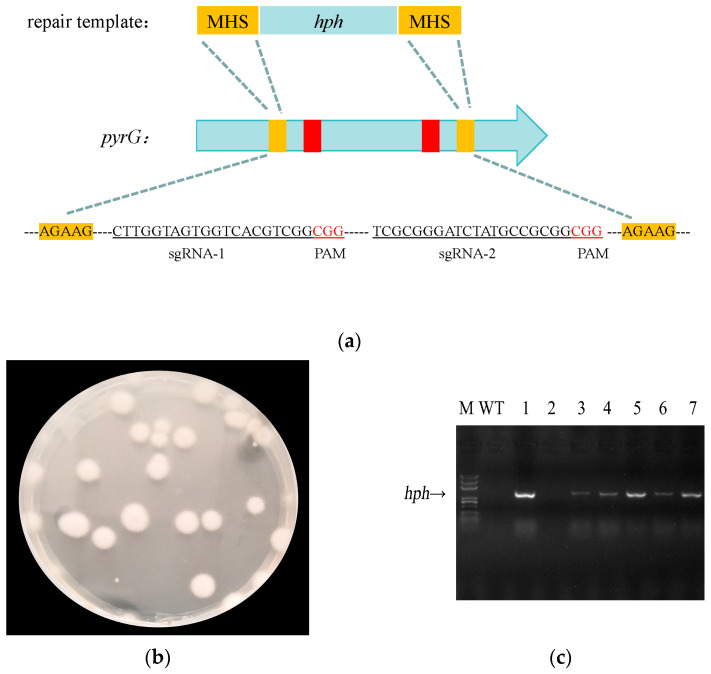 Figure 6
Peer Reviews
No public reviews on file for this paper yet. If you reviewed it on a platform where reviews are public (OpenReview, ICLR, NeurIPS, ICML), you can paste yours below so the community can read it here.
Videos
No videos yet. Explain this paper in a talk, walkthrough, or lecture? Add one.
Taxonomy
TopicsCRISPR and Genetic Engineering · Fungal and yeast genetics research · Microbial Metabolic Engineering and Bioproduction