Reconstruction of Deep Partial-Thickness Burns With Ovine Forestomach Matrix: Results From a Prospective Observational Study
Patrick J Kennedy, Michael Young, Kylie Wentworth, Nidhi Aravapalli, Nicole P Bernal, Ariel Rodgers, Laura Pezzopane, Beth McGuire, Jessica Simon, D. Adam Young, John Loftus

TL;DR
A new biologically derived graft from ovine forestomach matrix helps heal deep burns quickly with minimal pain and good cosmetic results.
Contribution
The study introduces and evaluates a novel biologically derived graft for deep partial-thickness burns.
Findings
The median time to healing was 16 days with no infections observed.
Patients reported low pain scores and high satisfaction with scar appearance.
Most treatment areas showed normal pigmentation and good pliability.
Abstract
Maximizing the critical goals of burn care (efficient healing, pain control, good cosmesis, and patient satisfaction) can reduce hospital burden and enhance patient outcomes. Use of a biologically derived graft in burn management may support these goals by limiting inflammation and infection and improving tissue remodeling; however, rigorous clinical evaluation of these materials is currently limited. This prospective observational study evaluated the safety and performance of a biologically derived graft composed of ovine forestomach matrix (OFM) in promoting the critical goals of burn care in deep partial-thickness burns. Outcome measures included postoperative complications, time to healing, postoperative pain, and a patient and observer scar assessment. The study enrolled 49 burns with a median size of 129 cm2 that were treated with a single application of OFM. The median time to…
Genes, proteins, chemicals, diseases, species, mutations and cell lines named across the full text — each resolved to its canonical identifier and authoritative record.
Click any figure to enlarge with its caption.
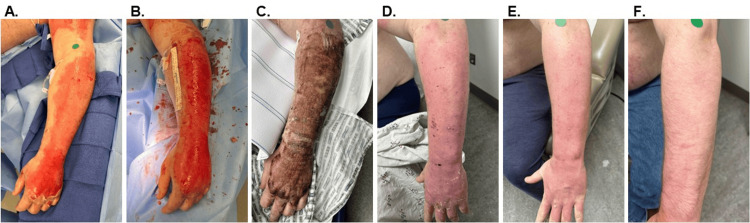 Figure 1
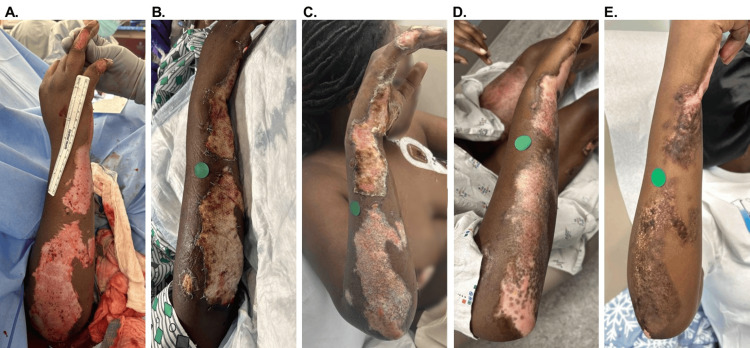 Figure 2
Peer Reviews
No public reviews on file for this paper yet. If you reviewed it on a platform where reviews are public (OpenReview, ICLR, NeurIPS, ICML), you can paste yours below so the community can read it here.
Videos
No videos yet. Explain this paper in a talk, walkthrough, or lecture? Add one.
Taxonomy
TopicsReconstructive Facial Surgery Techniques · Wound Healing and Treatments · Reconstructive Surgery and Microvascular Techniques