Discovery of a Secretory Granule Lumen-Enriched Serum Protein Signature in Resectable Pancreatic Ductal Adenocarcinoma
Septimiu Alex Moldovan, Maria Iacobescu, Emil Ioan Moiș, Florin Graur, Luminiţa Furcea, Florin Zaharie, Andra Ciocan, Maria-Andreea Soporan, Ioana-Ecaterina Pralea, Simona Mirel, Mihaela Ştefana Moldovan, Andrada Seicean, Vlad Ionuț Nechita, Cristina Adela Iuga, Nadim Al Hajjar

TL;DR
Researchers found a set of blood proteins that could help detect early-stage pancreatic cancer, which might improve diagnosis and treatment timing.
Contribution
The study identifies a novel serum protein signature enriched in secretory granule lumen components for resectable pancreatic cancer.
Findings
Ninety proteins were significantly altered in PDAC patients compared to controls.
A three-protein panel (ITIH3, F13A1, FTL) achieved high diagnostic accuracy (AUC = 0.98) in distinguishing PDAC from non-cancer controls.
The protein signature is biologically linked to secretory granule lumen and coagulation pathways.
Abstract
Background and Objectives: Serum biomarker discovery in resectable pancreatic ductal adenocarcinoma (PDAC) remains a critical unmet need, as over 80% of patients present with unresectable disease. Serum proteomics offers a promising approach for identifying circulating biomarkers associated with early-stage disease; however, clinical translation has been limited by inconsistent validation and the absence of clinically relevant comparator populations. Materials and Methods: We performed a discovery-phase study using data-independent acquisition mass spectrometry-based serum proteomics in 35 patients with resectable, non-metastatic PDAC and 34 non-cancer controls without hepato-biliary-pancreatic disease. Following quality filtering (≥80% detection threshold), 407 proteins were retained for analysis. Differential abundance was assessed using Welch’s t-test with Benjamini–Hochberg…
Genes, proteins, chemicals, diseases, species, mutations and cell lines named across the full text — each resolved to its canonical identifier and authoritative record.
Click any figure to enlarge with its caption.
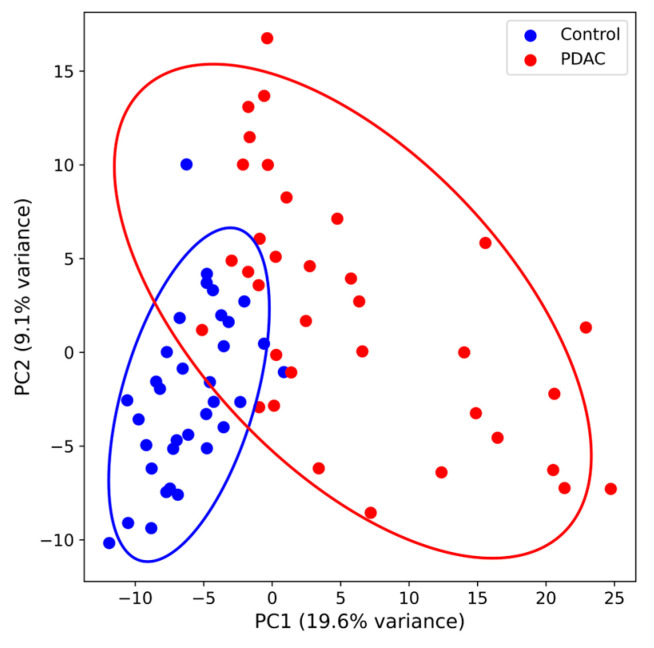 Figure 1
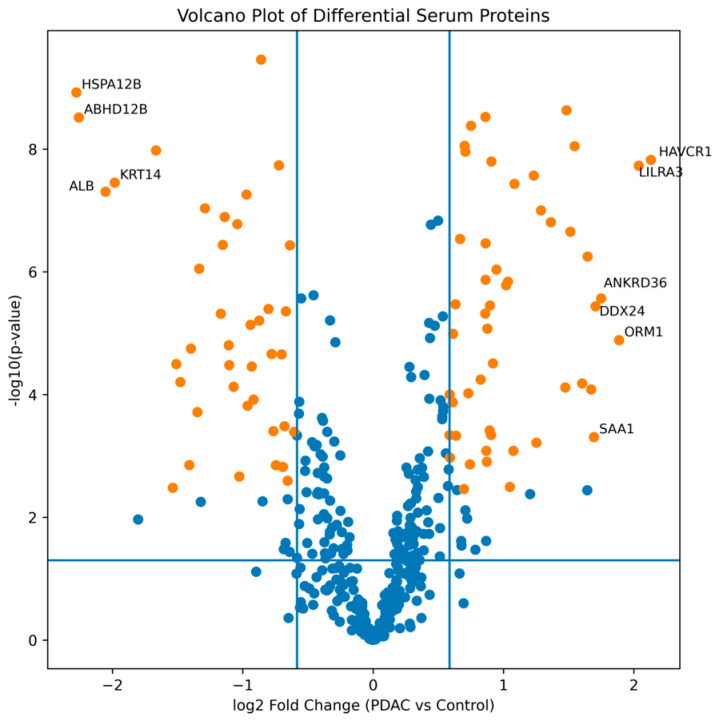 Figure 2
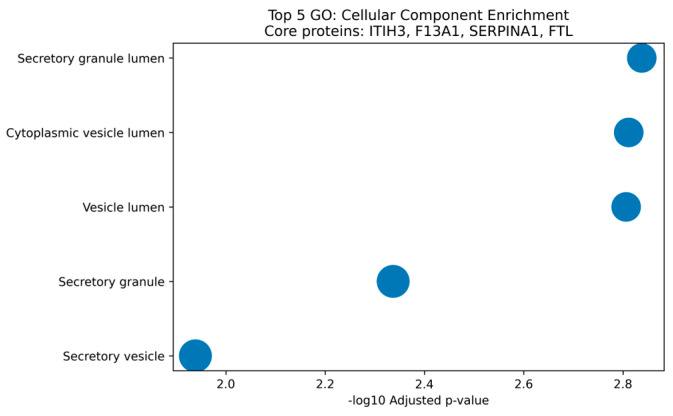 Figure 3
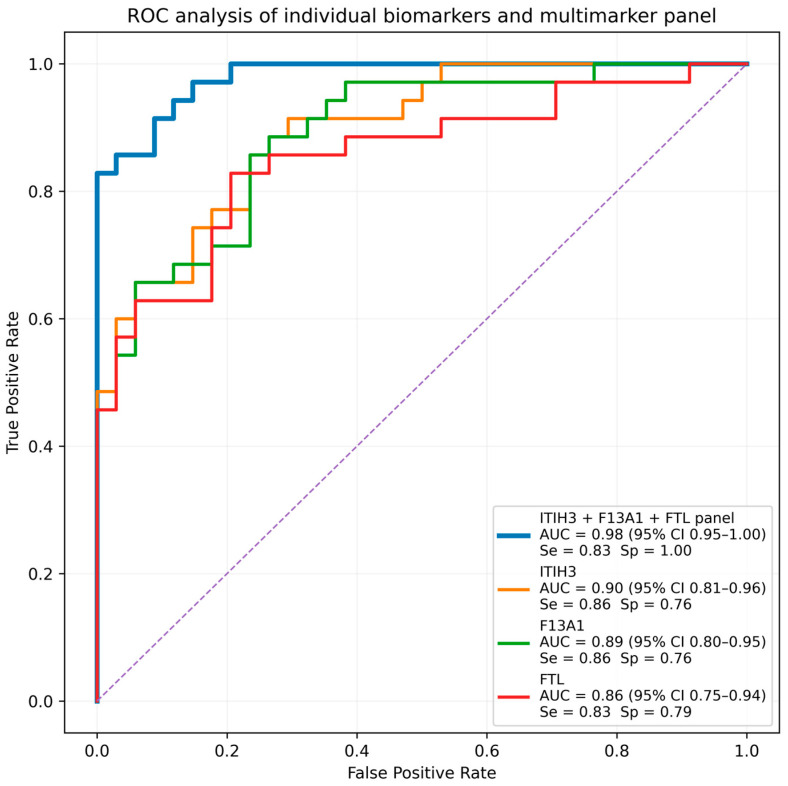 Figure 4
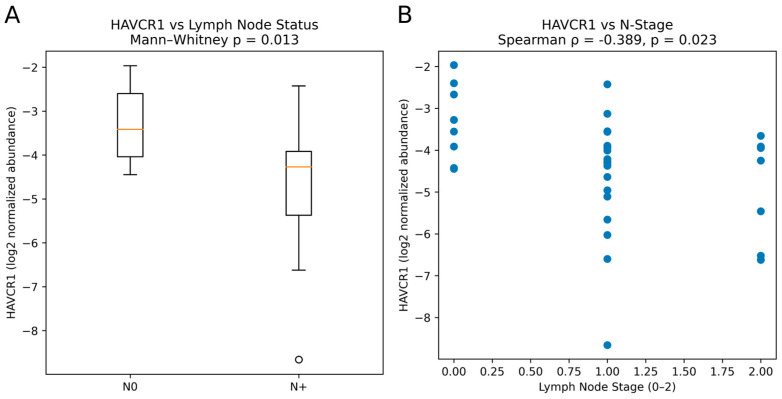 Figure 5
Peer Reviews
No public reviews on file for this paper yet. If you reviewed it on a platform where reviews are public (OpenReview, ICLR, NeurIPS, ICML), you can paste yours below so the community can read it here.
Videos
No videos yet. Explain this paper in a talk, walkthrough, or lecture? Add one.
Taxonomy
TopicsAdvanced Proteomics Techniques and Applications · Pancreatic and Hepatic Oncology Research · Clusterin in disease pathology