Mechanobiological Implications of Low–Young’s Modulus TiNbSn Alloy Plates for Fracture Fixation: A Focused Review
Yu Mori, Hidetatsu Tanaka, Masayuki Kamimura, Naoko Mori, Toshimi Aizawa

TL;DR
This review explores how low-stiffness TiNbSn alloy plates may improve fracture healing by better mimicking bone's mechanical properties compared to traditional rigid plates.
Contribution
The paper provides a mechanobiological rationale for using low-modulus TiNbSn alloys in fracture fixation based on preclinical and computational evidence.
Findings
TiNbSn plates promote controlled interfragmentary strain and better stress distribution compared to rigid plates.
Animal studies show enhanced callus formation and more physiological healing with TiNbSn plates.
Finite element models suggest TiNbSn alloys support biologically relevant healing processes like endochondral ossification.
Abstract
Rigid internal fixation has long been the standard for fracture management; however, excessive construct stiffness can suppress interfragmentary strain, reduce callus formation, and impair secondary fracture healing. Low-elastic-modulus TiNbSn alloys have emerged as a promising alternative, offering mechanical behavior closer to that of cortical bone. This review synthesizes representative preclinical and computational evidence to clarify the mechanobiological rationale for TiNbSn alloy plates in fracture fixation. We summarize key biological requirements for secondary fracture healing, including controlled interfragmentary strain, preservation of vascularity, and effective load sharing, and contrast these with the limitations of conventional high-stiffness fixation plates, such as stress shielding and reduced callus formation. Finite element analyses from previously reported models…
Genes, proteins, chemicals, diseases, species, mutations and cell lines named across the full text — each resolved to its canonical identifier and authoritative record.
Click any figure to enlarge with its caption.
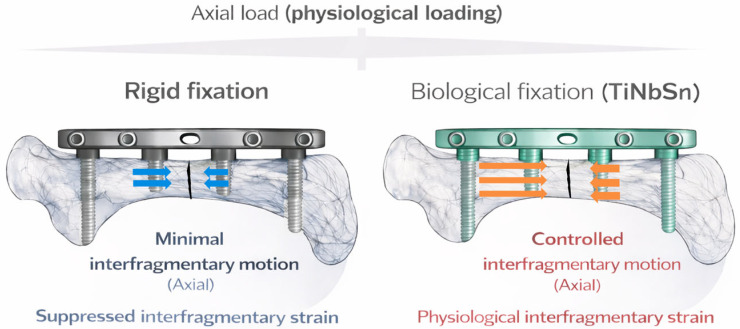 Figure 1
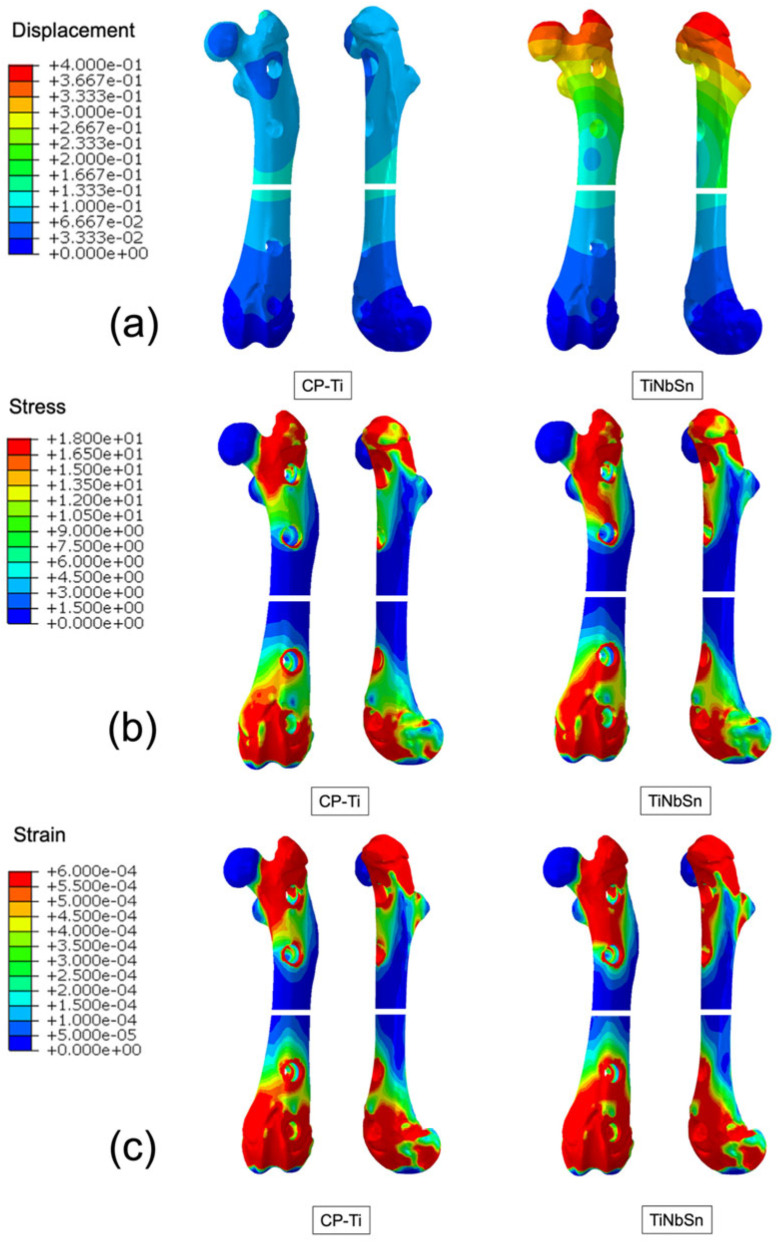 Figure 2
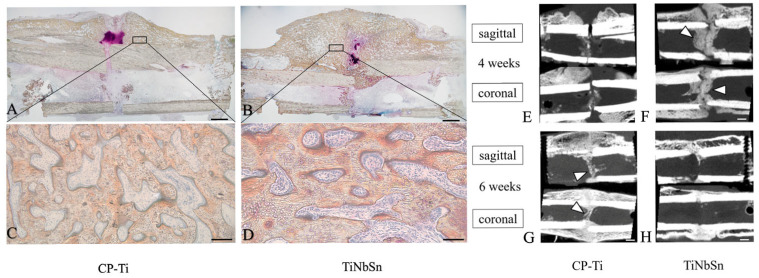 Figure 3
Peer Reviews
No public reviews on file for this paper yet. If you reviewed it on a platform where reviews are public (OpenReview, ICLR, NeurIPS, ICML), you can paste yours below so the community can read it here.
Videos
No videos yet. Explain this paper in a talk, walkthrough, or lecture? Add one.
Taxonomy
TopicsBone fractures and treatments · Orthopaedic implants and arthroplasty · Titanium Alloys Microstructure and Properties