Environmental Adaptation Strategies of Deep-Sea Fungi
Shuang Leng, Chang-Hong Liu

TL;DR
This review explores how deep-sea fungi survive extreme conditions like high pressure and low temperatures, offering insights into life in harsh environments and potential biotech applications.
Contribution
The paper synthesizes recent findings on deep-sea fungal adaptation strategies, emphasizing their biotechnological potential.
Findings
Deep-sea fungi have developed mechanisms to cope with hypoxia, high pressure, and low temperature.
These adaptations reveal the resilience of life in extreme environments.
The study highlights the potential of deep-sea fungi for biotechnological innovation.
Abstract
Deep-sea ecosystems, characterized by extreme conditions such as high hydrostatic pressure, low temperatures, and oligotrophy, host phylogenetically and functionally diverse microbial communities. Among these, deep-sea fungi represent a critical but underexplored group whose survival strategies and adaptive mechanisms are emerging as a key research area. This review highlights recent advances in understanding how fungi adapt to deep-sea environments, focusing on strategies for managing three primary stressors: hypoxia, high pressure, and low temperature. These unique adaptations not only expand our understanding of the limits of life in extreme habitats but also offer valuable microbial resources for biotechnological innovation.
Genes, proteins, chemicals, diseases, species, mutations and cell lines named across the full text — each resolved to its canonical identifier and authoritative record.
Click any figure to enlarge with its caption.
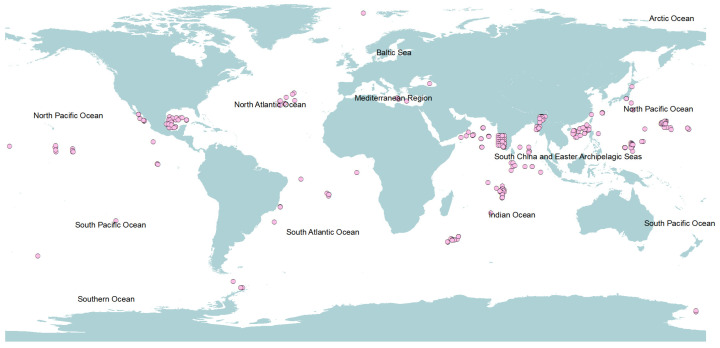 Figure 1
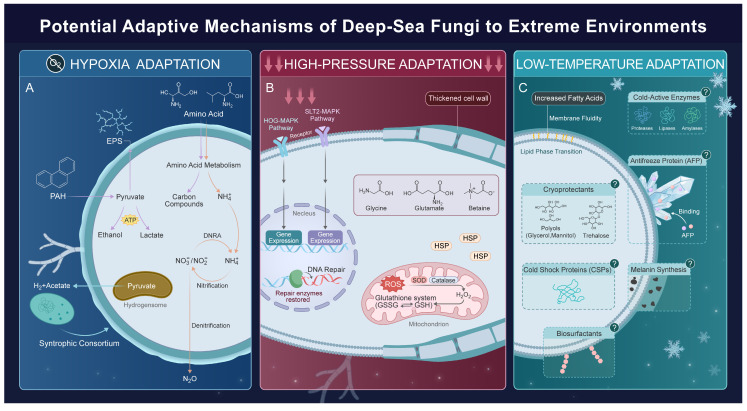 Figure 2
Peer Reviews
No public reviews on file for this paper yet. If you reviewed it on a platform where reviews are public (OpenReview, ICLR, NeurIPS, ICML), you can paste yours below so the community can read it here.
Videos
No videos yet. Explain this paper in a talk, walkthrough, or lecture? Add one.
Taxonomy
TopicsProtist diversity and phylogeny · Marine Biology and Ecology Research · Marine Ecology and Invasive Species