Indocyanine Green Sentinel Lymph Node Mapping as a Tool for Personalized Surgical Management in Uterine Corpus Cancer: A Single-Center Comparative Study
Krzysztof Nowak, Wiktor Bek, Maja Mrugała, Zofia Borowiec, Ewa Milnerowicz-Nabzdyk

TL;DR
This study shows that using indocyanine green for sentinel lymph node mapping in uterine cancer surgery is safe and leads to fewer complications and shorter hospital stays compared to other lymph node procedures.
Contribution
The study provides evidence that sentinel lymph node mapping with ICG is a safer alternative to traditional lymph node dissection in uterine corpus cancer.
Findings
SLN mapping had a 0% complication rate and shorter hospital stays compared to other lymph node procedures.
Obesity was associated with higher complication rates and fewer lymph nodes resected.
Successful ICG injection and SLN mapping were more frequent in the SLN group.
Abstract
Objectives: This study aimed to investigate the usefulness and safety of sentinel lymph node (SLN) mapping in comparison to other types of lymph node dissection in patients with uterine corpus cancers. Methods: Retrospective data from 161 patients subjected to uterine corpus cancer staging with SLN mapping with indocyanine green (ICG) dye were collected. Results: SLN procedure was associated with a complication rate of 0%, a median number of dissected lymph nodes of 2 (range 0–13), and a median hospitalization following surgery of 5 (range:2–23) days. Systemic lymphadenectomy and one-sided pelvic lymph node resection were associated with the highest percentage of complications (12% and 25%; p = 0.0030), while the post-surgery course was uneventful for the selective lymphadenectomy group and SLN. Complication rates were the highest in patients with obesity and severe obesity (5.1% and…
Genes, proteins, chemicals, diseases, species, mutations and cell lines named across the full text — each resolved to its canonical identifier and authoritative record.
Click any figure to enlarge with its caption.
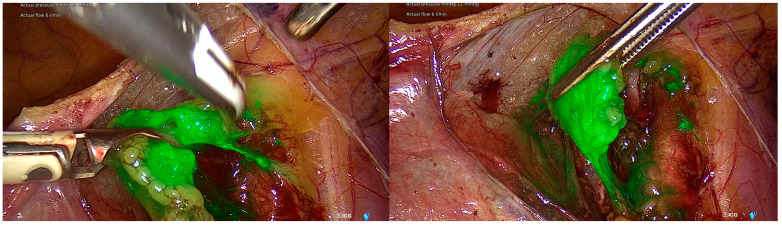 Figure 1
Peer Reviews
No public reviews on file for this paper yet. If you reviewed it on a platform where reviews are public (OpenReview, ICLR, NeurIPS, ICML), you can paste yours below so the community can read it here.
Videos
No videos yet. Explain this paper in a talk, walkthrough, or lecture? Add one.
Taxonomy
TopicsEndometrial and Cervical Cancer Treatments · Lymphatic System and Diseases · Breast Cancer Treatment Studies