The Morphometry of Male Genitalia as a Reliable Tool for Identifying Forest Pests Dendrolimus sibiricus, D. pini (Lepidoptera: Lasiocampidae), and Their Hybrids in Eurasia
Maria A. Ryazanova, Alexander A. Ageev, Sergey Yu. Sinev, Alexey Yu. Matov, Stanislav Gomboc, Margarita G. Kovalenko, Evgeny N. Akulov, Denis A. Demidko, Dmitrii L. Musolin, Natalia I. Kirichenko

TL;DR
This study shows that male genitalia measurements can reliably distinguish between two destructive forest pests and their hybrids, aiding in pest monitoring and control.
Contribution
The first comprehensive morphometric analysis of male genitalia for identifying Dendrolimus sibiricus, D. pini, and their hybrids.
Findings
D. sibiricus has significantly larger genital structures compared to D. pini, with hybrids showing intermediate measurements.
Diagnostic indices like HL/VL and CGPI effectively distinguish species and hybrids based on genital morphology.
Abstract
The Siberian moth, Dendrolimus sibiricus Tschetverikov, is one of the most destructive conifer pests in Northern Asia, causing severe ecological and economic losses. In Russia, its range overlaps with that of the closely related pine-tree lappet Dendrolimus pini (L.), and this raises the potential for hybridization and complicates accurate identification, particularly in the context of the potential westward expansion of D. sibiricus. Here, we present the first comprehensive morphometric analysis of male genitalia aimed at distinguishing these two major forest pests and their hybrids. The study was based on D. sibiricus and D. pini specimens collected during the last 130 years (1894–2024) across Europe and Asia, including their hybrids reared indoors by crossing D. pini females with D. sibiricus males in 1956 and preserved in the collection of the Zoological Institute of the Russian…
Genes, proteins, chemicals, diseases, species, mutations and cell lines named across the full text — each resolved to its canonical identifier and authoritative record.
Click any figure to enlarge with its caption.
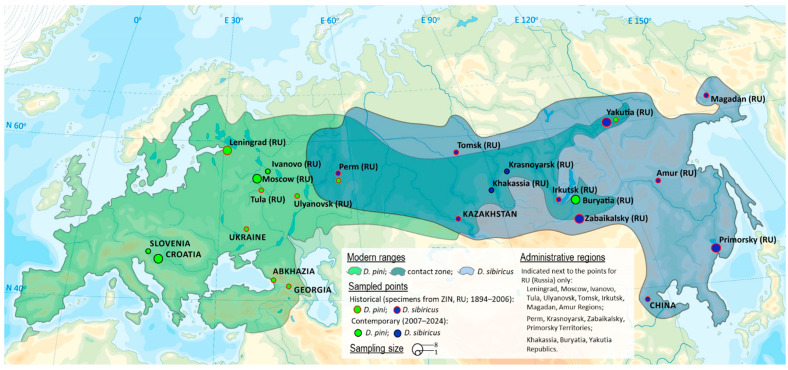 Figure 1
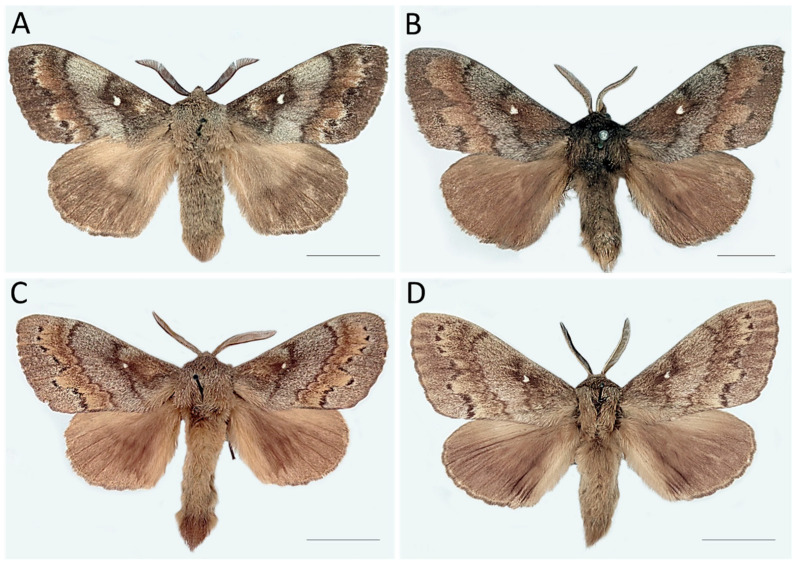 Figure 2
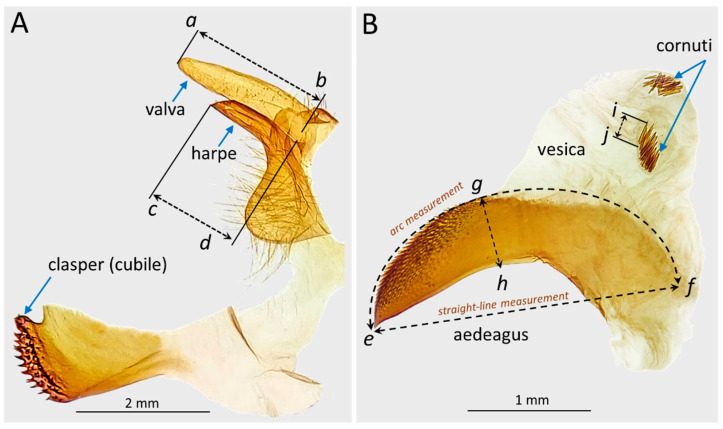 Figure 3
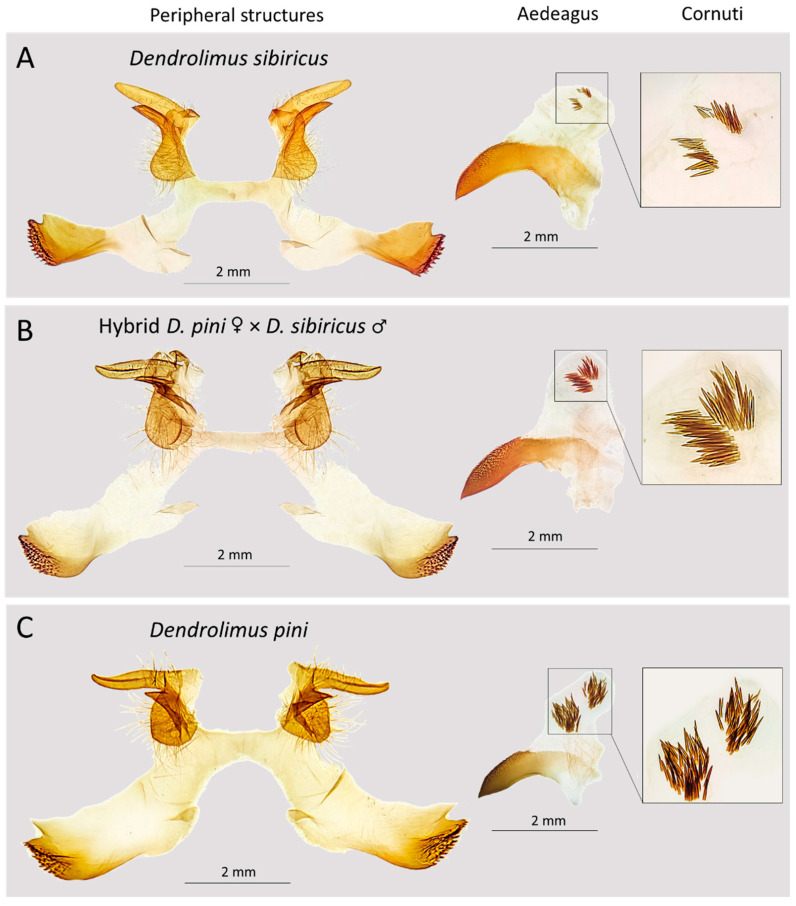 Figure 4
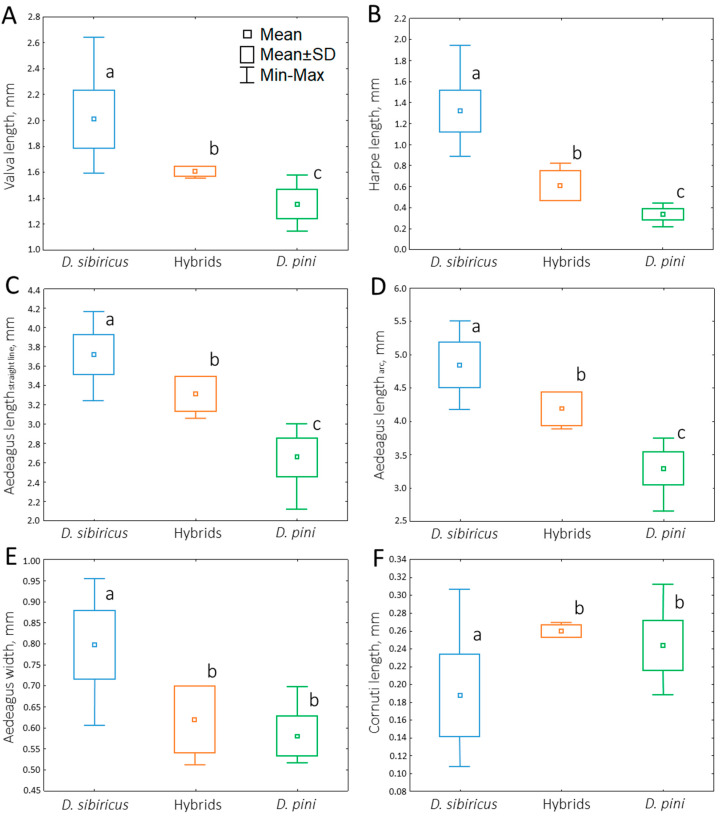 Figure 5
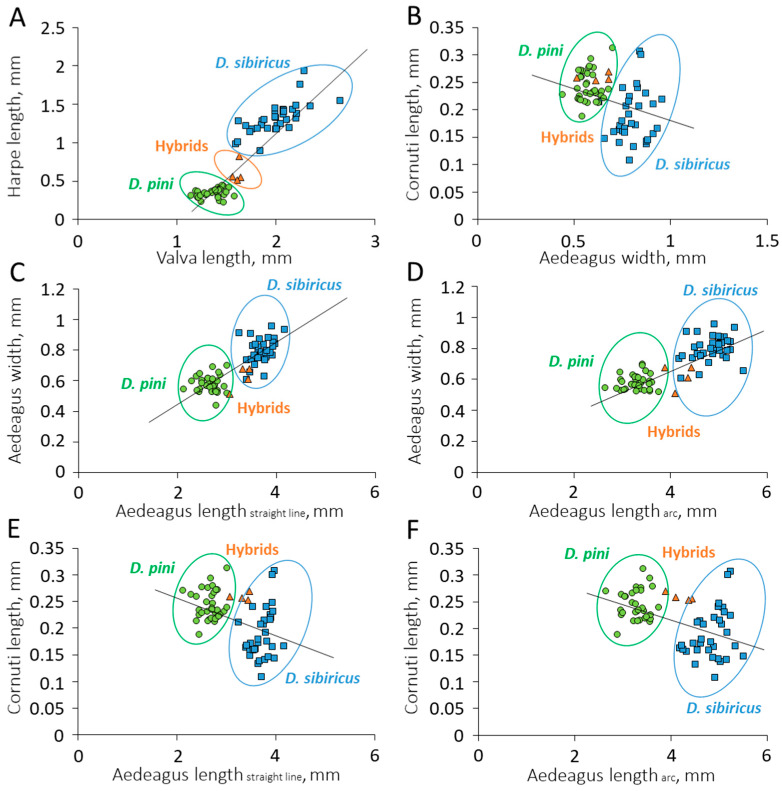 Figure 6
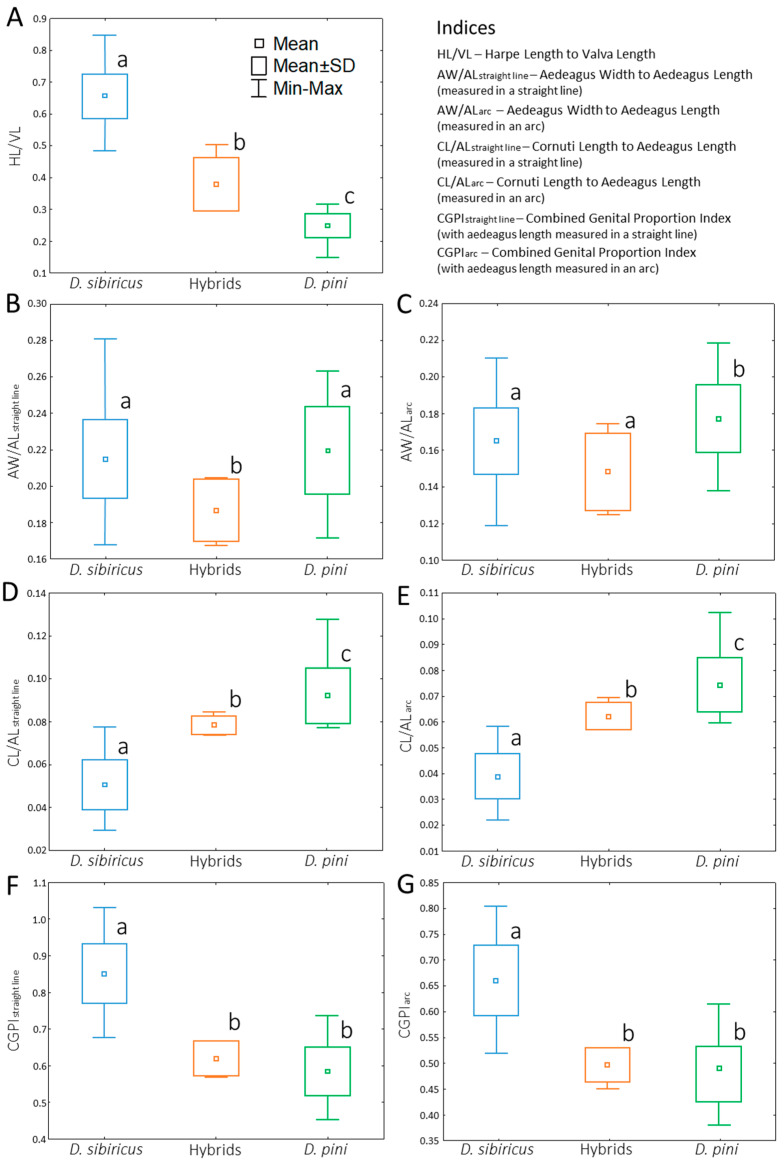 Figure 7
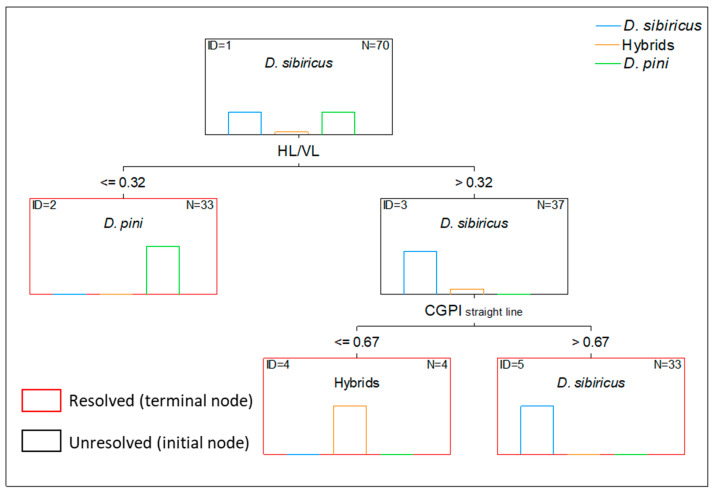 Figure 8
Peer Reviews
No public reviews on file for this paper yet. If you reviewed it on a platform where reviews are public (OpenReview, ICLR, NeurIPS, ICML), you can paste yours below so the community can read it here.
Videos
No videos yet. Explain this paper in a talk, walkthrough, or lecture? Add one.
Taxonomy
TopicsInsect Pheromone Research and Control · Lepidoptera: Biology and Taxonomy · Entomological Studies and Ecology