Magnetoelectric Coupling in Ba0.85Ca0.15Ti0.92Zr0.08O3 with Ultra-Low Concentrations of CoFe2O4
Alejandro Campos-Rodríguez, Brayan Carmona-Conejo, Miguel H. Bocanegra-Bernal, Gabriel Rojas-George, Armando Reyes-Rojas

TL;DR
This paper studies how adding small amounts of CoFe2O4 to a specific ceramic material enhances its magnetoelectric coupling, useful for advanced electronic devices.
Contribution
The study demonstrates enhanced magnetoelectric coupling at ultra-low CoFe2O4 concentrations in a Ba-Ca-Ti-Zr-O composite.
Findings
Adding 0.2-0.3 mol% CoFe2O4 increases magnetoelectric coupling to 4.9 μC/cm² under 50 Oe magnetic field.
The material shows high dielectric permittivity (5070) and mechanical stability due to compressive residual stress.
Phase boundary shifts and structural stability are confirmed via Rietveld refinement and Raman spectroscopy.
Abstract
Magnetoelectric (ME) materials that exhibit simultaneous coupling between electric polarization and magnetization have attracted significant attention due to their potential technological applications in the emerging generation of multifunctional devices. In this research, Ba0.85Ca0.15Ti0.92Zr0.08O3-CoFe2O4:x (x = 0.1, 0.2, 0.3% mol) composites were synthesized using solid-state and sol–gel combustion chemical methods to elucidate their ME coupling at ultra-low concentrations of the magnetic phase. Rietveld refinement and Raman spectroscopy results confirm a shift in the morphotropic phase boundary (MPB), evidenced by an increase in the tetragonal phase relative to the orthorhombic structure. High stability of the P4mm and Amm2 symmetries is reached at 1300 °C without diffusion of Fe and Co into the octahedral site. At this temperature, the CoFe2O4 spinel structure remains stable…
Genes, proteins, chemicals, diseases, species, mutations and cell lines named across the full text — each resolved to its canonical identifier and authoritative record.
Click any figure to enlarge with its caption.
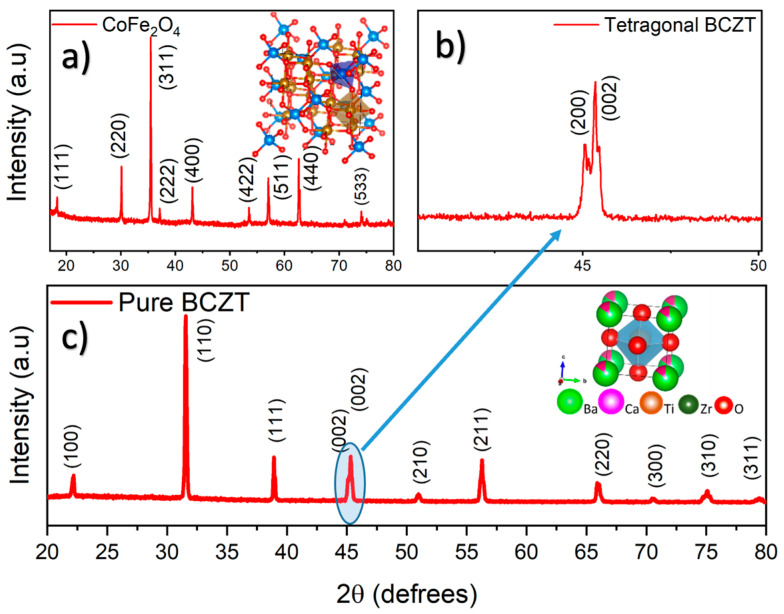 Figure 1
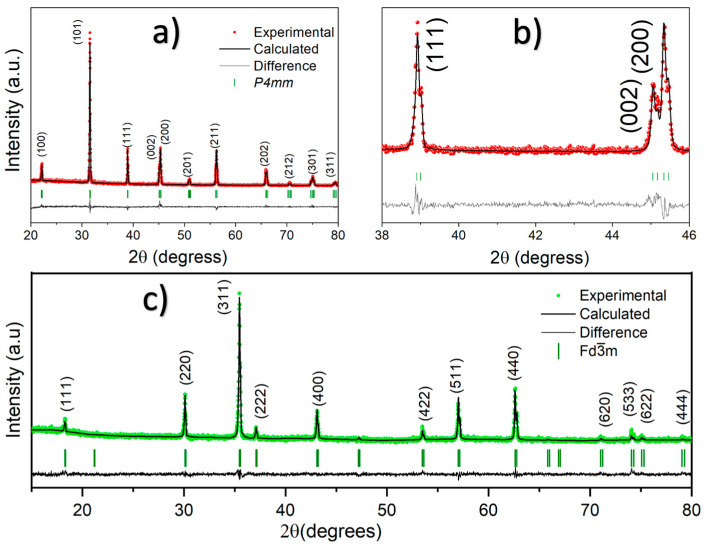 Figure 2
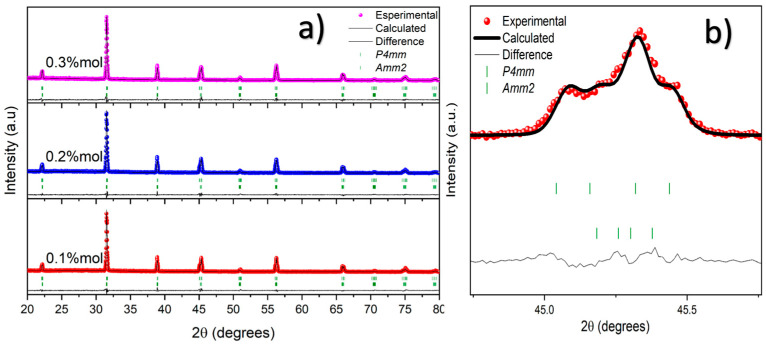 Figure 3
 Figure 4
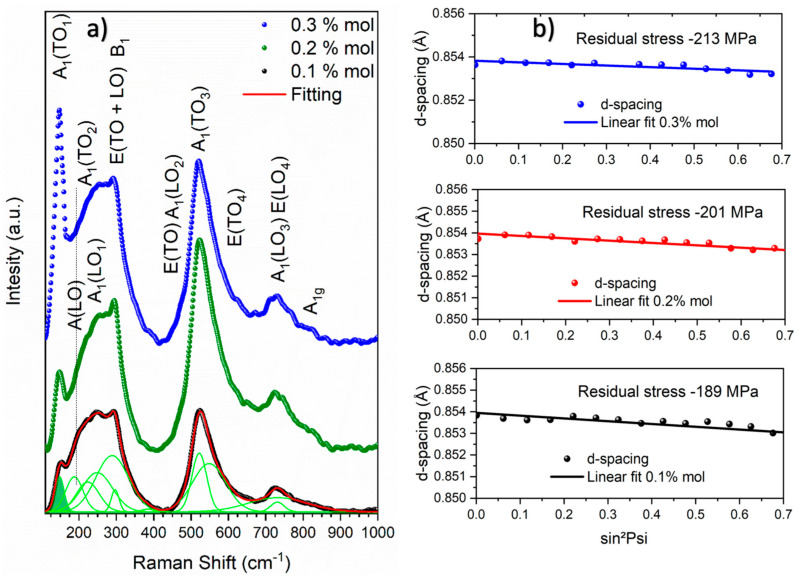 Figure 5
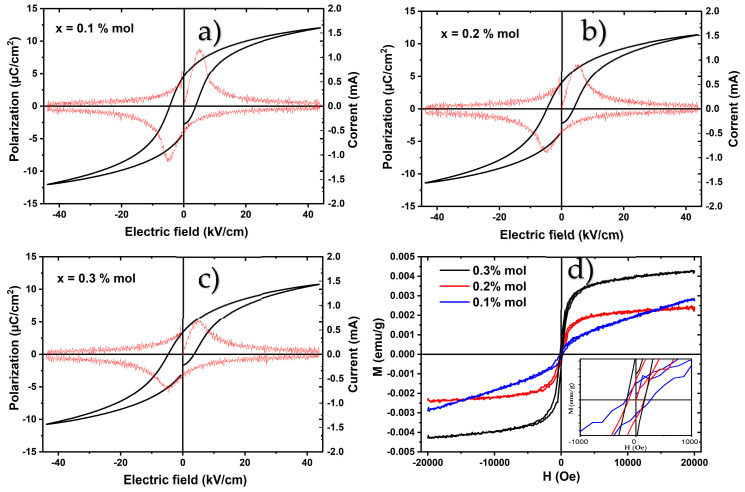 Figure 6
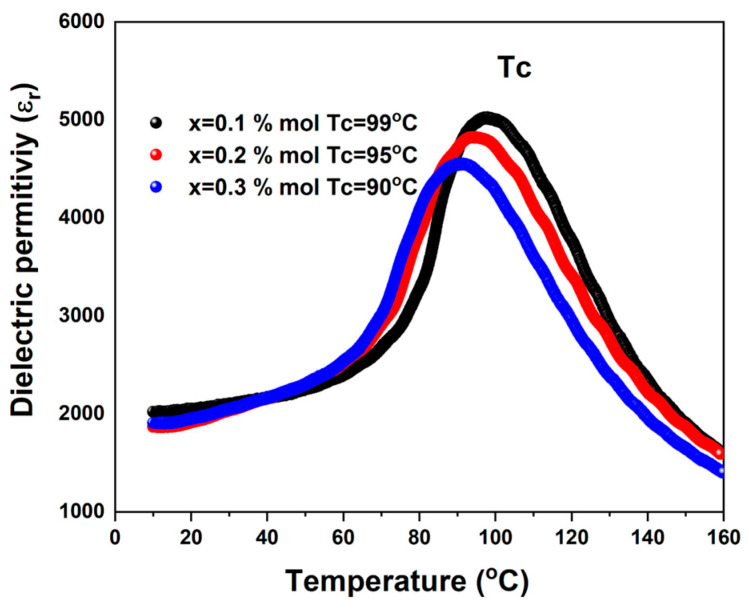 Figure 7
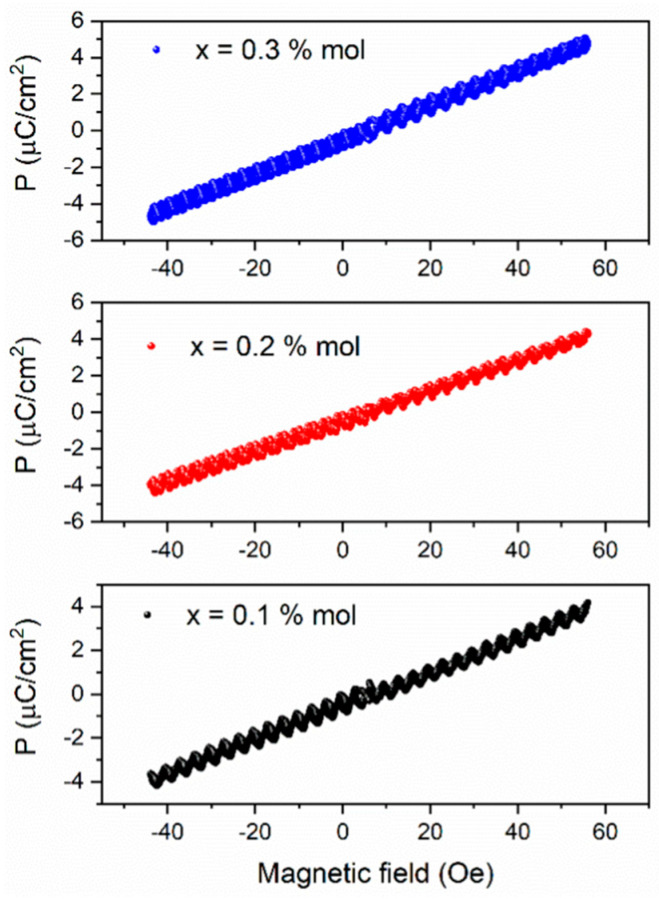 Figure 8
Peer Reviews
No public reviews on file for this paper yet. If you reviewed it on a platform where reviews are public (OpenReview, ICLR, NeurIPS, ICML), you can paste yours below so the community can read it here.
Videos
No videos yet. Explain this paper in a talk, walkthrough, or lecture? Add one.
Taxonomy
TopicsMultiferroics and related materials · Magnetic Properties and Synthesis of Ferrites · Ferroelectric and Piezoelectric Materials