Dynamics and Predictive Values of Urinary Podocyte Biomarkers Following SGLT2 Inhibition in CKD
Alexandra Urs, Diana Moldovan, Crina Claudia Rusu, Cosmina Ioana Bondor, Alina Ramona Potra, Dacian Tirinescu, Maria Țicală, Yuriy Maslyennikov, Andrada Alina Bărar, Ioana Dînșoreanu, Ina Maria Kacso

TL;DR
This study shows that urinary podocyte biomarkers, especially podocalyxin, can detect early kidney responses to SGLT2 inhibitors in patients with chronic kidney disease.
Contribution
The study identifies podocalyxin as a novel, sensitive biomarker for early renal response to SGLT2 inhibitors in CKD patients with low albuminuria.
Findings
Baseline podocalyxin predicted transient eGFR dip and UACR reduction following SGLT2i initiation.
Early decreases in podocin and podocalyxin were linked to eGFR decline and lower UACR at 3 months.
Podocalyxin showed the highest discriminative accuracy in predicting short-term eGFR decline.
Abstract
Podocyte injury is an early hallmark of chronic kidney disease (CKD) and can be influenced by SGLT2 inhibitors (SGLT2i). Early effects of SGLT2i include transient estimated glomerular filtration rate (eGFR) dip and reduced proteinuria; however, the latter may be subtle in patients with normal or moderately increased albuminuria. In such cases, urinary podocyte-derived biomarkers may provide sensitive early indicators of SGLT2i effect. This study prospectively assessed short-term changes in urinary podocyte biomarkers (nephrin, podocin, podocalyxin) following SGLT2i initiation in diabetic and non-diabetic CKD patients. Our cohort had a low urinary albumin to creatinine ratio (UACR) of 19.09 mg/g (6.28; 164.93) and preserved eGFR 45 mL/min/1.73 m2 (36.85; 53.15). At baseline, podocyte biomarkers were mutually correlated, whereas only podocalyxin was associated with UACR. Baseline…
Genes, proteins, chemicals, diseases, species, mutations and cell lines named across the full text — each resolved to its canonical identifier and authoritative record.
Click any figure to enlarge with its caption.
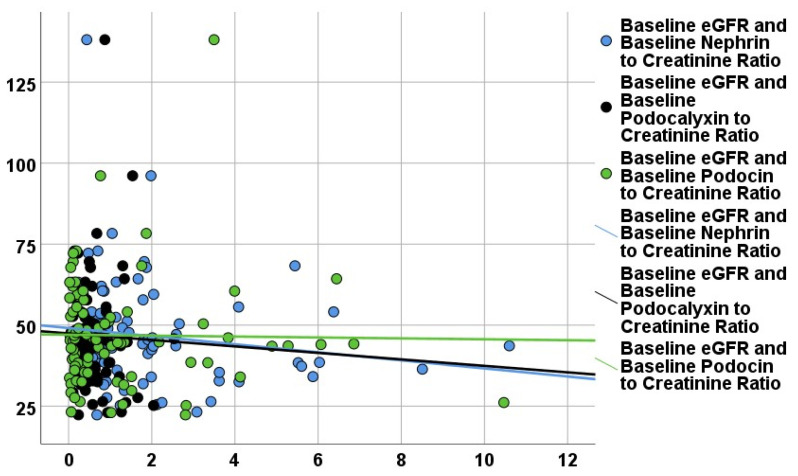 Figure 1
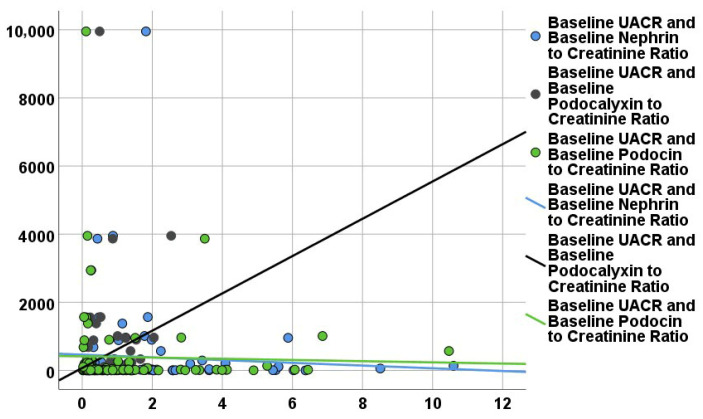 Figure 2
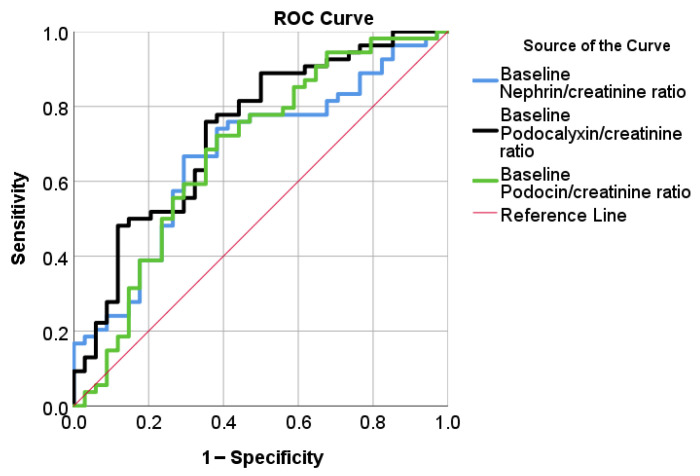 Figure 3
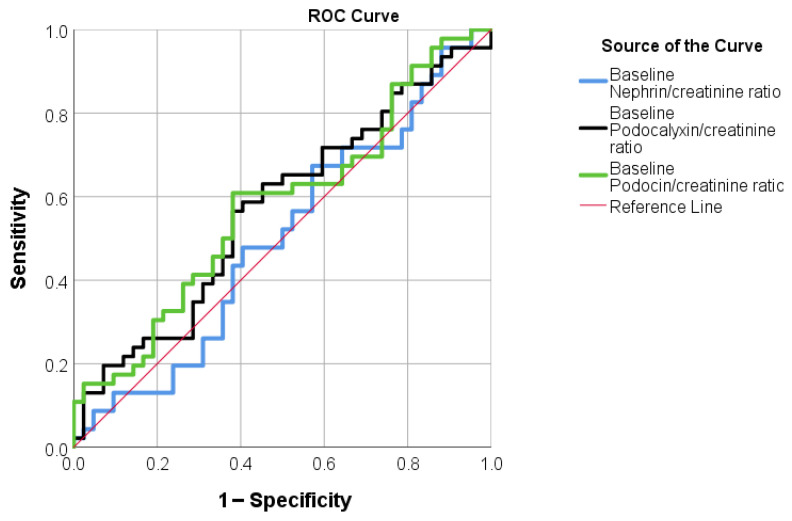 Figure 4
Peer Reviews
No public reviews on file for this paper yet. If you reviewed it on a platform where reviews are public (OpenReview, ICLR, NeurIPS, ICML), you can paste yours below so the community can read it here.
Videos
No videos yet. Explain this paper in a talk, walkthrough, or lecture? Add one.
Taxonomy
TopicsRenal Diseases and Glomerulopathies · Chronic Kidney Disease and Diabetes · Renal Transplantation Outcomes and Treatments