Carob Tree: A Review of Traditional Uses, Medicinal Properties, and Future Perspectives in Sustainable Forestry
Abdelkader Gadoum, Abdelkader Difallah, Ahmed Adda, Othmane Merah

TL;DR
The carob tree is a versatile plant with medicinal properties and potential for sustainable use in agriculture and industry.
Contribution
This review provides a comprehensive analysis of carob's phytochemicals and their applications, emphasizing its underutilized potential in sustainable forestry.
Findings
Carob contains bioactive compounds like gallic acid, quercetin, and luteolin with antioxidant and antimicrobial properties.
Carob-derived products such as locust bean gum and polyphenol extracts have applications in cosmetics, food, and pharmaceuticals.
Carob cultivation offers ecological and economic benefits, particularly in regions like Algeria.
Abstract
The carob tree (Ceratonia siliqua L.) is indigenous to the Mediterranean basin, noted for its adaptability to biotic and abiotic stresses and its long history of use in traditional agroforestry systems. This review critically analyzes the phytochemical composition of carob, its traditional medicinal uses, and its contemporary applications in the cosmetic, pharmaceutical, and agri-food sectors. Particular attention is placed on the valorization of carob pods, seeds, and leaves, which are transformed into high-value products, including locust bean gum and polyphenol-rich extracts. Recent studies indicate that carob is a rich source of bioactive compounds, particularly phenolic acids and flavonoids such as gallic acid, chlorogenic acid, ellagic acid, catechins, quercetin, and luteolin. These compounds have primarily been investigated in vitro and in vivo, where they exhibited antioxidant,…
Genes, proteins, chemicals, diseases, species, mutations and cell lines named across the full text — each resolved to its canonical identifier and authoritative record.
Click any figure to enlarge with its caption.
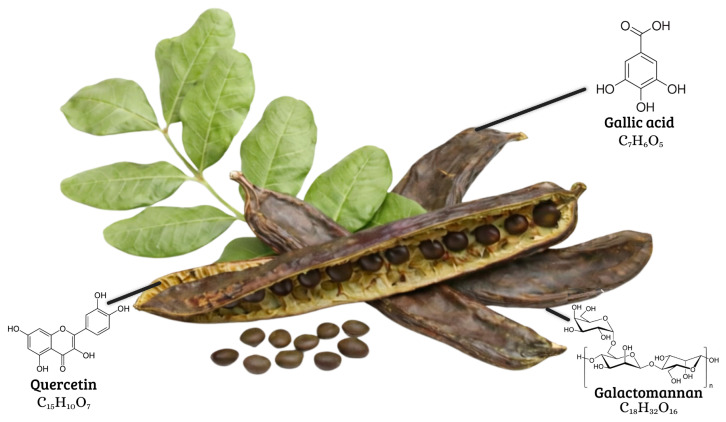 Figure 1
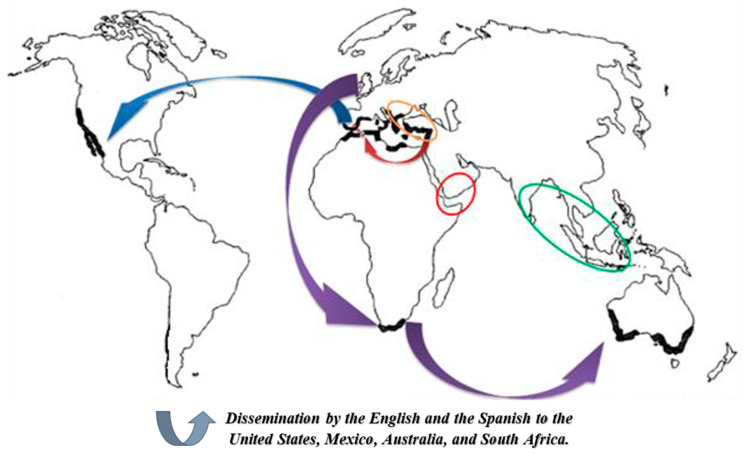 Figure 2
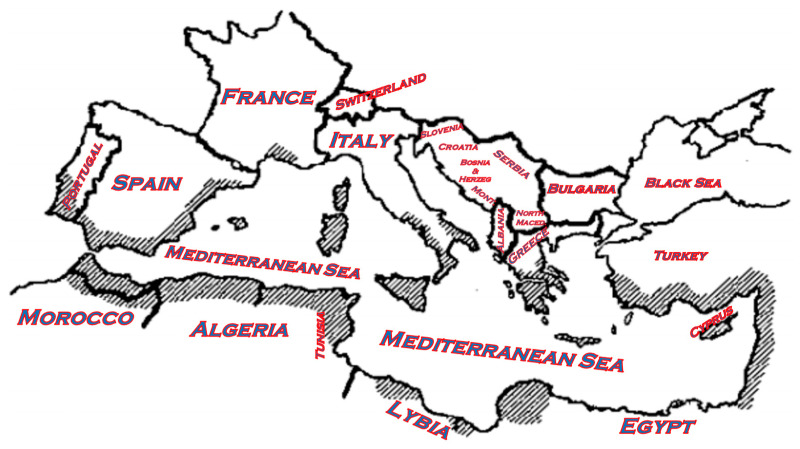 Figure 3
Peer Reviews
No public reviews on file for this paper yet. If you reviewed it on a platform where reviews are public (OpenReview, ICLR, NeurIPS, ICML), you can paste yours below so the community can read it here.
Videos
No videos yet. Explain this paper in a talk, walkthrough, or lecture? Add one.
Taxonomy
TopicsPolysaccharides Composition and Applications · Polysaccharides and Plant Cell Walls · Hibiscus Plant Research Studies