Modification of Polysulfone Substrate with GO–PAMAM Nanocomposite for Improved Desalination Performance
Mohd Muzammil Zubair, Ahmed T. Yasir, Abdelbaki Benamor, Syed Javaid Zaidi

TL;DR
This paper introduces a new method to improve desalination membranes using a nanocomposite, resulting in better water filtration and fouling resistance.
Contribution
A GO–PAMAM nanocomposite is used to modify polysulfone substrates, achieving high salt rejection and water flux in reverse osmosis membranes.
Findings
A 0.06 wt% GO-PAMAM loading produced a membrane with 95.88% NaCl rejection and 42.6 L m−2 h−1 water flux.
The optimized membrane retained 93% of its initial flux after fouling, showing improved fouling resistance.
The method is scalable and offers a substrate-level modification strategy for next-generation RO membranes.
Abstract
Globally, freshwater scarcity is driving the urgent demand for advanced and new desalination technologies to overcome the shortage of clean water. Reverse osmosis (RO) membranes dominate seawater and brackish water treatment but are limited by the permeability–selectivity trade-off, fouling, and structural instability. To overcome these challenges, we employed a phase inversion process to fabricate polysulfone (PSF) supports embedded with a graphene oxide–poly(amidoamine) (GO-PAMAM) nanocomposite at three concentrations (0.03, 0.06, and 0.10 wt%), alongside a pristine control membrane with no GO-PAMAM. Systematic variation in GO-PAMAM loading revealed that a 0.06 wt% nanoparticle helps in producing a more uniform polyamide layer that achieves a high NaCl rejection (95.88%) and higher water flux (42.6 L m−2 h−1). The performance was evaluated at an operating pressure of 20 bar with a…
Genes, proteins, chemicals, diseases, species, mutations and cell lines named across the full text — each resolved to its canonical identifier and authoritative record.
Click any figure to enlarge with its caption.
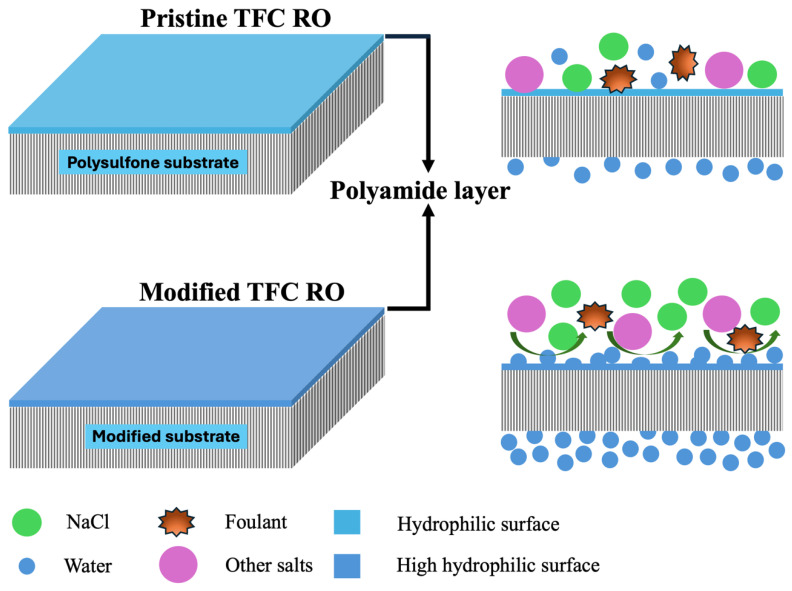 Figure 1
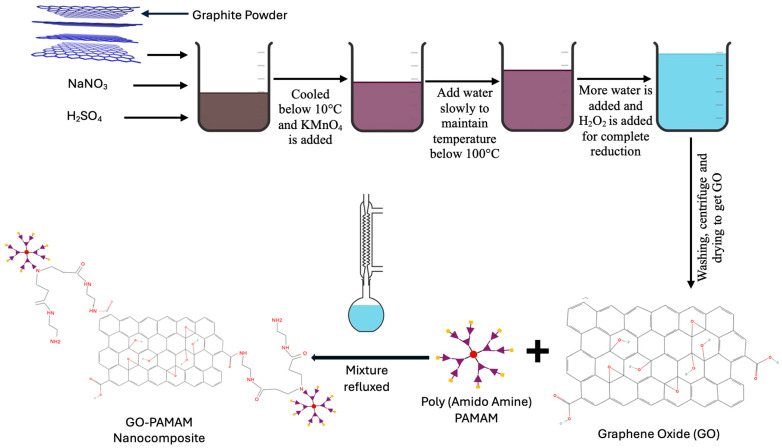 Figure 2
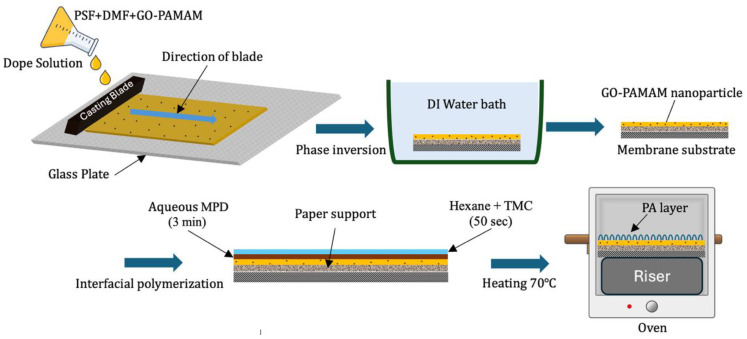 Figure 3
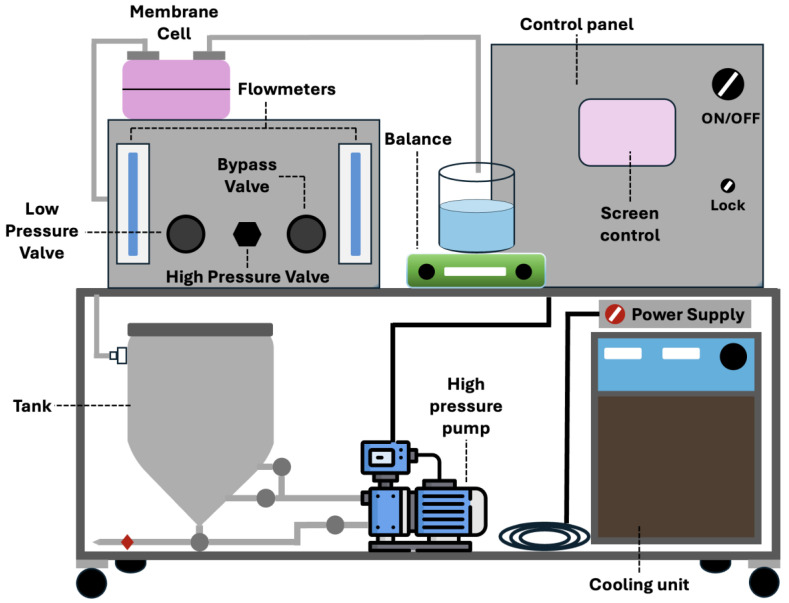 Figure 4
 Figure 5
 Figure 6
 Figure 7
 Figure 8
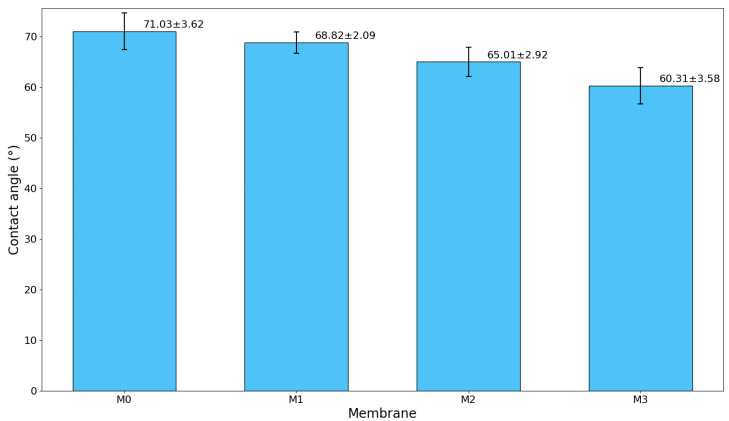 Figure 9
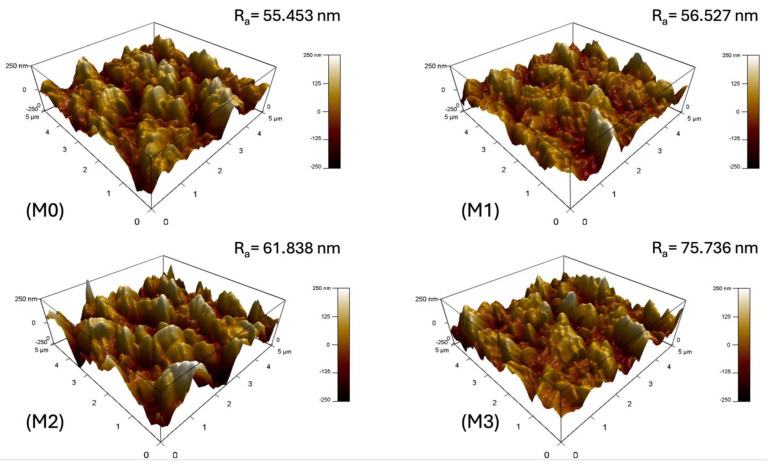 Figure 10
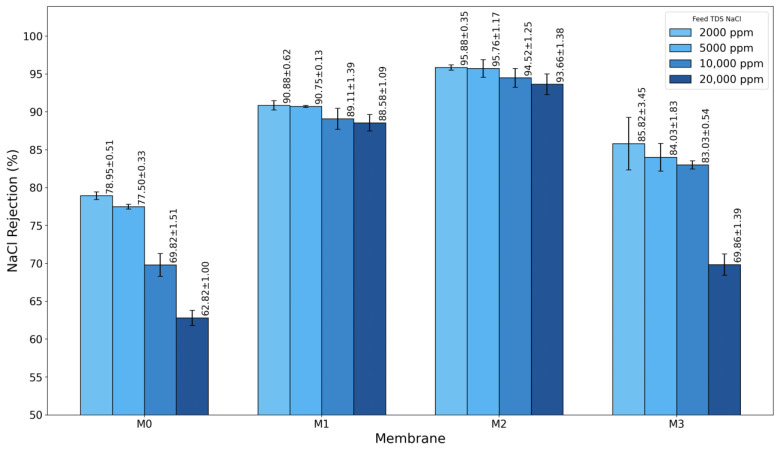 Figure 11
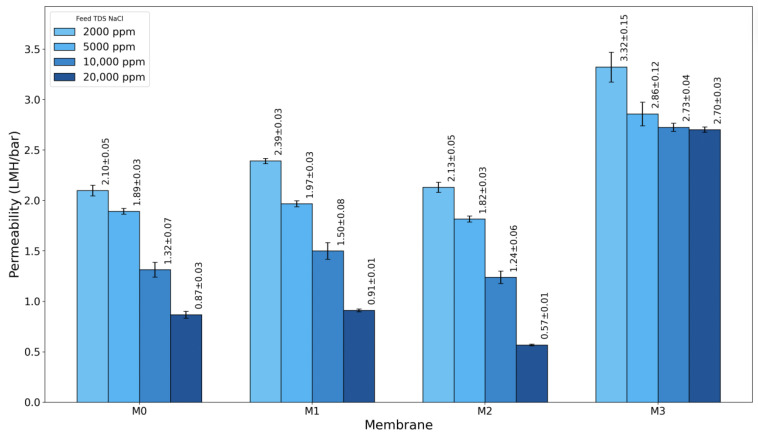 Figure 12
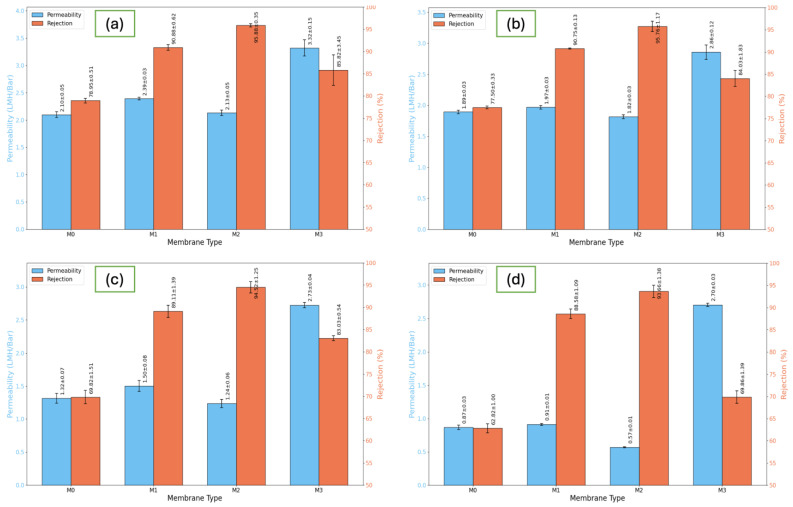 Figure 13
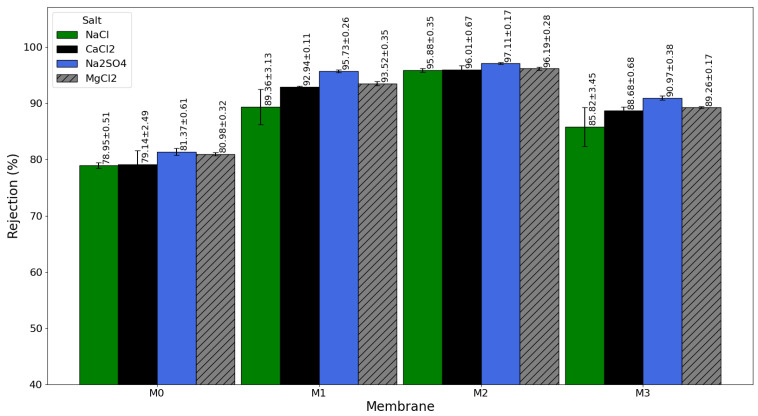 Figure 14
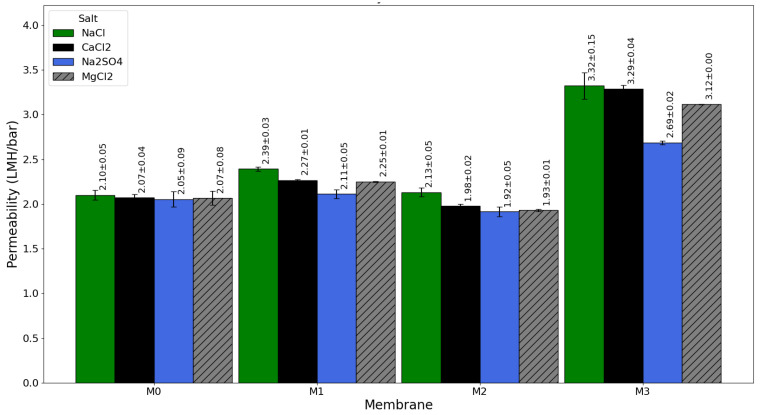 Figure 15
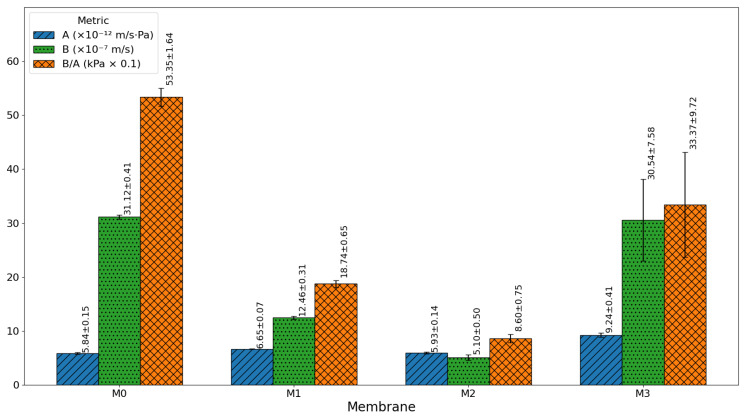 Figure 16
 Figure 17
 Figure 18
 Figure 19
Peer Reviews
No public reviews on file for this paper yet. If you reviewed it on a platform where reviews are public (OpenReview, ICLR, NeurIPS, ICML), you can paste yours below so the community can read it here.
Videos
No videos yet. Explain this paper in a talk, walkthrough, or lecture? Add one.
Taxonomy
TopicsMembrane Separation Technologies · Membrane-based Ion Separation Techniques · Nanopore and Nanochannel Transport Studies