Optimizing Radiographic Diagnosis Through Signal-Balanced Convolutional Models
Sakina Juzar Neemuchwala, Raja Hashim Ali, Qamar Abbas, Talha Ali Khan, Ambreen Shahnaz, Iftikhar Ahmed

TL;DR
This paper introduces a deep learning framework that improves chest X-ray diagnosis by combining signal fidelity analysis with transfer learning, achieving high accuracy and transparency.
Contribution
A novel explainable deep learning framework integrating signal fidelity and transfer learning for reliable and transparent medical image diagnosis.
Findings
ResNet-50 achieved the highest classification accuracy (93.7%) and macro-AUC = 0.97 on a chest X-ray dataset.
EfficientNetB3 demonstrated superior generalization with reduced parameter overhead.
Grad-CAM visualizations confirmed anatomically coherent activations aligned with pathological regions.
Abstract
Accurate interpretation of chest radiographs is central to the early diagnosis and management of pulmonary disorders. This study introduces an explainable deep learning framework that integrates biomedical signal fidelity analysis with transfer learning to enhance diagnostic reliability and transparency. Using the publicly available COVID-19 Radiography Dataset (21,165 chest X-ray images across four classes: COVID-19, Viral Pneumonia, Lung Opacity, and Normal), three architectures, namely baseline Convolutional Neural Network (CNN), ResNet-50, and EfficientNetB3, were trained and evaluated under varied class-balancing and hyperparameter configurations. Signal preservation was quantitatively verified using the Structural Similarity Index Measure (SSIM = 0.93 ± 0.02), ensuring that preprocessing retained key diagnostic features. Among all models, ResNet-50 achieved the highest…
Genes, proteins, chemicals, diseases, species, mutations and cell lines named across the full text — each resolved to its canonical identifier and authoritative record.
Click any figure to enlarge with its caption.
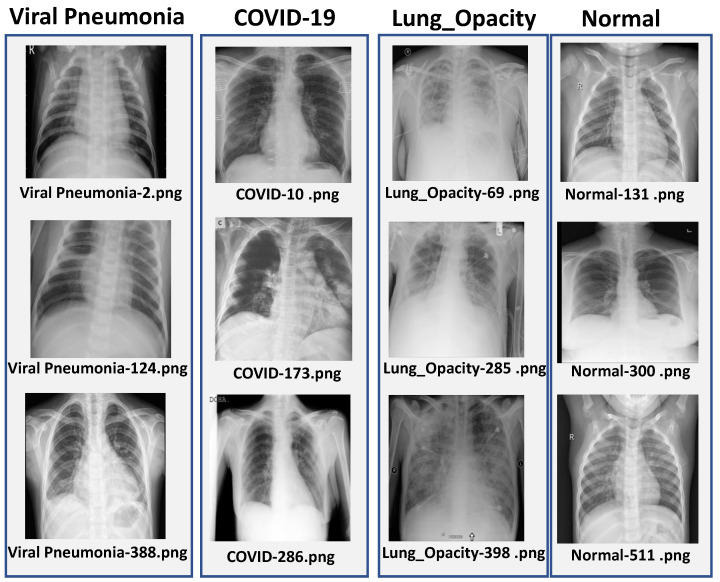 Figure 1
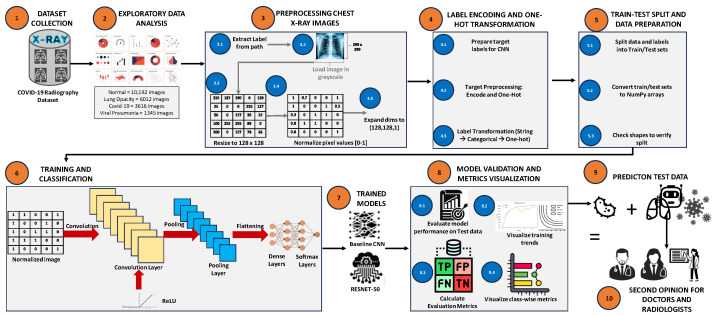 Figure 2
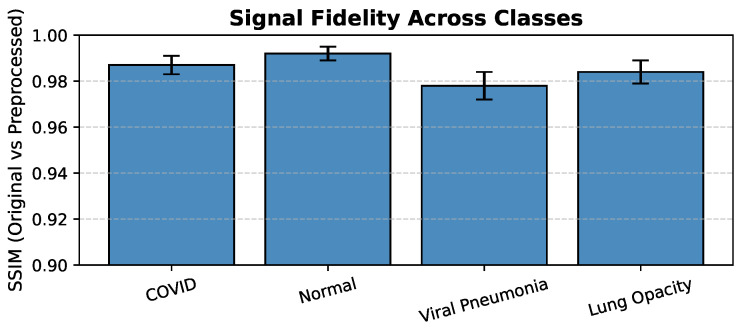 Figure 3
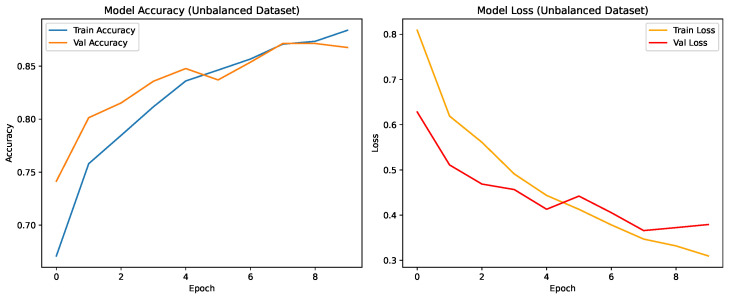 Figure 4
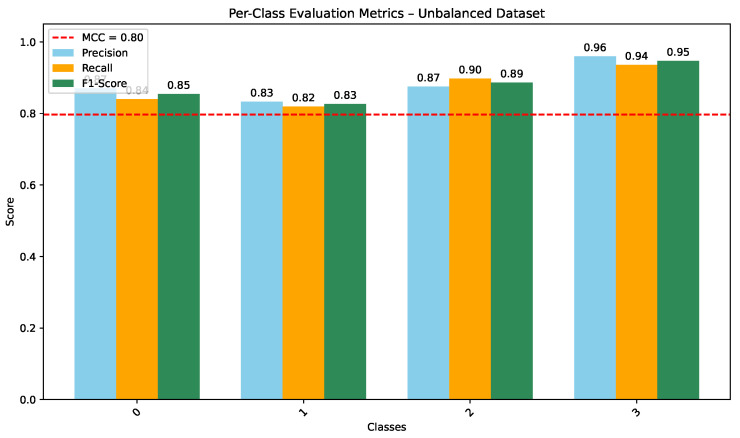 Figure 5
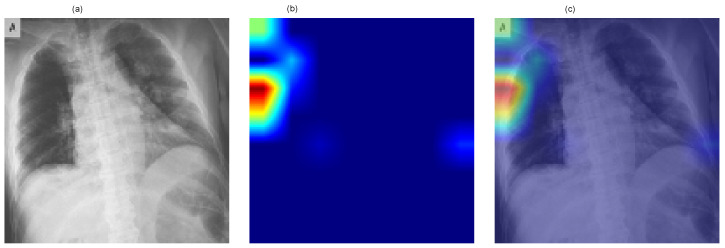 Figure 6
Peer Reviews
No public reviews on file for this paper yet. If you reviewed it on a platform where reviews are public (OpenReview, ICLR, NeurIPS, ICML), you can paste yours below so the community can read it here.
Videos
No videos yet. Explain this paper in a talk, walkthrough, or lecture? Add one.
Taxonomy
TopicsCOVID-19 diagnosis using AI · AI in cancer detection · Ultrasound in Clinical Applications