Chrysogenones A–E: Malonyl-Modified Ergosterone Derivatives from Deep-Sea-Derived Penicillium sp. MCCC 3A00121 as Inhibitors of Renal Fibroblast Activation
Zeqing Li, Lei Chen, Yuan Wang, Mengjiao Jiang, Siyu Fang, Rong Chao, Taizong Wu, Tianhua Zhong

TL;DR
Scientists discovered five new steroid compounds from a deep-sea fungus that can inhibit kidney fibrosis by targeting specific proteins.
Contribution
The discovery of chrysogenones A–E, a new class of malonyl-modified ergosterone derivatives with anti-renal fibrotic activity.
Findings
Chrysogenones A–E were identified as ergosterone derivatives with a rare malonyl substitution at C-12.
Chrysogenone B showed the strongest inhibition of renal fibroblast activation and cell proliferation.
Molecular docking suggests compound 2 interacts with targets like AKT1, HSP90AA1, and MDM2 to exert its effects.
Abstract
Five previously undescribed steroids, chrysogenones A–E (1–5), were isolated from the deep-sea-derived Penicillium sp. MCCC 3A00121. Their chemical structures were unambiguously established through comprehensive spectroscopic analyses, density functional theory (DFT)-based electronic circular dichroism (ECD) calculations, and X-ray crystallography. Chrysogenones represent a class of oxidatively modified ergosterone-type derivatives, with 1, 2, and 5 featuring an uncommon malonyl substitution at C-12 of the ergosterone skeleton. Biologically, 1–5 exhibited varying degrees of inhibitory activity against renal fibrosis, as evidenced by the downregulation of the key fibrotic markers α-smooth muscle actin (α-SMA) and collagen I (COL1A1). Among them, chrysogenone B (2) emerged as the most promising candidate, demonstrating superior potency and pronounced inhibition of activated NRK-49F cell…
Genes, proteins, chemicals, diseases, species, mutations and cell lines named across the full text — each resolved to its canonical identifier and authoritative record.
Click any figure to enlarge with its caption.
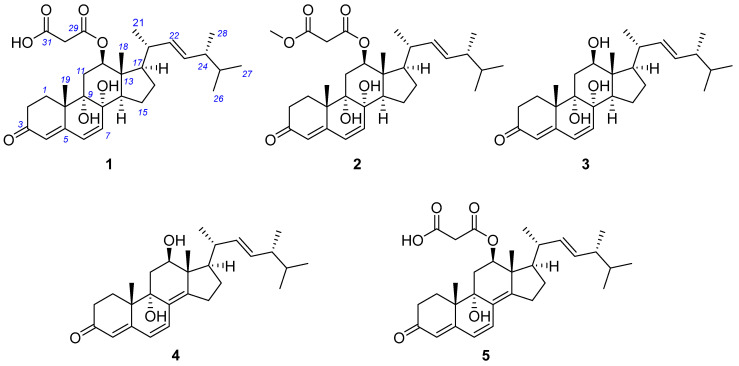 Figure 1
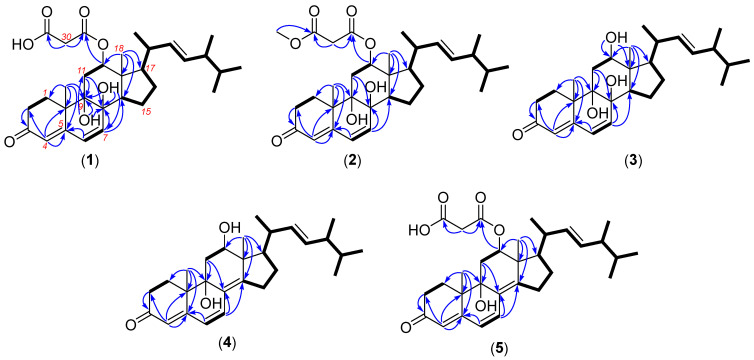 Figure 2
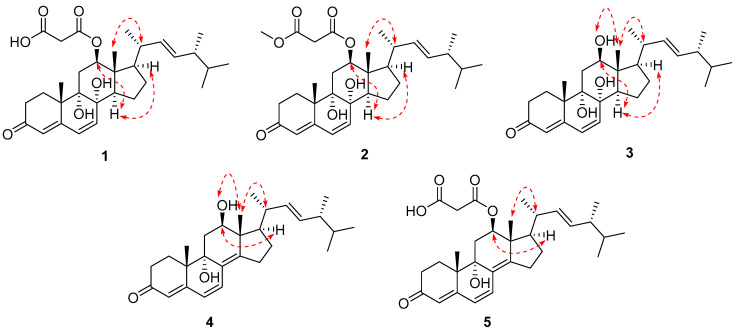 Figure 3
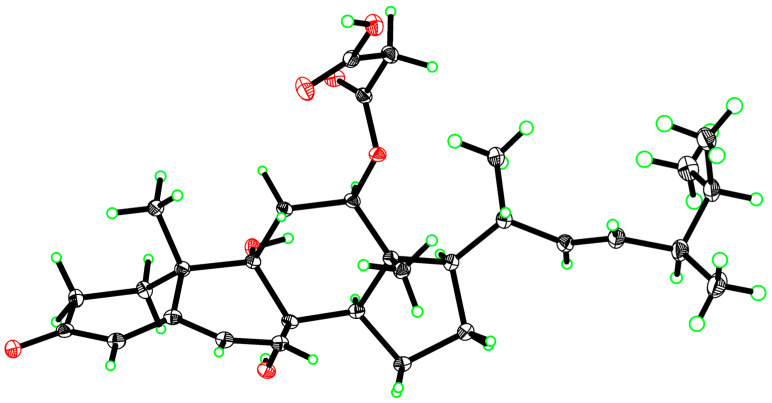 Figure 4
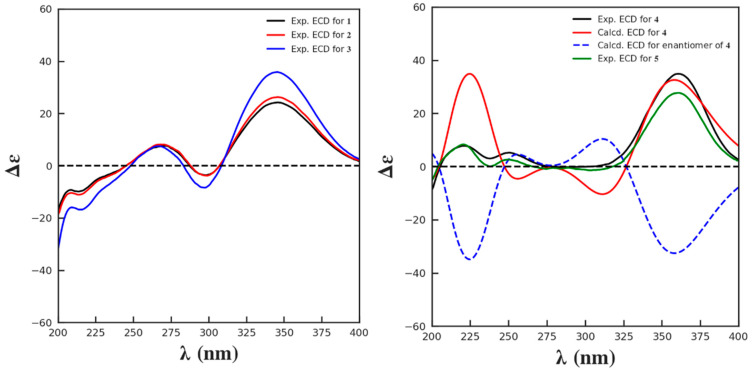 Figure 5
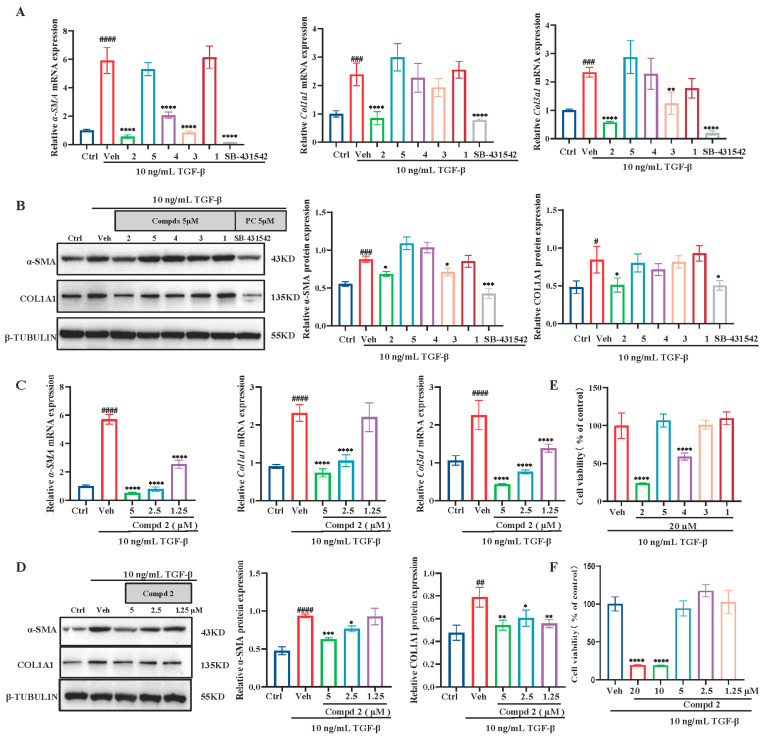 Figure 6
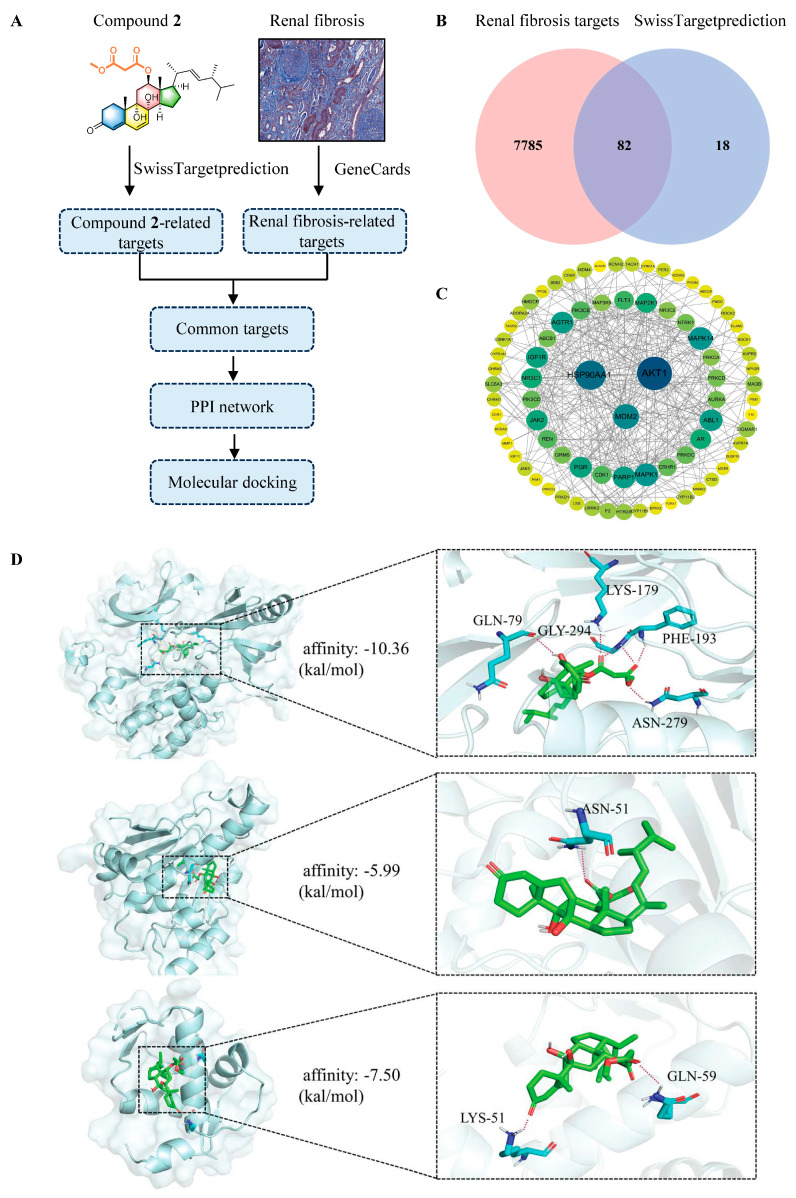 Figure 7
Peer Reviews
No public reviews on file for this paper yet. If you reviewed it on a platform where reviews are public (OpenReview, ICLR, NeurIPS, ICML), you can paste yours below so the community can read it here.
Videos
No videos yet. Explain this paper in a talk, walkthrough, or lecture? Add one.
Taxonomy
TopicsSeaweed-derived Bioactive Compounds · Fungal Biology and Applications · Microbial Natural Products and Biosynthesis