Variant-Specific Kinetics of SARS-CoV-2 Anti-Nucleocapsid Antibodies and Household Transmission in Families During Anchestral, Alpha, Delta and Omicron Periods
Filippos Filippatos, Elizabeth-Barbara Tatsi, Vassiliki Syriopoulou, Athanasios Michos

TL;DR
This study shows how SARS-CoV-2 antibody levels change over time in children and adults and how different virus variants affect household transmission.
Contribution
The study reveals variant-specific antibody kinetics and the role of pediatric cases in household transmission during different SARS-CoV-2 waves.
Findings
Anti-nucleocapsid antibody levels peaked at three months and declined, with 89.2% remaining seropositive at 12 months.
Children had higher antibody levels than adults during Delta and Omicron periods, and pediatric cases increased household transmission risk.
Antibody waning was faster in secondary cases and during Omicron, but slower in those with higher initial antibody levels.
Abstract
To investigate SARS-CoV-2 antibody kinetics and household transmission, infected children along with their families were tested for anti-nucleocapsid antibodies at 1, 3, 6, 9 and 12 months post-SARS-CoV-2 infection during the Ancestral, Alpha, Delta, and Omicron waves. We prospectively included SARS-CoV-2 acute infected children (n = 189). After household recruitment (n = 76 households), the total study population was 228 children and 105 adults. The median age (IQR) of children and adults was 96 (115) months and 504 (96) months, respectively. Anti-nucleocapsid (anti-N) COI (cut-off index) titers peaked at three months post-infection and declined thereafter (p-value < 0.001), and 89.2% remained seropositive at 12 months. Children displayed significantly higher anti-N COI titers than adults during the Delta (p-value: 0.018) and Omicron (p-value: 0.047) periods. Household contact anti-N…
Genes, proteins, chemicals, diseases, species, mutations and cell lines named across the full text — each resolved to its canonical identifier and authoritative record.
Click any figure to enlarge with its caption.
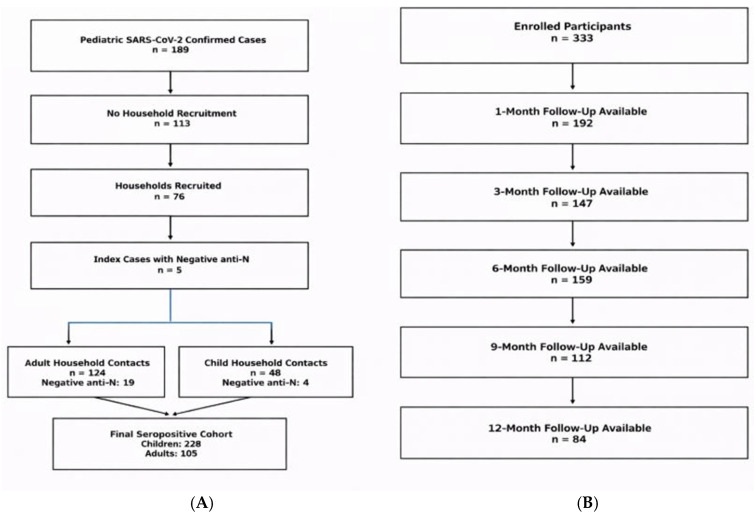 Figure 1
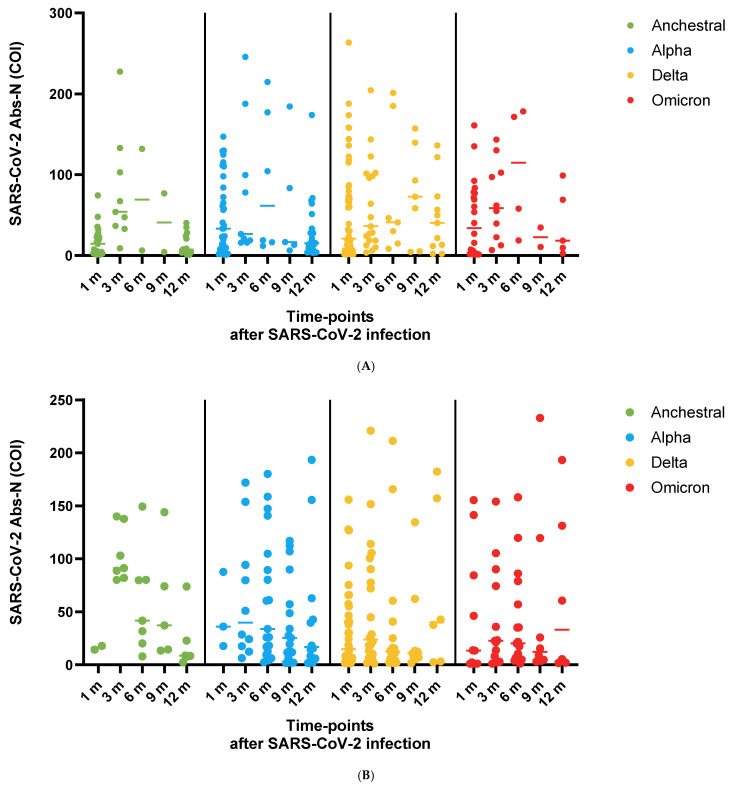 Figure 2
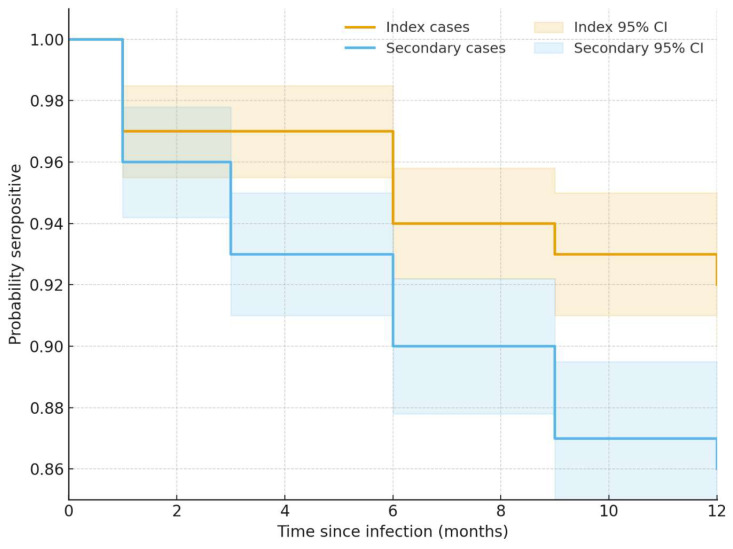 Figure 3
Peer Reviews
No public reviews on file for this paper yet. If you reviewed it on a platform where reviews are public (OpenReview, ICLR, NeurIPS, ICML), you can paste yours below so the community can read it here.
Videos
No videos yet. Explain this paper in a talk, walkthrough, or lecture? Add one.
Taxonomy
TopicsSARS-CoV-2 and COVID-19 Research · Vaccine Coverage and Hesitancy · COVID-19 epidemiological studies