Sex-Based Variations in Metal(loid) Levels in Green Tiger Shrimp (Penaeus semisulcatus, Decapoda:Penaeidae) from the Northeastern Mediterranean Coast of Türkiye: A Human Health Risk-Benefit Assessment
Mustafa Gocer, Mine Percin Olgunoglu, Ilkan Ali Olgunoglu

TL;DR
This study examines metal levels in green tiger shrimp from Turkey's Mediterranean coast, finding that metal concentrations vary by sex and location, with potential health risks in certain areas.
Contribution
The study introduces sex-specific and region-specific risk assessments for metal contamination in shrimp, highlighting localized bioaccumulation and the importance of selenium-mercury interactions.
Findings
Male shrimps in Iskenderun Bay had 10-fold higher Chromium levels than females, indicating sex-specific bioaccumulation.
Lead contamination exceeded EU limits in multiple locations, while Mercury risks were offset by high Selenium levels.
Localized Chromium and Lead risks highlight the need for region-specific and sex-specific seafood safety assessments.
Abstract
This study provides a comprehensive assessment of 12 metal(loid)s in the muscle tissue of the commercially vital shrimp, Penaeus semisulcatus, from four stations (Bozyazi, Silifke, Karatas, and Iskenderun) along the Northeastern Mediterranean. Metal concentrations were evaluated separately for males and females, utilizing Estimated Weekly Intake (EWI), Target Hazard Quotient (THQ), Carcinogenic Risk (CR), and Selenium Health Benefit Value (HBVSe) indices. While the species is generally safe for consumption across the region, a striking, localized bioaccumulation of Chromium (Cr) was identified specifically in Iskenderun Bay, where male shrimps exhibited concentrations (1.209 mg/kg wet weight) approximately 10-fold higher than females, highlighting a sex-specific sensitivity likely linked to metabolic and physiological differences. By adopting a precautionary risk assessment…
Genes, proteins, chemicals, diseases, species, mutations and cell lines named across the full text — each resolved to its canonical identifier and authoritative record.
Click any figure to enlarge with its caption.
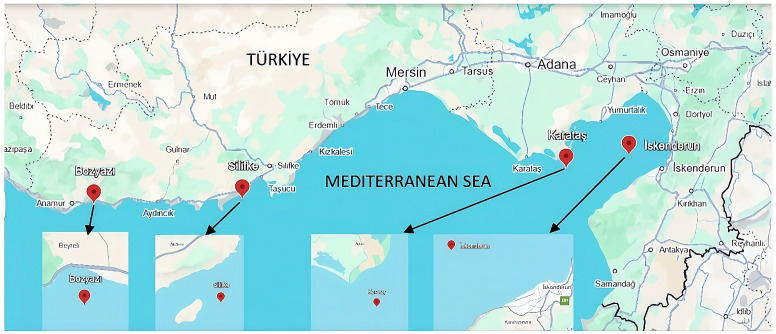 Figure 1
 Figure 2
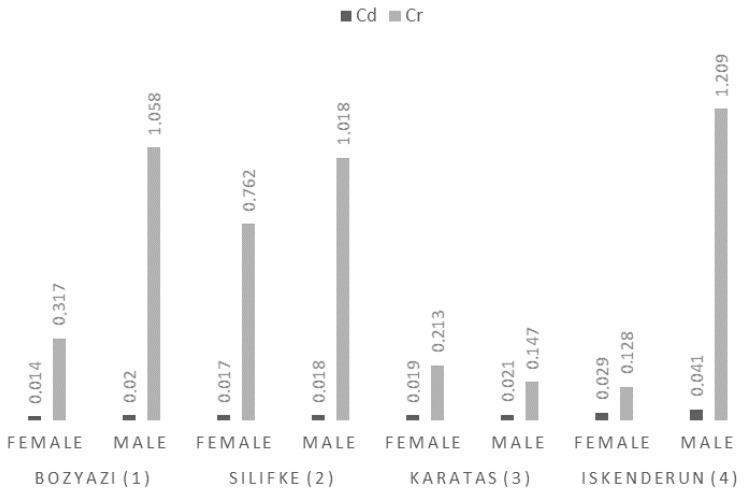 Figure 3
 Figure 4
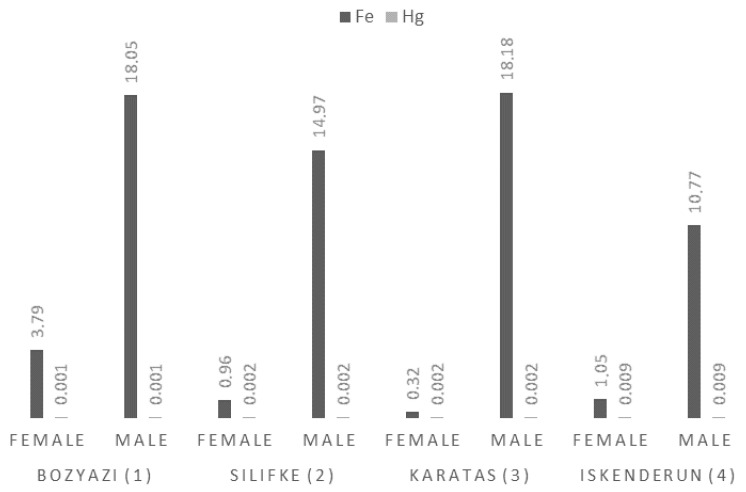 Figure 5
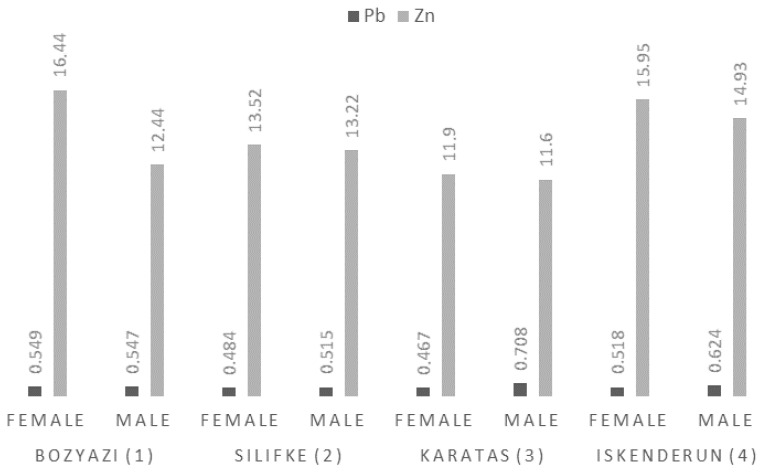 Figure 6
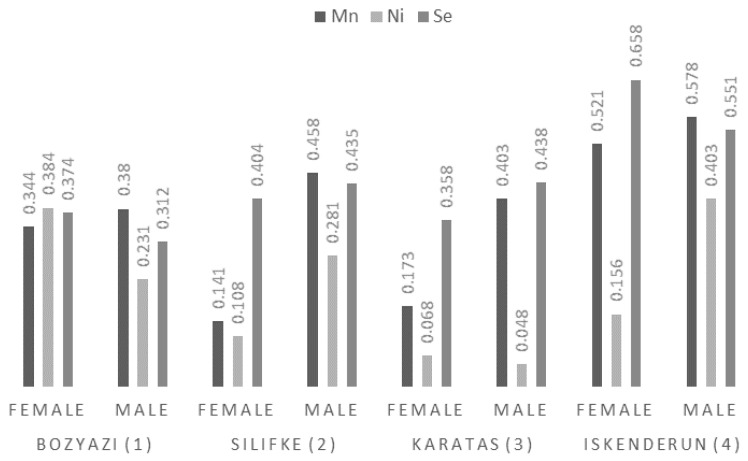 Figure 7
Peer Reviews
No public reviews on file for this paper yet. If you reviewed it on a platform where reviews are public (OpenReview, ICLR, NeurIPS, ICML), you can paste yours below so the community can read it here.
Videos
No videos yet. Explain this paper in a talk, walkthrough, or lecture? Add one.
Taxonomy
TopicsEnvironmental Toxicology and Ecotoxicology · Heavy metals in environment · Mercury impact and mitigation studies