Comparative Cancer Genetics and Veterinary Therapeutics in Dogs and Cats: A Species-Aware Framework for Comparative Oncology
Sangjin Ahn, Jang-Hyuk Yun

TL;DR
This paper explores how dogs and cats can serve as models for human cancer research due to their similar tumor biology and treatment responses, emphasizing the need for species-specific approaches in drug development.
Contribution
The paper introduces a species-aware framework for comparative oncology, highlighting conserved molecular targets and drug delivery platforms across humans, dogs, and cats.
Findings
Dogs and cats develop tumors similar to humans in histopathology and molecular features.
Cross-species conservation of targets like TP53 and HER2 supports their use in biomarker discovery.
Species-specific differences in drug metabolism require tailored dosing and monitoring strategies.
Abstract
Cancer remains one of the leading causes of death worldwide, affecting not only humans but also companion animals such as dogs and cats. Although traditional rodent models have long served as the foundation of preclinical oncology research, their limited ability to replicate the complexity of spontaneous human cancers has driven interest in comparative oncology. Dogs and cats develop naturally occurring tumors that closely resemble human malignancies in histopathology, molecular alterations, tumor microenvironments, and treatment response. These species also share exposure to environmental carcinogens and demonstrate conserved pharmacokinetic and pharmacodynamic (PK/PD) profiles of several chemotherapeutic agents. This review provides a comprehensive comparison of cancer epidemiology, tumor biology, pharmacologic treatment modalities, drug formulation challenges, and regulatory…
Genes, proteins, chemicals, diseases, species, mutations and cell lines named across the full text — each resolved to its canonical identifier and authoritative record.
Click any figure to enlarge with its caption.
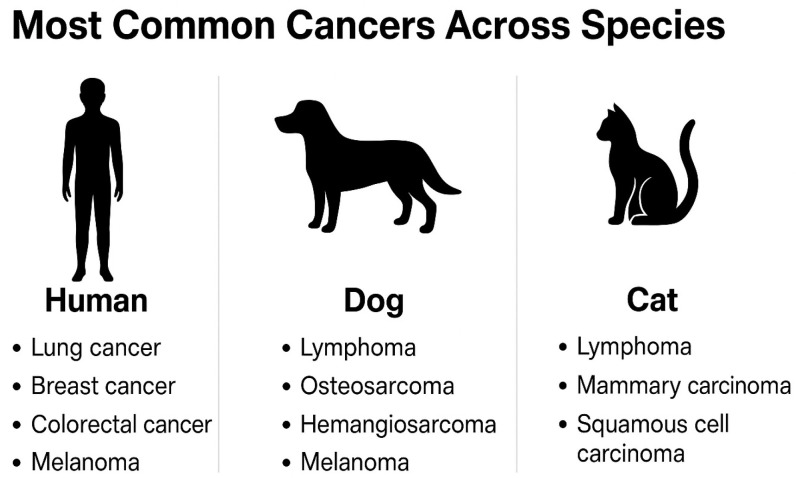 Figure 1
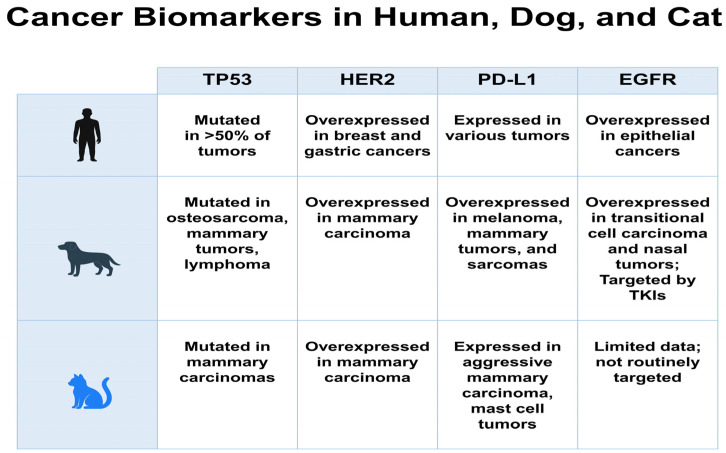 Figure 2
Peer Reviews
No public reviews on file for this paper yet. If you reviewed it on a platform where reviews are public (OpenReview, ICLR, NeurIPS, ICML), you can paste yours below so the community can read it here.
Videos
No videos yet. Explain this paper in a talk, walkthrough, or lecture? Add one.
Taxonomy
TopicsVeterinary Oncology Research · Veterinary Medicine and Surgery · Human-Animal Interaction Studies