Eccentric Isokinetic Rehabilitation for Chronic Lateral Epicondylitis in Female Swimmers: A Randomized Controlled Trial of Bilateral Neuromuscular Adaptations and Functional Performance
Wissem Dhahbi, Hatem Ghouili, Halil İbrahim Ceylan, Nessrine Adhadhi, Souhail Bchini, Manel Bessifi, Nagihan Burçak Ceylan, Valentina Stefanica, Nejmeddine Ouerghi, Nadhir Hammami

TL;DR
Eccentric isokinetic training improves strength and function in female swimmers with chronic tennis elbow better than passive motion.
Contribution
Demonstrates that eccentric isokinetic training leads to better neuromuscular adaptations and functional gains in swimmers with lateral epicondylitis.
Findings
Eccentric training improved push-up performance by 3.21 repetitions more than passive motion.
Explosive power increased by 0.35 m more in the eccentric group.
Eccentric training produced balanced bilateral strength gains unlike passive motion.
Abstract
Background and Objectives: This study investigated the efficacy of eccentric isokinetic muscle strengthening versus passive motion protocols on neuromuscular function and performance capacity in female swimmers with chronic lateral epicondylitis. Materials and Methods: Twenty-five swimmers (age 46.1 ± 3.1 years) with lateral epicondylitis exceeding three months’ duration completed a randomized controlled trial comparing eccentric training in Controlled Active Motion mode (experimental group (EG), n = 13) against passive motion in Continuous Passive Motion mode (control group (CG), n = 12). Both groups performed 18 supervised sessions over six weeks (60°/s angular velocity, progressive loading 1–12 sets × 5 repetitions). Bilateral concentric peak torque of elbow extensors and flexors constituted the primary outcomes. Secondary measures included push-up performance, explosive power…
Genes, proteins, chemicals, diseases, species, mutations and cell lines named across the full text — each resolved to its canonical identifier and authoritative record.
Click any figure to enlarge with its caption.
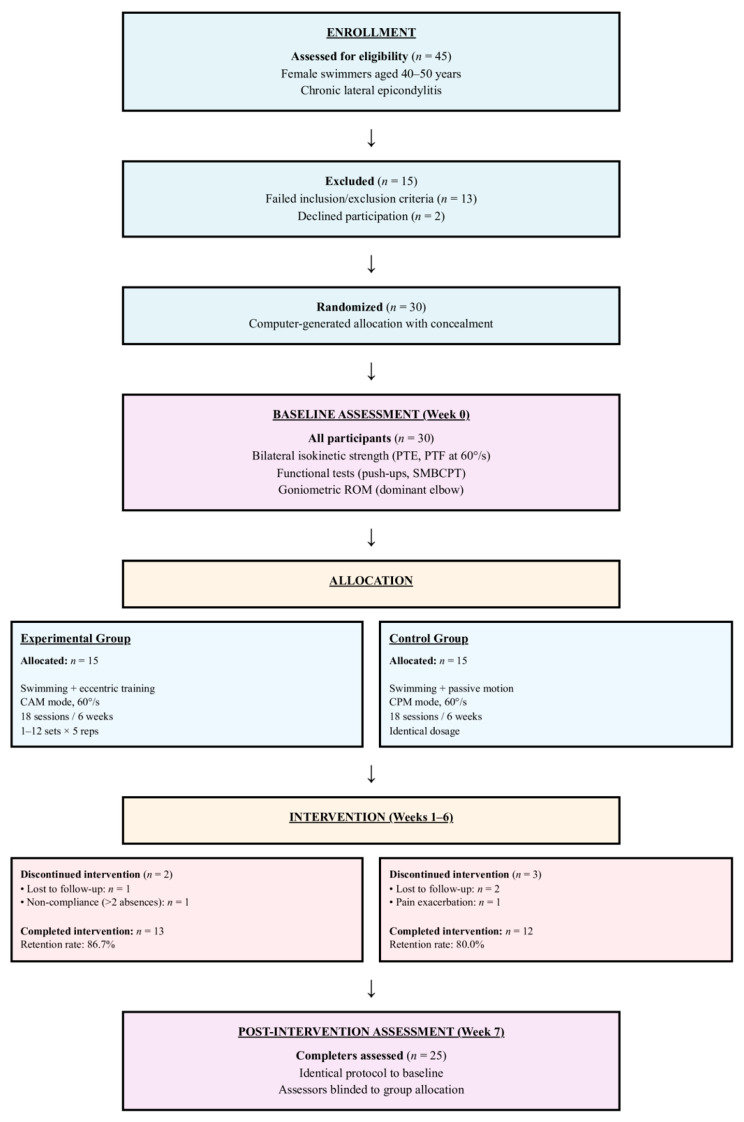 Figure 1
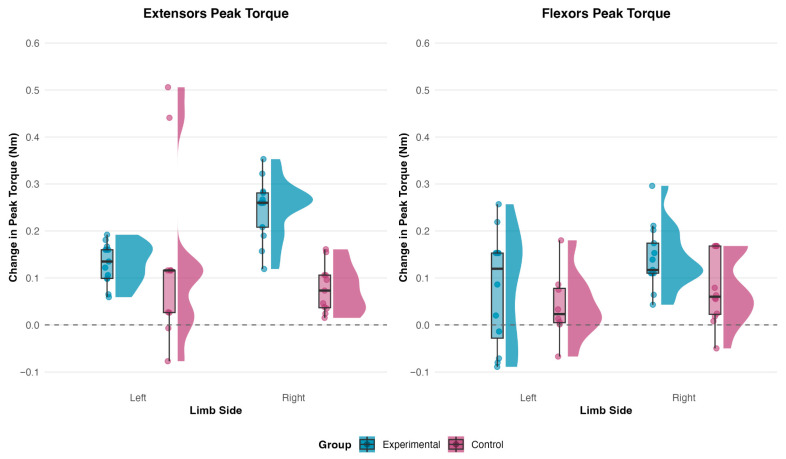 Figure 2
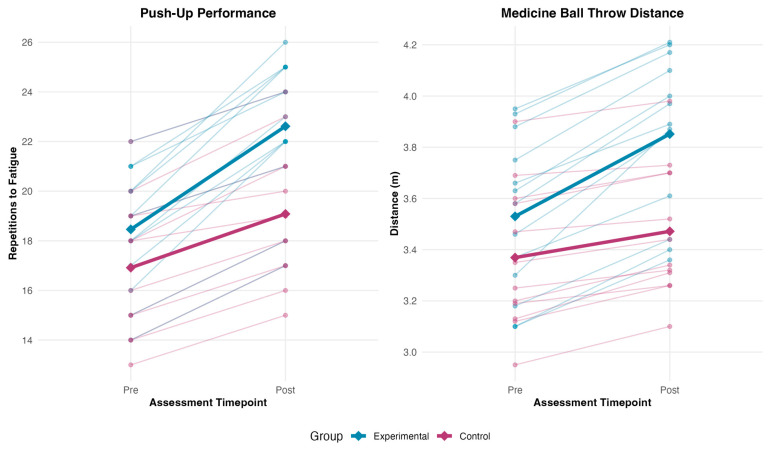 Figure 3
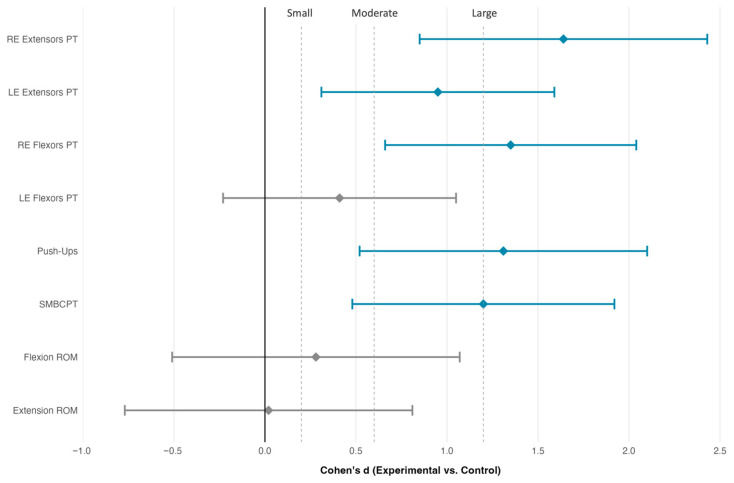 Figure 4
Peer Reviews
No public reviews on file for this paper yet. If you reviewed it on a platform where reviews are public (OpenReview, ICLR, NeurIPS, ICML), you can paste yours below so the community can read it here.
Videos
No videos yet. Explain this paper in a talk, walkthrough, or lecture? Add one.
Taxonomy
TopicsTendon Structure and Treatment · Sports injuries and prevention · Exercise and Physiological Responses