Chlokamycins B–D: Chlorohydrin-Containing Polycyclic Tetramate Macrolactams with Cytotoxic Activity from the Marine Sponge-Derived Streptomyces xiamenensis 1310KO-148
Min Ah Lee, Jong Soon Kang, Joo-Hee Kwon, Jeong-Wook Yang, Hwa-Sun Lee, Chang-Su Heo, Hee Jae Shin

TL;DR
Scientists discovered new compounds from a marine sponge-derived bacteria that show promise in fighting cancer and bacterial infections.
Contribution
The discovery of three new chlorohydrin-containing polycyclic tetramate macrolactams with cytotoxic and antibacterial properties.
Findings
Chlokamycins B–D showed significant cytotoxic activity against 14 human cancer cell lines.
The compounds exhibited antibacterial activity against Staphylococcus aureus and Micrococcus luteus.
Structures were confirmed using NMR, HR-ESIMS, and ECD calculations.
Abstract
Chemical investigation of the marine sponge-derived Streptomyces xiamenensis 1310KO-148 afforded six polycyclic tetramate macrolactams (PTMs), including three known compounds (1–3) and three previously undescribed chlorohydrin-containing analogues, chlokamycins B–D (4–6). Their planar structures were elucidated by extensive analysis of 1D and 2D NMR spectra and HR-ESIMS data, while the relative configurations were assigned using NOESY correlations. The absolute configurations were further confirmed by electronic circular dichroism (ECD) calculations. Compounds 3–6 exhibited significant cytotoxic activity against 14 human cancer cell lines (GI50 = 2.68–24.92 μM) and antibacterial activity against Staphylococcus aureus (MIC = 16.00–32.00 μg/mL) and Micrococcus luteus (MIC = 4.00–32.00 μg/mL) among six tested bacterial strains.
Genes, proteins, chemicals, diseases, species, mutations and cell lines named across the full text — each resolved to its canonical identifier and authoritative record.
Click any figure to enlarge with its caption.
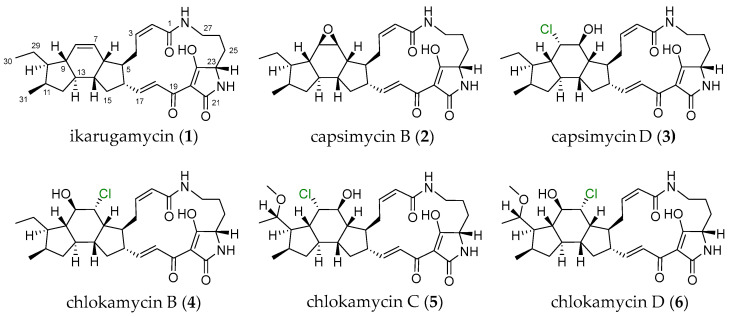 Figure 1
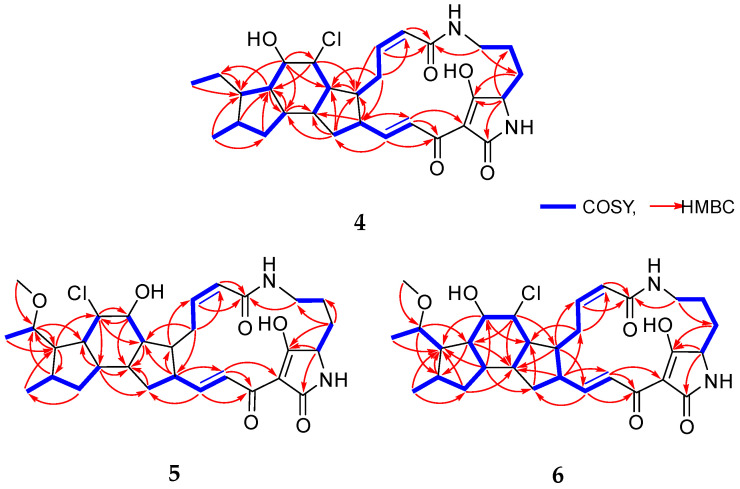 Figure 2
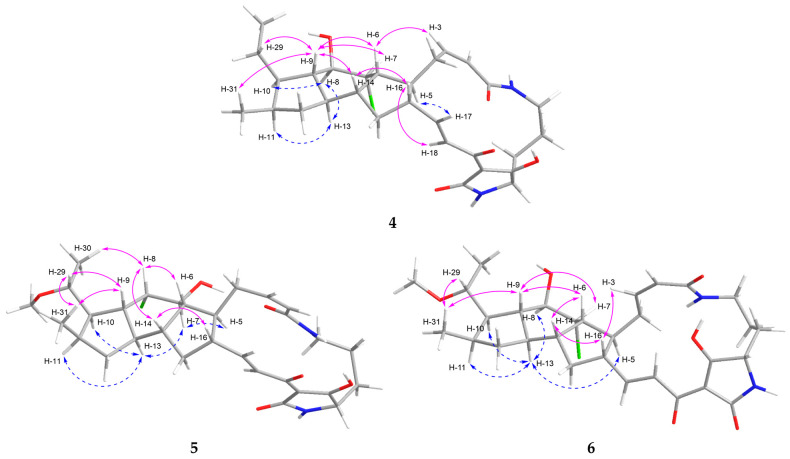 Figure 3
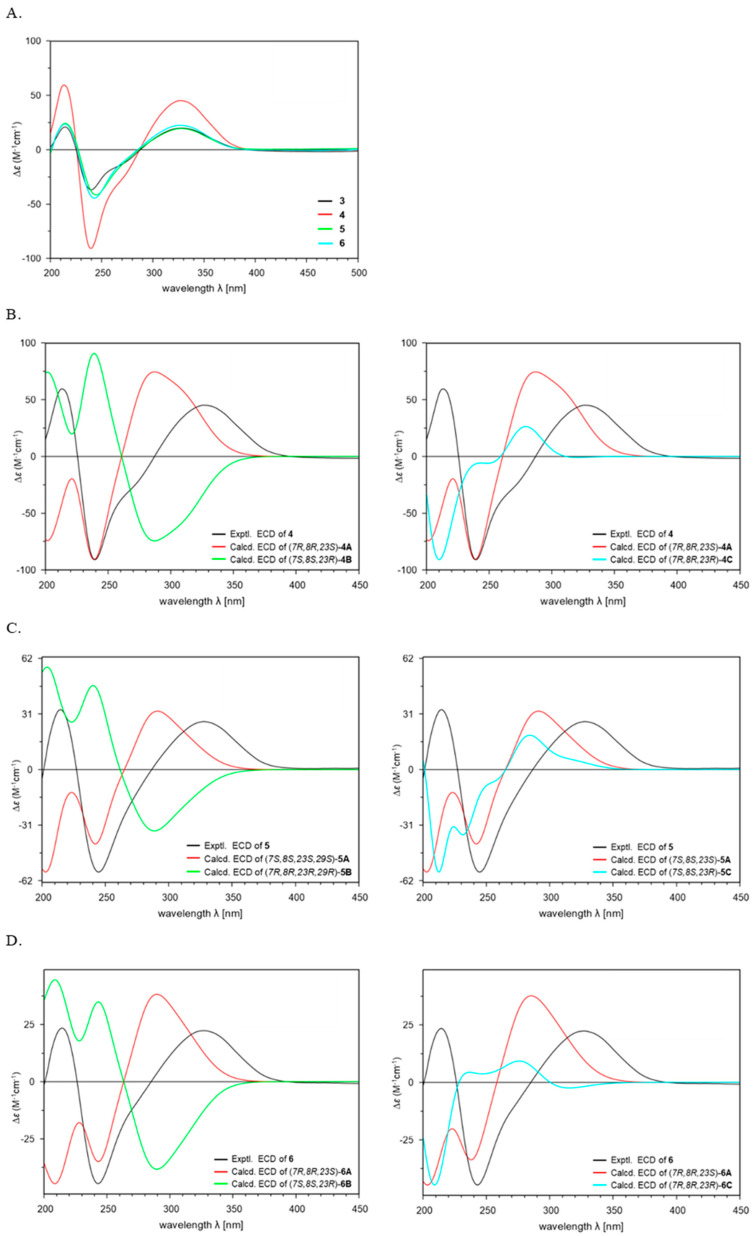 Figure 4
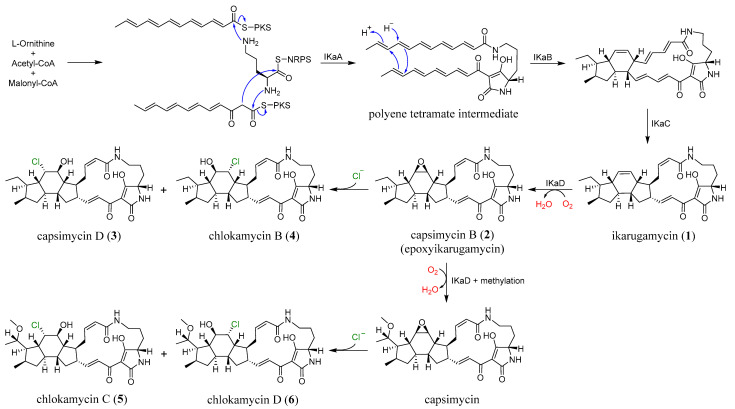 Figure 5
Peer Reviews
No public reviews on file for this paper yet. If you reviewed it on a platform where reviews are public (OpenReview, ICLR, NeurIPS, ICML), you can paste yours below so the community can read it here.
Videos
No videos yet. Explain this paper in a talk, walkthrough, or lecture? Add one.
Taxonomy
TopicsMicrobial Natural Products and Biosynthesis · Synthesis and Biological Activity · Synthetic Organic Chemistry Methods