Harnessing Poly(9,9-dialkylfluorene-alt-benzothiadiazole) for Circularly Polarized Electroluminescence: Advances and Perspectives
Mariacecilia Pasini, Umberto Giovanella

TL;DR
This review discusses how the polymer PFBT can be used to create efficient circularly polarized light-emitting devices for advanced display and computing technologies.
Contribution
The paper provides a comprehensive review of PFBT's role in CP-OLEDs and highlights strategies for improving their performance.
Findings
PFBT is a promising material for CP-OLEDs due to its optoelectronic properties and processability.
Recent strategies for integrating PFBT into CP-OLED architectures are summarized.
The review identifies key challenges and opportunities for future research in this field.
Abstract
Circularly polarized (CP) organic light-emitting diodes (CP-OLEDs) have attracted considerable attention due to their promising applications in next-generation display systems, optical data transmission, and quantum computing, and their potential roles in medical devices. Achieving efficient and tunable CP emission remains a significant challenge, prompting the development of various strategies that leverage organic semiconductors. Notably, certain classes of materials now consistently deliver CP polarization at levels suitable for technological applications. Among these, conjugated polymers, particularly the copolymer poly(9,9-dialkylfluorene-alt-benzothiadiazole) (PFBT), stand out for their exceptional optoelectronic properties, ease of processing, and adaptability to produce CP emission. PFBT has played diverse roles within CP-OLED devices, enabling innovative architectural…
Genes, proteins, chemicals, diseases, species, mutations and cell lines named across the full text — each resolved to its canonical identifier and authoritative record.
Click any figure to enlarge with its caption.
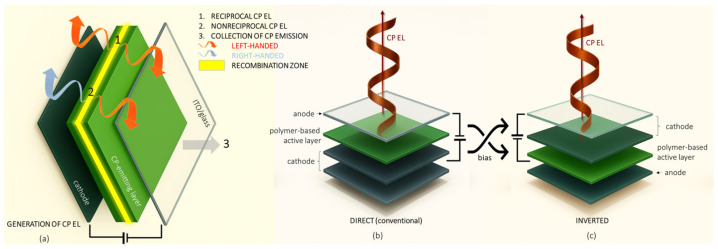 Figure 1
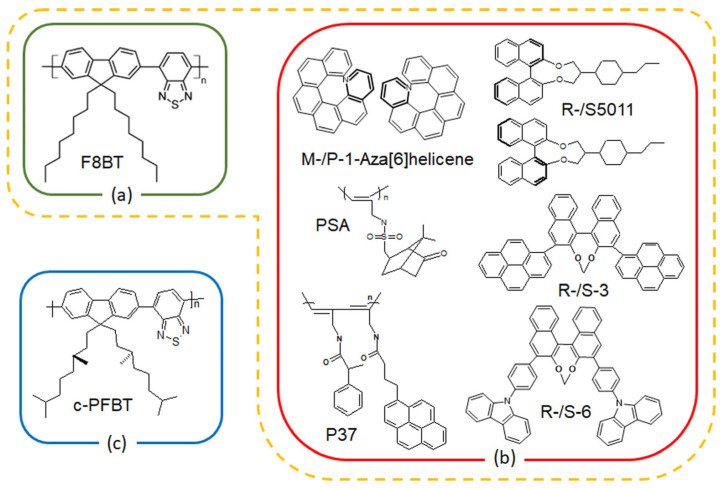 Figure 2
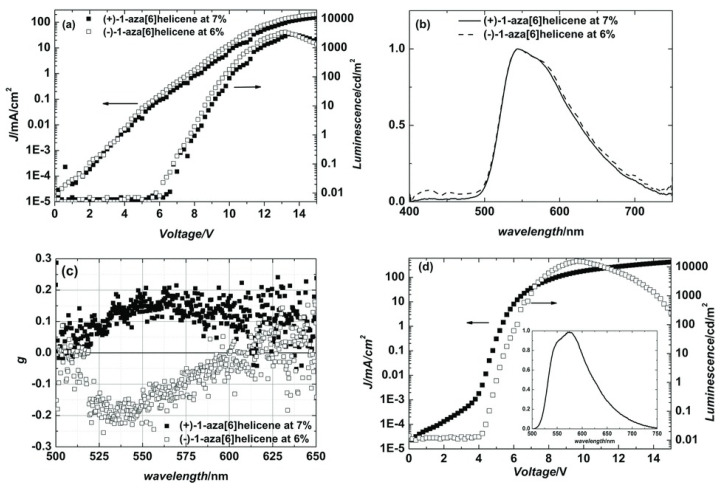 Figure 3
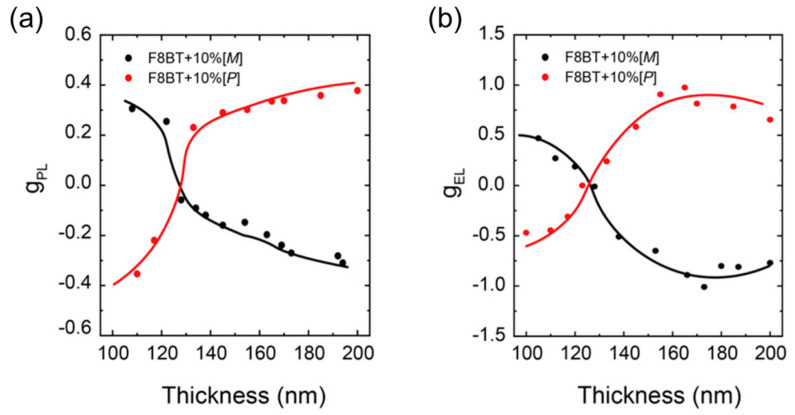 Figure 4
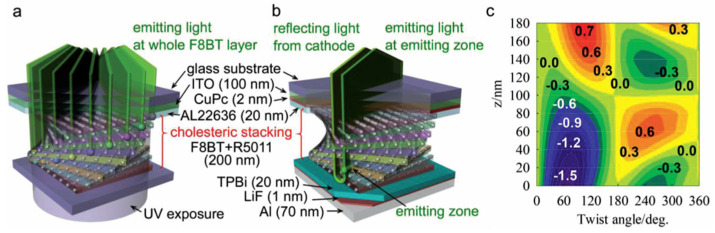 Figure 5
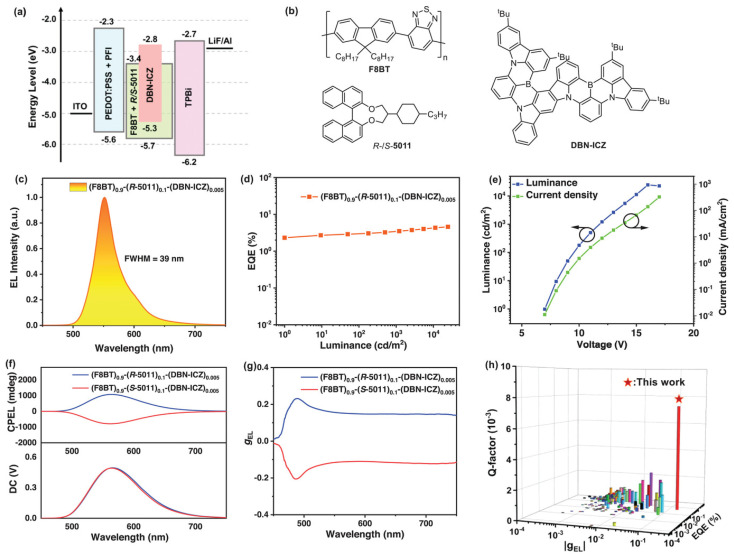 Figure 6
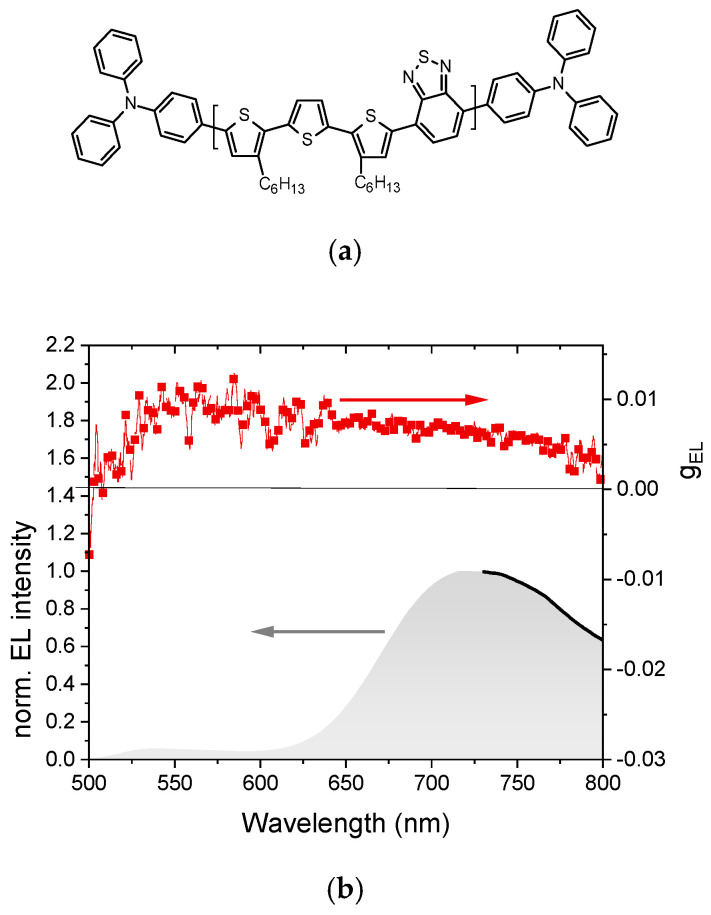 Figure 7
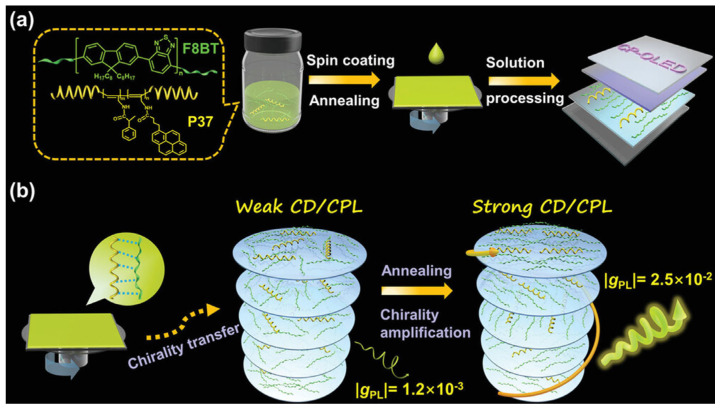 Figure 8
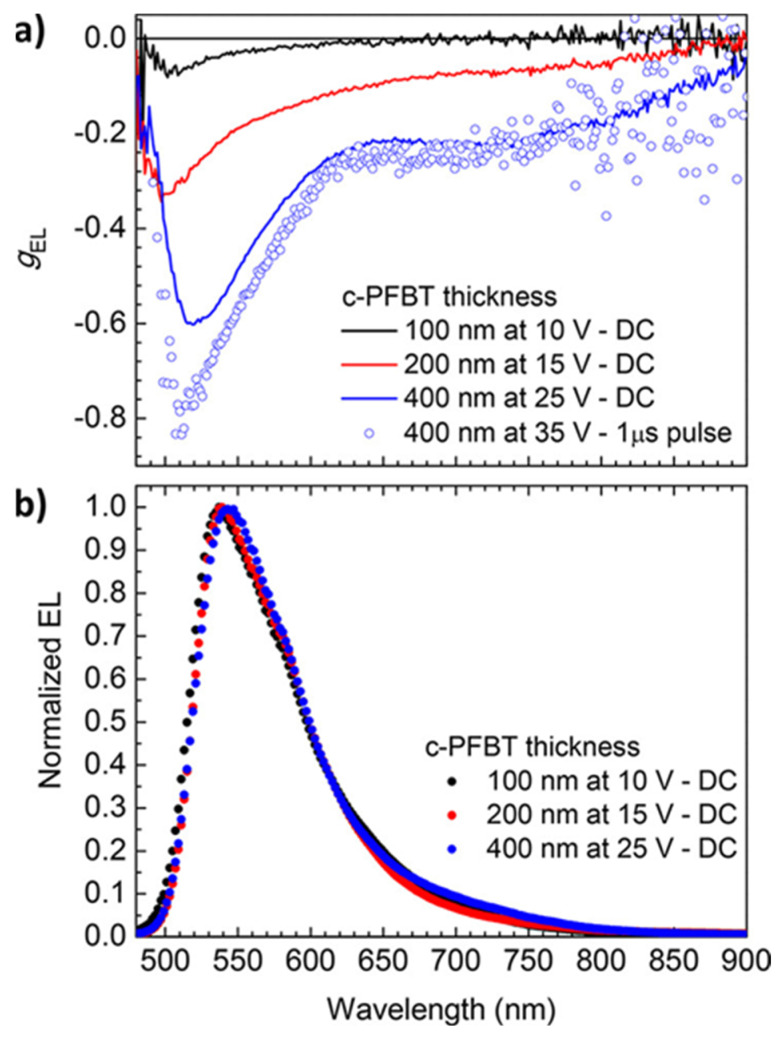 Figure 9
Peer Reviews
No public reviews on file for this paper yet. If you reviewed it on a platform where reviews are public (OpenReview, ICLR, NeurIPS, ICML), you can paste yours below so the community can read it here.
Videos
No videos yet. Explain this paper in a talk, walkthrough, or lecture? Add one.
Taxonomy
TopicsOrganic Light-Emitting Diodes Research · Organic Electronics and Photovoltaics · Luminescence and Fluorescent Materials