Biodistribution and Biodegradation of an Osteoinductive Supramolecular Polymer Implant in a Rat Spinal Fusion Model
Jacqueline Inglis, Alyssa Goodwin, Steven Kurapaty, David M. Hiltzik, Rahim Laiwalla, Hogan Brecount, Nicholas A. Sather, Emily A. Waters, Chad R. Haney, Rebecca Sponenburg, Xinyi Lin, Wellington K. Hsu, Samuel I. Stupp, Erin L. Hsu, Romie F. Gibly

TL;DR
A new biodegradable implant for spinal fusion was tested in rats, showing it breaks down safely with minimal side effects.
Contribution
The study demonstrates the biodegradation and tissue clearance of a supramolecular polymer implant in a rat spinal fusion model.
Findings
Gadolinium concentration at the fusion site decreased from 71% to 19.5% over 13 weeks.
Peak Gd accumulation in the liver was 3% at 4 weeks, declining to 1.4% by 13 weeks.
MRI showed complete loss of Gd signal enhancement by 8 weeks, indicating implant degradation.
Abstract
Recombinant human bone morphogenic protein-2 (rhBMP-2) use in spinal fusion is limited by dose-dependent complications. Peptide amphiphile (PA) supramolecular polymers presenting a BMP-2–binding epitope have previously been developed to reduce the rhBMP-2 dose required for successful fusion. We evaluated PA implant biodegradation and tissue clearance in a rat posterolateral spinal fusion model as a prerequisite to clinical safety studies. Twenty-three female Sprague–Dawley rats underwent L4–L5 fusion with gadolinium (Gd)-labeled PA implants. Longitudinal magnetic resonance imaging (MRI) was performed up to 13 weeks postoperatively, while the spine and filter organs were harvested for inductively coupled plasma mass spectrometry (ICP-MS) quantification of Gd at multiple time points. Gd concentration at the fusion site decreased from 71% of maximum to 19.5% at 13 weeks, and MRI showed a…
Genes, proteins, chemicals, diseases, species, mutations and cell lines named across the full text — each resolved to its canonical identifier and authoritative record.
Click any figure to enlarge with its caption.
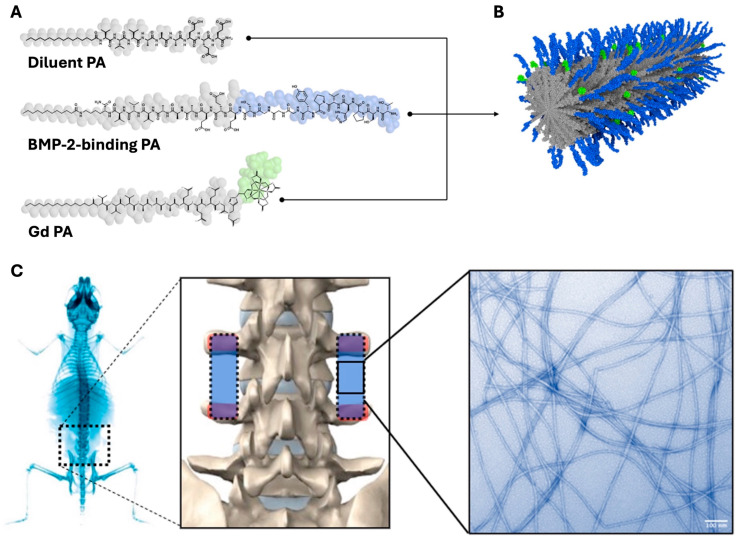 Figure 1
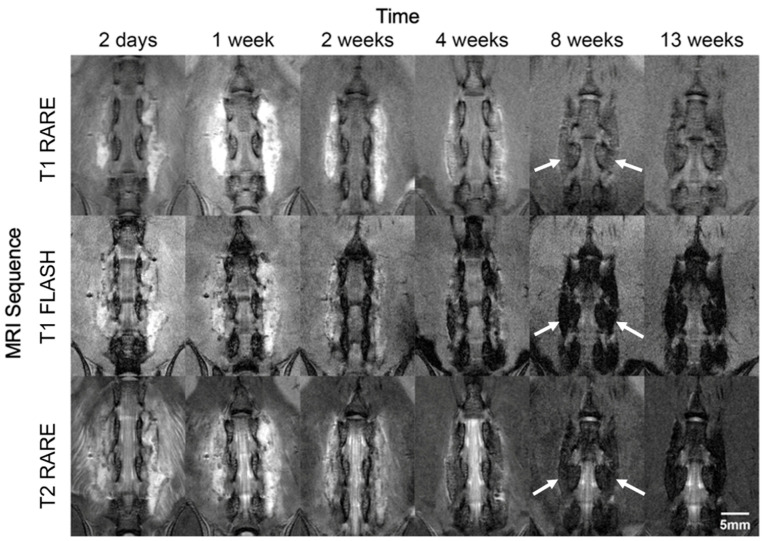 Figure 2
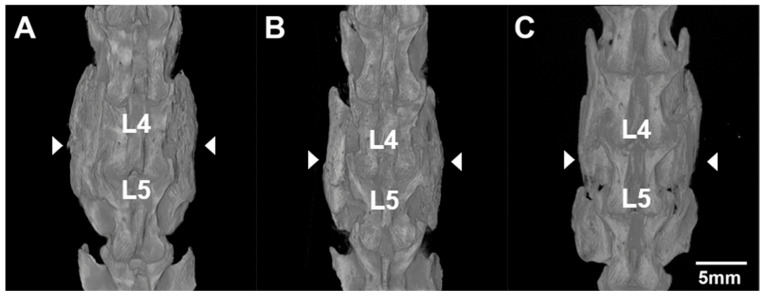 Figure 3
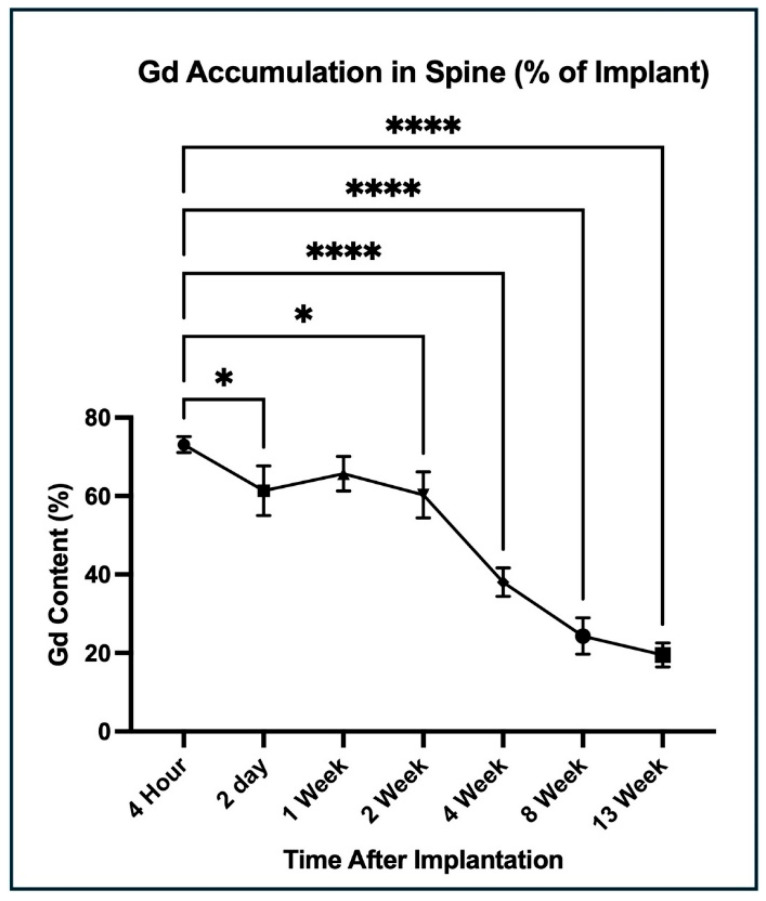 Figure 4
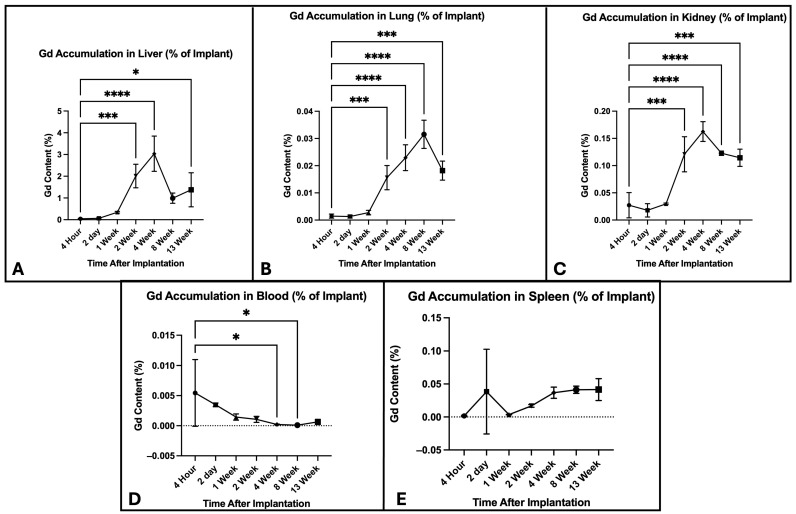 Figure 5
 Figure 6
 Figure 7
 Figure 8
 Figure 9
 Figure 10
 Figure 11
 Figure 12
 Figure 13
 Figure 14
Peer Reviews
No public reviews on file for this paper yet. If you reviewed it on a platform where reviews are public (OpenReview, ICLR, NeurIPS, ICML), you can paste yours below so the community can read it here.
Videos
No videos yet. Explain this paper in a talk, walkthrough, or lecture? Add one.
Taxonomy
TopicsBone Tissue Engineering Materials · Supramolecular Self-Assembly in Materials · biodegradable polymer synthesis and properties