Two Years of Expanded Newborn Screening in Russia: High-Throughput Detection of Inherited Metabolic Disorders by Tandem Mass Spectrometry with Next-Generation Sequencing Confirmation
Ekaterina Y. Zakharova, Galina V. Baydakova, Polina V. Baranova, Darya Y. Aleksandrova, Olga A. Shchagina, Yulia S. Itkis, Natalya V. Milovanova, Tatyana S. Nagornova, Olga N. Ivanova, Yana D. Nazarenko, Sergey V. Voronin, Alena L. Chukhrova, Varvara A. Kadnikova

TL;DR
Russia expanded newborn screening for metabolic disorders, detecting 1 in 2900 cases with high-throughput methods and genetic confirmation.
Contribution
The study reports the first nationwide outcomes of expanded newborn screening in Russia using MS/MS and NGS confirmation.
Findings
Phenylketonuria was the most common inherited metabolic disorder detected (1 in 4600 live births).
Regional and ethnic variations were observed, such as high tyrosinemia type 1 in Chechen Republic.
NGS was crucial for resolving complex cases like dual diagnoses and heterozygous carriers.
Abstract
In 2023, the Russian Federation expanded its national newborn screening (NBS) program from 5 to 36 conditions, 29 of which are inherited metabolic diseases (IMDs). This study presents the first nationwide results and outcomes of the expanded NBS program. Between January 2023 and December 2024, dried blood spots from 2,466,615 newborns (98.53% of the birth cohort) were analyzed for IMDs using MS/MS. Screen-positive cases were referred to the national reference center for confirmatory testing, which included biochemical (MS/MS and GC-MS) and genetic analyses (NGS). A total of 41,728 neonates (1.69%) screened positive, of whom 37,733 underwent confirmatory testing. It resulted in 834 confirmed diagnoses of IMDs (1 in 2900 live births). Phenylketonuria was the most prevalent IMD (n = 538; 1 in 4600), followed by MCADD (n = 99; 1 in 25,000). Distinct regional and ethnic variations were…
Genes, proteins, chemicals, diseases, species, mutations and cell lines named across the full text — each resolved to its canonical identifier and authoritative record.
Click any figure to enlarge with its caption.
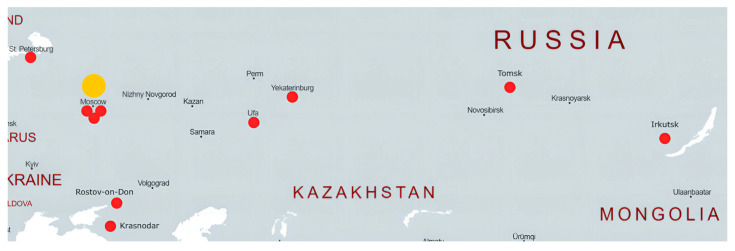 Figure 1
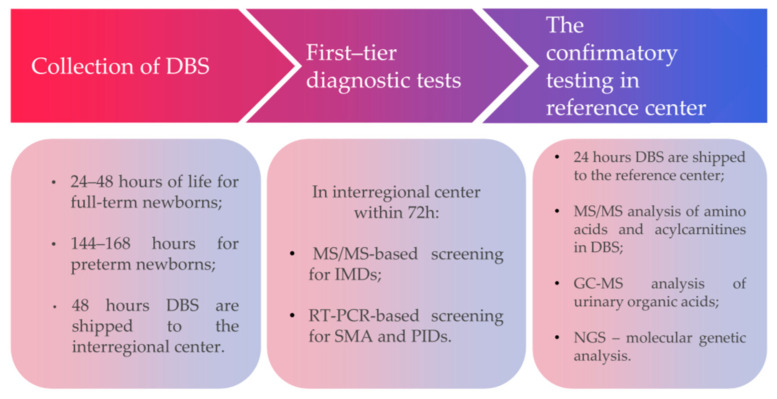 Figure 2
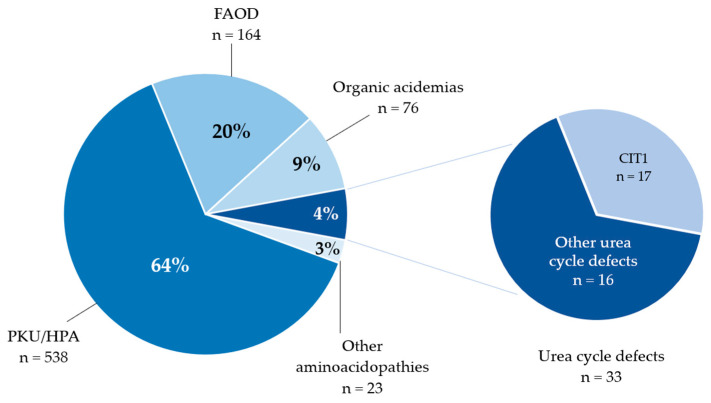 Figure 3
Peer Reviews
No public reviews on file for this paper yet. If you reviewed it on a platform where reviews are public (OpenReview, ICLR, NeurIPS, ICML), you can paste yours below so the community can read it here.
Videos
No videos yet. Explain this paper in a talk, walkthrough, or lecture? Add one.
Taxonomy
TopicsMetabolism and Genetic Disorders · Genomics and Rare Diseases · Amino Acid Enzymes and Metabolism