A Review of Artificial Diets for Aphids (Hemiptera: Aphididae)
Rongrong Gao, Qingqiu Zeng, Ming Zhu, Zhentao Ren, Kun Xue

TL;DR
This review summarizes progress and challenges in developing artificial diets for aphids, highlighting key strategies and future directions for improving diet formulations.
Contribution
The paper provides a comprehensive review of successful artificial diets and outlines novel approaches for improving aphid rearing through digestive enzymes and symbiotic bacteria.
Findings
Many aphid species still struggle to survive or reproduce on artificial diets.
Optimizing nutrient ratios and using functional nutrients are key to successful artificial diets.
Future improvements should focus on matching nutritional elements with aphid digestive enzymes and gut microbes.
Abstract
Artificial diets have facilitated in-depth physiological research and pest control in aphids. In this review, we summarize the successful artificial diets for aphids, including Myzus persicae, Acyrthosiphon pisum, Aphis fabae, Macrosiphum euphorbiae, and Aphis glycines. However, many aphid species still cannot survive or reproduce properly on artificial diets. Some key successful approaches for developing artificial diets for aphids are discussed, including (1) optimizing nutrient ratios, (2) precisely adding specific functional nutrients, (3) introducing feeding stimulants and other active growth factors, (4) replacing complex natural components with well-defined substitutes, and (5) exploring future improvements based on aphid digestive enzymes and symbiotic bacteria. Aphids are among the most significant agricultural pests worldwide. Artificial diets are a critical foundation for…
Genes, proteins, chemicals, diseases, species, mutations and cell lines named across the full text — each resolved to its canonical identifier and authoritative record.
Click any figure to enlarge with its caption.
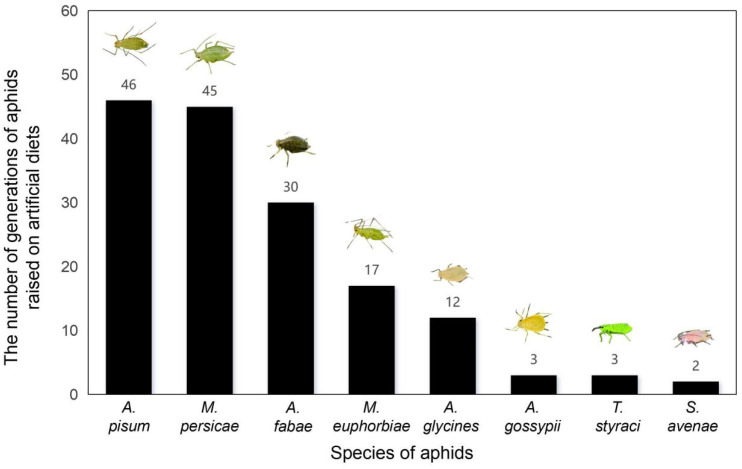 Figure 1
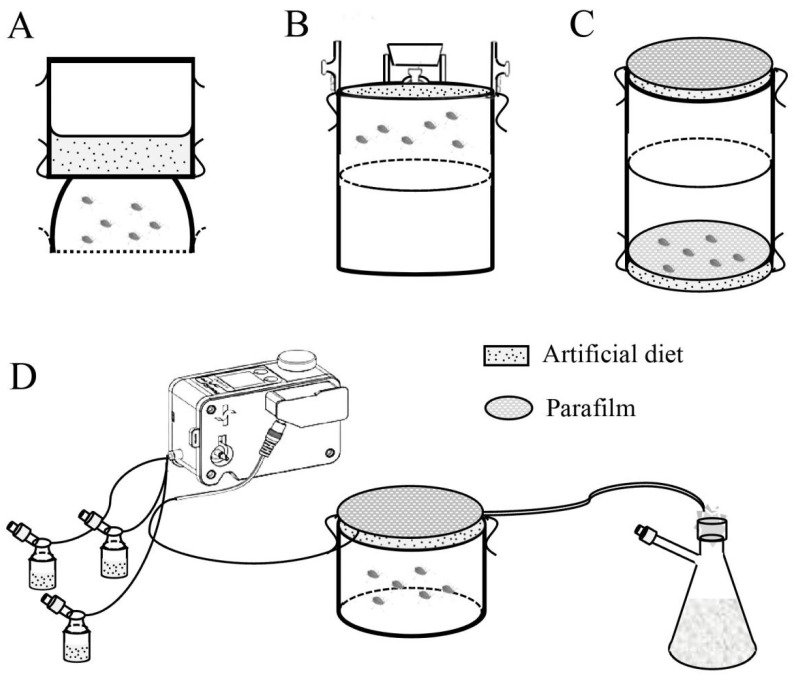 Figure 2
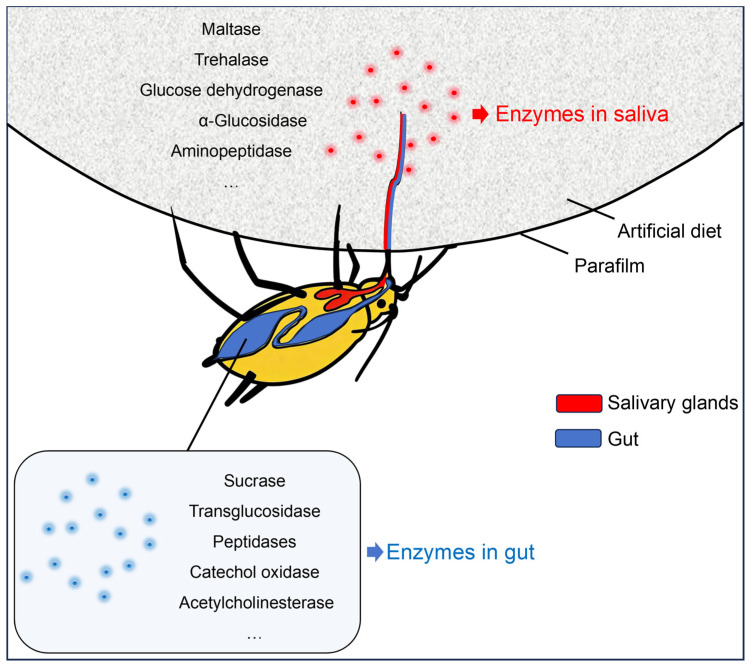 Figure 3
Peer Reviews
No public reviews on file for this paper yet. If you reviewed it on a platform where reviews are public (OpenReview, ICLR, NeurIPS, ICML), you can paste yours below so the community can read it here.
Videos
No videos yet. Explain this paper in a talk, walkthrough, or lecture? Add one.
Taxonomy
TopicsInsect symbiosis and bacterial influences · Insect-Plant Interactions and Control · Entomopathogenic Microorganisms in Pest Control