Boron Neutron Capture Therapy for High-Grade CNS Tumors: Mechanisms, Carriers, and Clinical Progress: A Narrative Review
Tugce Kutuk, Ece Atak, Marshall Harrell, Raju R. Raval, Fatemeh Fekrmandi, Simeng Zhu, Sasha Beyer, Pawan K. Singh, Pierre Giglio, Hamid Mohtashami, Kyle C. Wu, James Bradley Elder, Sean S. Mahase, Raj Singh, Arnab Chakravarti, Joshua D. Palmer

TL;DR
Boron Neutron Capture Therapy (BNCT) is a targeted cancer treatment that uses boron and neutron sources to kill tumor cells, showing promise for high-grade brain tumors.
Contribution
This review summarizes the mechanisms, delivery strategies, and clinical outcomes of BNCT for high-grade central nervous system tumors.
Findings
BNCT is technically feasible and well tolerated with encouraging survival outcomes in glioblastoma and meningiomas.
Second-generation boron carriers are currently used clinically, while third-generation platforms are in preclinical stages.
BNCT shows acceptable safety in limited pediatric populations and potential for radioresistant tumors.
Abstract
Boron neutron capture therapy (BNCT) is a biologically targeted, high–linear energy transfer radiotherapy that selectively delivers cytotoxic α-particles to boron-loaded tumor cells and has re-emerged with the development of hospital-compatible accelerator neutron sources and improved boron carriers. We performed a structured literature review of PubMed, Embase, and the Cochrane Library through October 2025 to summarize the radiobiological rationale, boron delivery strategies, and clinical outcomes of BNCT in glioblastoma (GBM) and other high-grade central nervous system tumors. Eligible clinical and translational studies were screened independently, and data on patient populations, boron agents, neutron source technologies, dosimetry, survival, response, and toxicity were extracted. Contemporary series and phase II trials indicate that BNCT is technically feasible and generally well…
Genes, proteins, chemicals, diseases, species, mutations and cell lines named across the full text — each resolved to its canonical identifier and authoritative record.
Click any figure to enlarge with its caption.
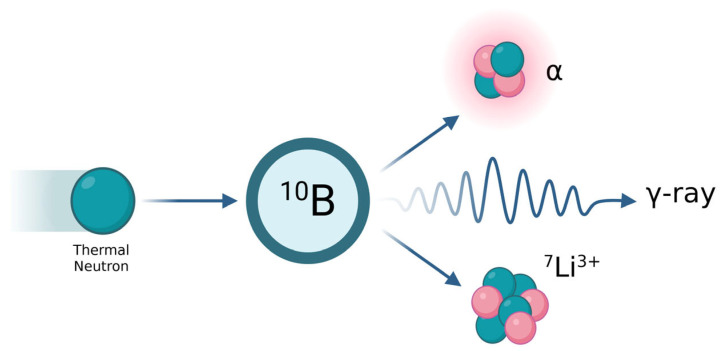 Figure 1
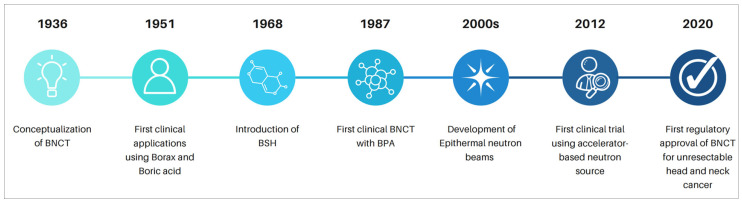 Figure 2
Peer Reviews
No public reviews on file for this paper yet. If you reviewed it on a platform where reviews are public (OpenReview, ICLR, NeurIPS, ICML), you can paste yours below so the community can read it here.
Videos
No videos yet. Explain this paper in a talk, walkthrough, or lecture? Add one.
Taxonomy
TopicsBoron Compounds in Chemistry · Boron and Carbon Nanomaterials Research · Organoboron and organosilicon chemistry