Development of Freeze-Dried Hyaluronic Acid Sheets for Healing Oral Mucositis: Influence of Hyaluronic Acid Molecular Weight and Nicotinamide Mononucleotide Loading on Healing Efficacy
Akiko Tanaka, Takanobu Takata, Hidemasa Katsumi, Yasuhisa Sawai, Hiroyuki Nakano, Chika Yoneto, Kunio Yoneto, Tomoyuki Furubayashi, Toshiyasu Sakane

TL;DR
Researchers developed freeze-dried hyaluronic acid sheets to treat oral mucositis, finding that sheets with 800 kDa HA and nicotinamide mononucleotide are most effective.
Contribution
The study introduces an optimized hyaluronic acid sheet formulation with specific molecular weight and NMN loading for enhanced healing of oral mucositis.
Findings
800 kDa hyaluronic acid sheets showed the greatest healing efficacy in an animal model.
Hyaluronic acid sheets with nicotinamide mononucleotide demonstrated sustained release and good buccal retention.
Hyaluronic acid with or without NMN was non-toxic in in vitro cytotoxicity assays.
Abstract
Oral mucositis frequently develops during radiotherapy or chemotherapy for head and neck cancer and is characterized by severe pain and impaired eating and speech. It was previously demonstrated that freeze-dried hyaluronic acid (HA) sheets effectively promote the healing of oral mucosal ulcers. This study aimed to optimize the HA sheet formulation by evaluating the effects of HA molecular weight and nicotinamide mononucleotide (NMN) loading on therapeutic efficacy. HA sheets were prepared using HA with four different molecular weights (50, 350, 800, and 2000 kDa), and their therapeutic effects were evaluated in an animal oral ulcer model using 6-week-old male Syrian hamsters. Among the formulations tested, the 800 kDa HA sheet exhibited the greatest healing efficacy, and it showed an excellent balance between buccal retention and the sustained release of NMN for the treatment of oral…
Genes, proteins, chemicals, diseases, species, mutations and cell lines named across the full text — each resolved to its canonical identifier and authoritative record.
Click any figure to enlarge with its caption.
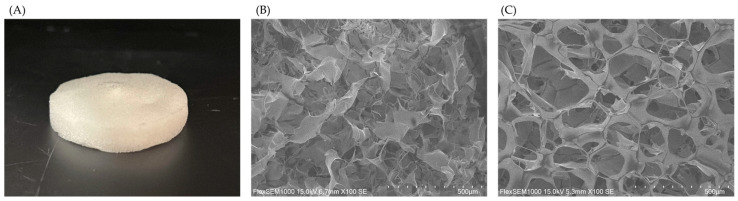 Figure 1
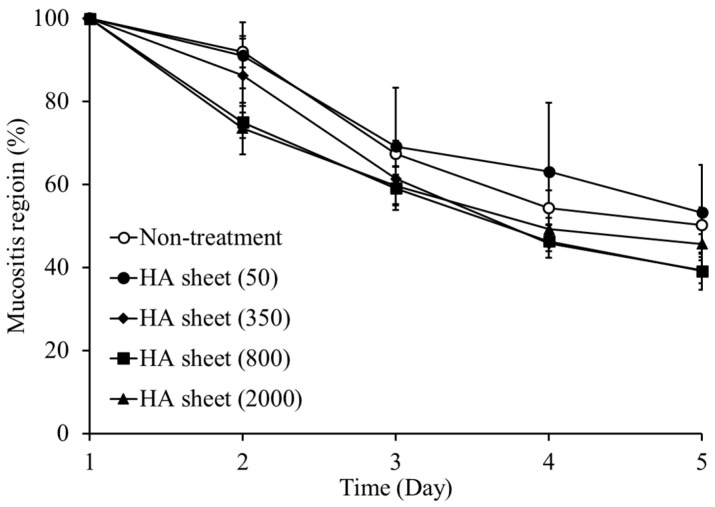 Figure 2
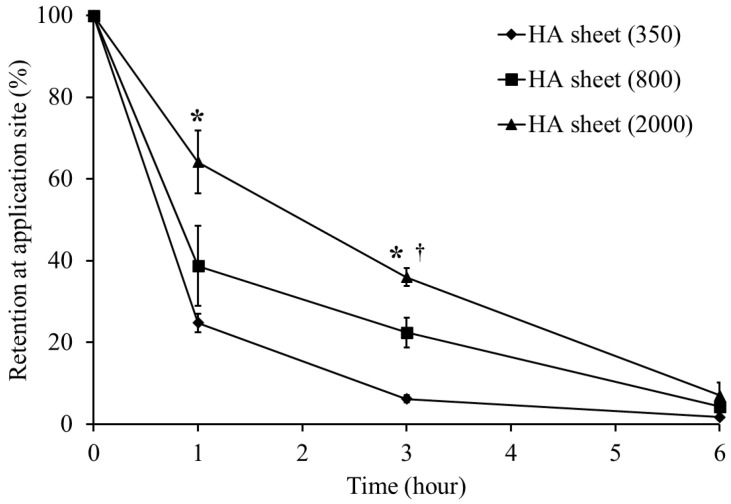 Figure 3
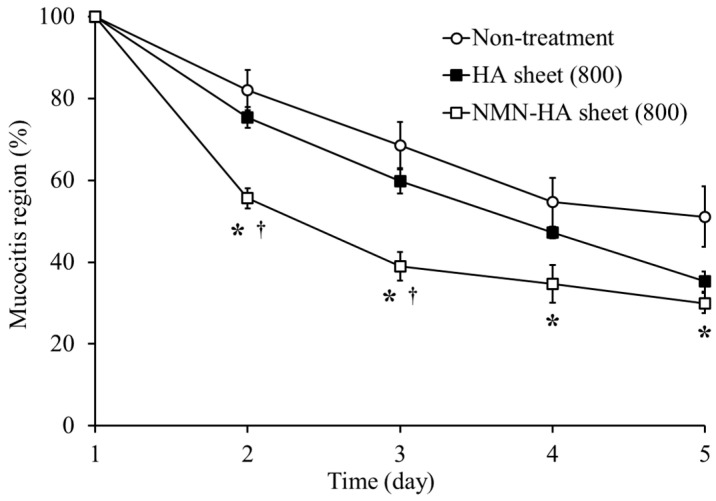 Figure 4
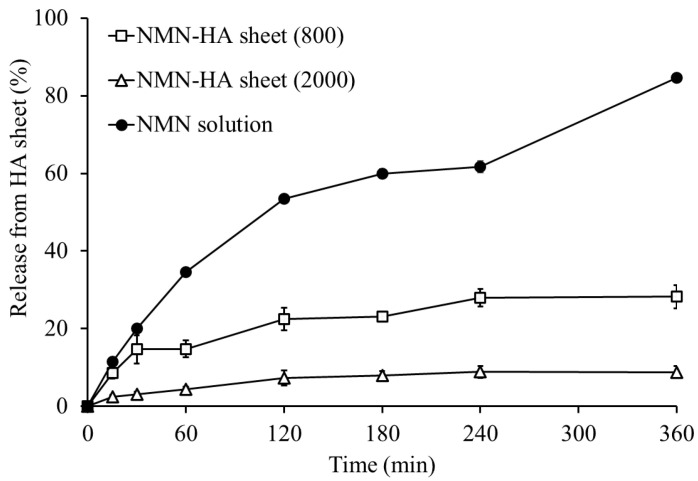 Figure 5
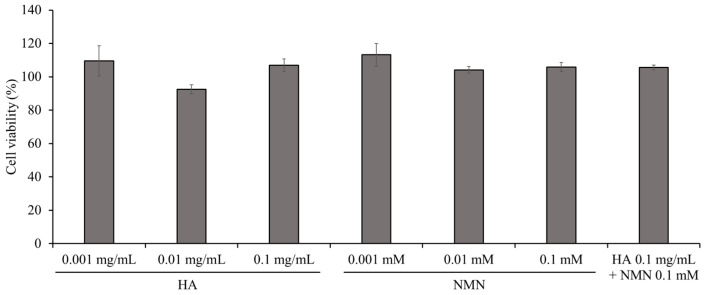 Figure 6
Peer Reviews
No public reviews on file for this paper yet. If you reviewed it on a platform where reviews are public (OpenReview, ICLR, NeurIPS, ICML), you can paste yours below so the community can read it here.
Videos
No videos yet. Explain this paper in a talk, walkthrough, or lecture? Add one.
Taxonomy
TopicsOral health in cancer treatment · Advanced Drug Delivery Systems · Proteoglycans and glycosaminoglycans research