Overexpression of OAS Genes in Severe COVID-19: A Cross-Sectional Study of Hospitalized Patients Infected with Delta and Omicron Variants
Cristian Oswaldo Hernández-Ramírez, Hazael Ramiro Ceja-Gálvez, Kevin J. Arellano-Arteaga, Elvira Miramontes-Luna, Jorge Hernández-Bello, Pablo Michael Navarro-Rodríguez, Francisco Javier Turrubiates-Hernández, Oliver Viera-Segura, Ferdinando Nicoletti, José Francisco Muñoz-Valle

TL;DR
This study finds that OAS genes are overexpressed in severe COVID-19 patients, regardless of whether they are infected with the Delta or Omicron variant.
Contribution
The study reveals that OAS gene overexpression is linked to severe COVID-19 and is not variant-specific, suggesting a role in disease severity rather than variant-specific immune response.
Findings
OAS1, OAS2, and OAS3 are overexpressed in hospitalized severe COVID-19 patients compared to healthy subjects.
OAS2 and OAS3 expression is significantly increased in both survivors and non-survivors compared to healthy subjects.
OAS gene upregulation is similar in Delta and Omicron infections, indicating disease severity rather than variant type drives expression.
Abstract
Background/Objectives: COVID-19 is an infectious disease caused by SARS-CoV-2. The innate immune response constitutes the first line of antiviral defense. Notably, interferon-stimulated genes, such as those belonging to the oligoadenylate synthetase (OAS) family, have been implicated in host susceptibility and the response to SARS-CoV-2 infection. However, the extent to which OAS gene expression varies across SARS-CoV-2 variants remains insufficiently characterized. Its relationship with clinical outcomes in hospitalized patients is also unclear. This study aimed to evaluate OAS gene expression and its association with inflammatory markers and clinical outcomes in patients with severe COVID-19. Methods: An analytical cross-sectional study was conducted in patients hospitalized with severe COVID-19 between October 2021 and February 2022. SARS-CoV-2 infection and viral variants were…
Genes, proteins, chemicals, diseases, species, mutations and cell lines named across the full text — each resolved to its canonical identifier and authoritative record.
Click any figure to enlarge with its caption.
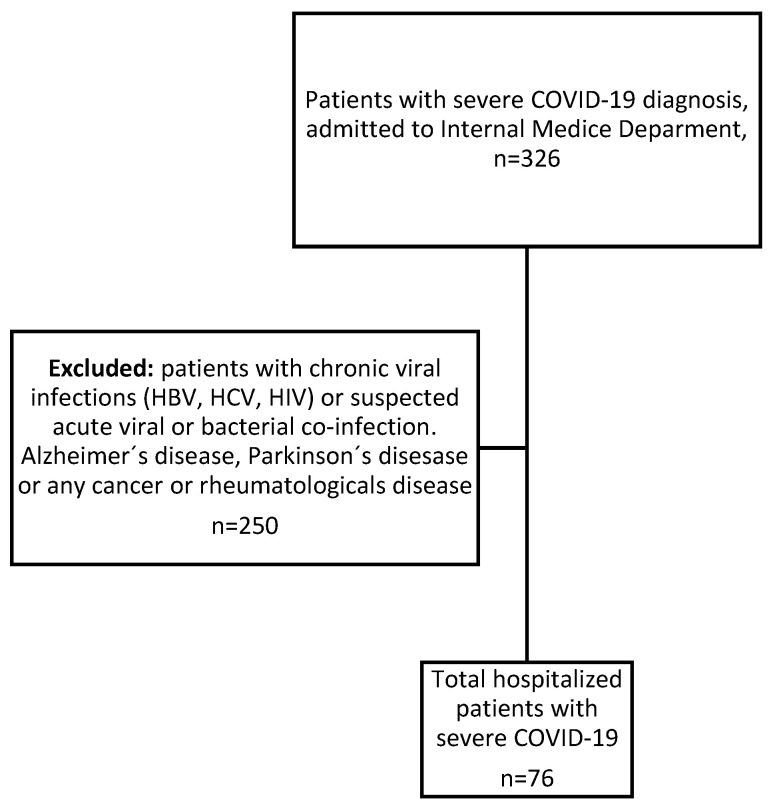 Figure 1
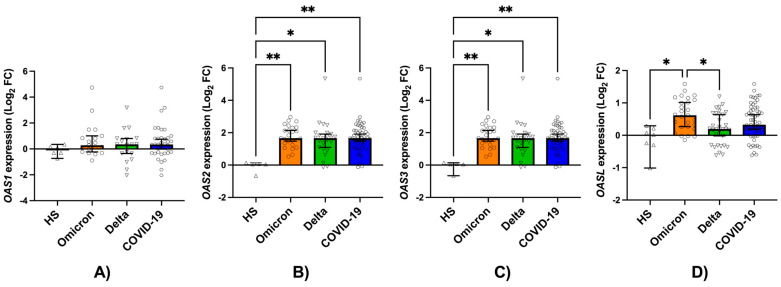 Figure 2
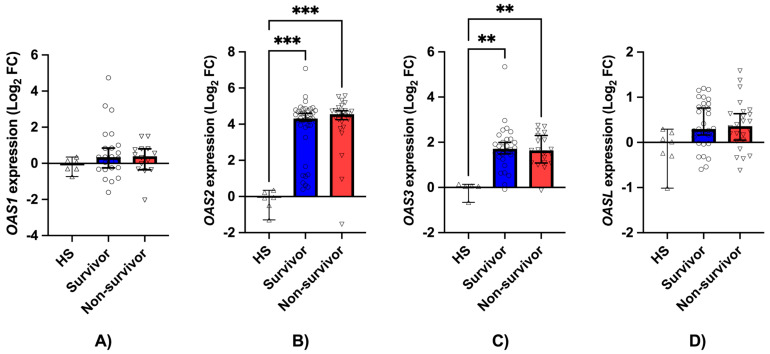 Figure 3
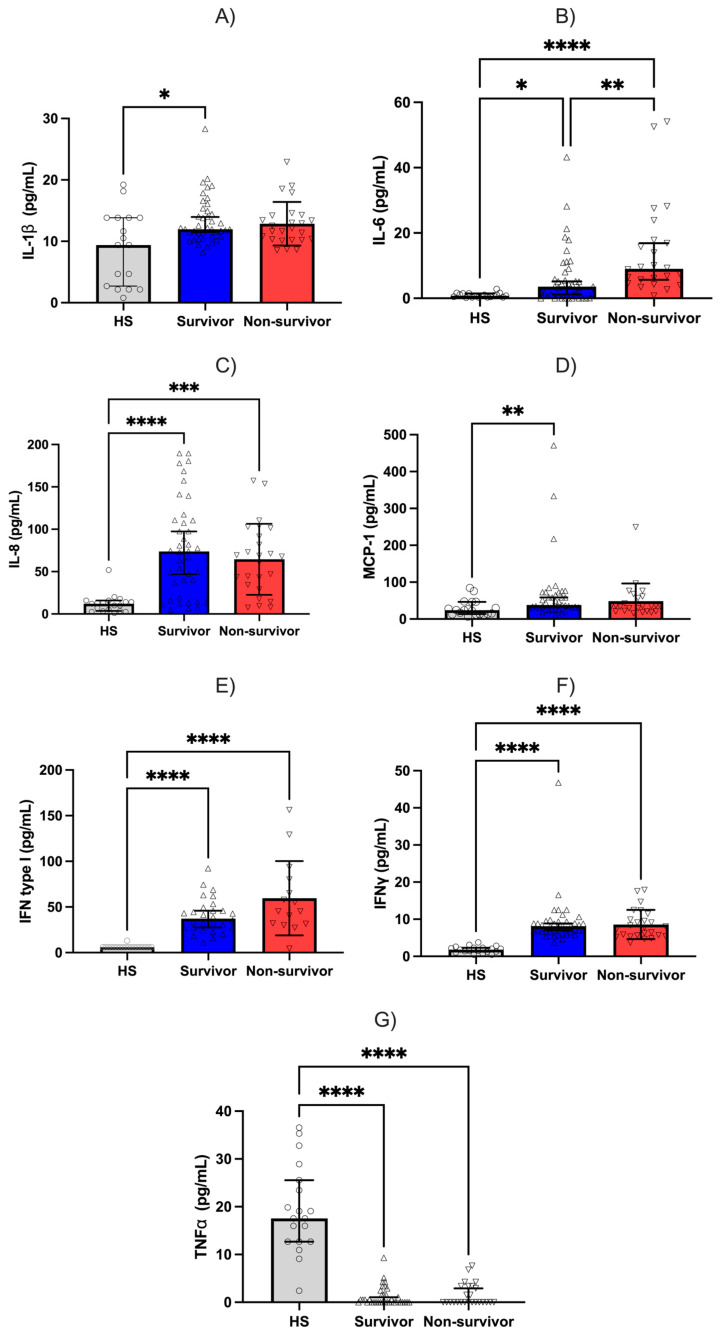 Figure 4
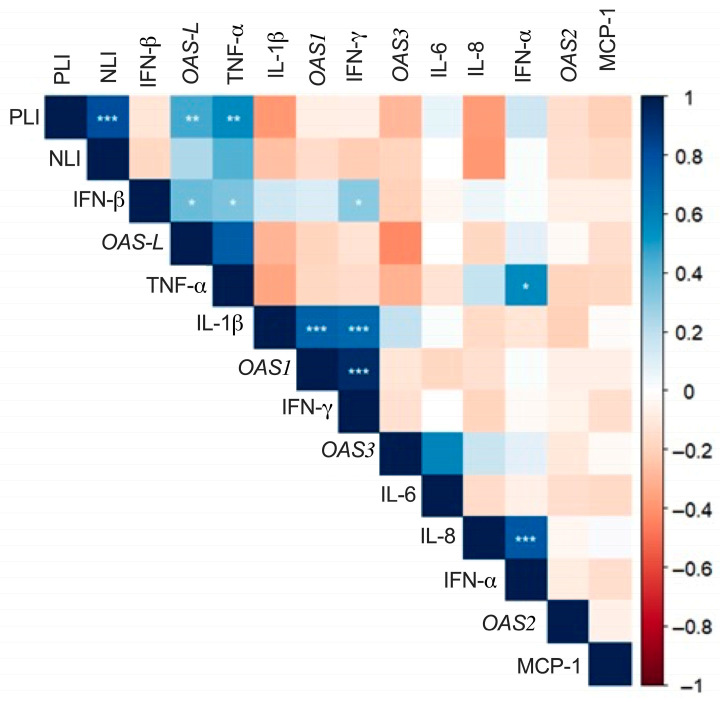 Figure 5
Peer Reviews
No public reviews on file for this paper yet. If you reviewed it on a platform where reviews are public (OpenReview, ICLR, NeurIPS, ICML), you can paste yours below so the community can read it here.
Videos
No videos yet. Explain this paper in a talk, walkthrough, or lecture? Add one.
Taxonomy
Topicsinterferon and immune responses · COVID-19 Clinical Research Studies · RNA regulation and disease