Bumped Kinase Inhibitor BKI-1708 Interferes in Cytokinesis and Drives Baryzoite Conversion in the Cyst-Forming Apicomplexan Parasites Toxoplasma gondii, Neospora caninum and Besnoitia besnoiti
Maria Cristina Ferreira de Sousa, Joachim Müller, Kai Pascal Alexander Hänggeli, Manfred Heller, Anne-Christine Uldry, Sophie Braga-Lagache, Alexandre Leitao, Luis-Miguel Ortega-Mora, Kayode K. Ojo, Wesley C. Van Voorhis, Andrew Hemphill

TL;DR
BKI-1708 causes parasites like Toxoplasma gondii to form unusual structures called baryzoites, which have mixed features of two life stages and may represent a stress response.
Contribution
The study reveals baryzoites as a stress-induced intermediate state with unique proteomic and structural features in three apicomplexan parasites.
Findings
Baryzoites contain trapped zoites and show structural differences across species, including a cyst wall-like structure in T. gondii.
Proteomic analysis shows downregulation of ribosomal and secretory proteins and upregulation of bradyzoite markers only in T. gondii baryzoites.
Common proteins in all three species include alveolin-domain and hypothetical proteins, indicating shared stress responses.
Abstract
Bumped kinase inhibitors (BKIs) have demonstrated safety and promising efficacy against various apicomplexan pathogens both in vitro and in vivo, but do not act parasiticidal in vitro. In the closely related cyst-forming coccidians Toxoplasma gondii, Neospora caninum and Besnoitia besnoiti, treatments with BKI-1708 induce the conversion of intracellular tachyzoites into atypical multinucleated complexes named “baryzoites”. In this study, we comparatively assessed tachyzoites and baryzoites of all three species with respect to ultrastructure, differential antigen expression by immunofluorescence, and overall differential protein expression by MS-proteomics. TEM demonstrated common, but also distinguishing, structural features in baryzoites of the three species. They contained newly formed zoites, unable to complete cytokinesis, and thus they were trapped intracellularly. An…
Genes, proteins, chemicals, diseases, species, mutations and cell lines named across the full text — each resolved to its canonical identifier and authoritative record.
Click any figure to enlarge with its caption.
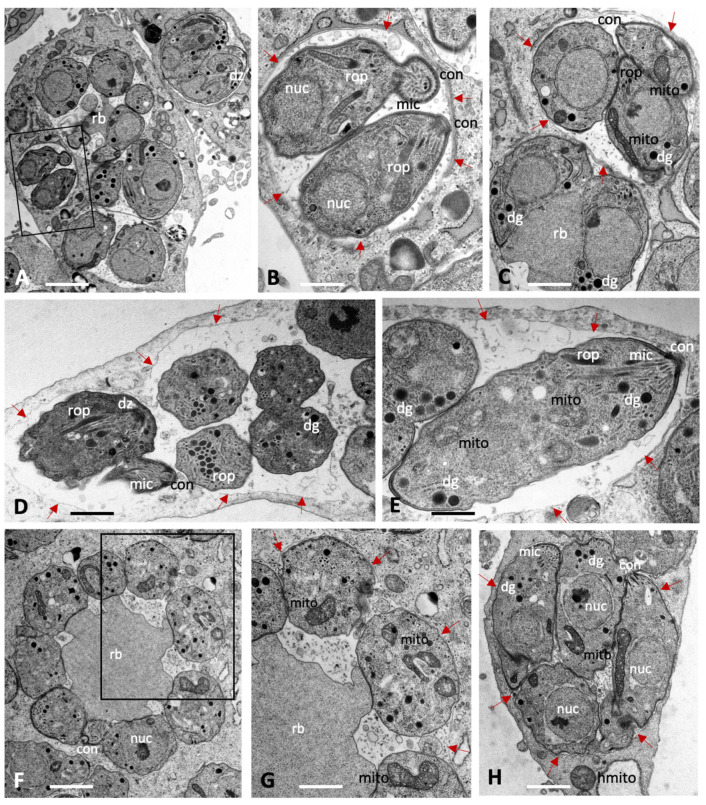 Figure 1
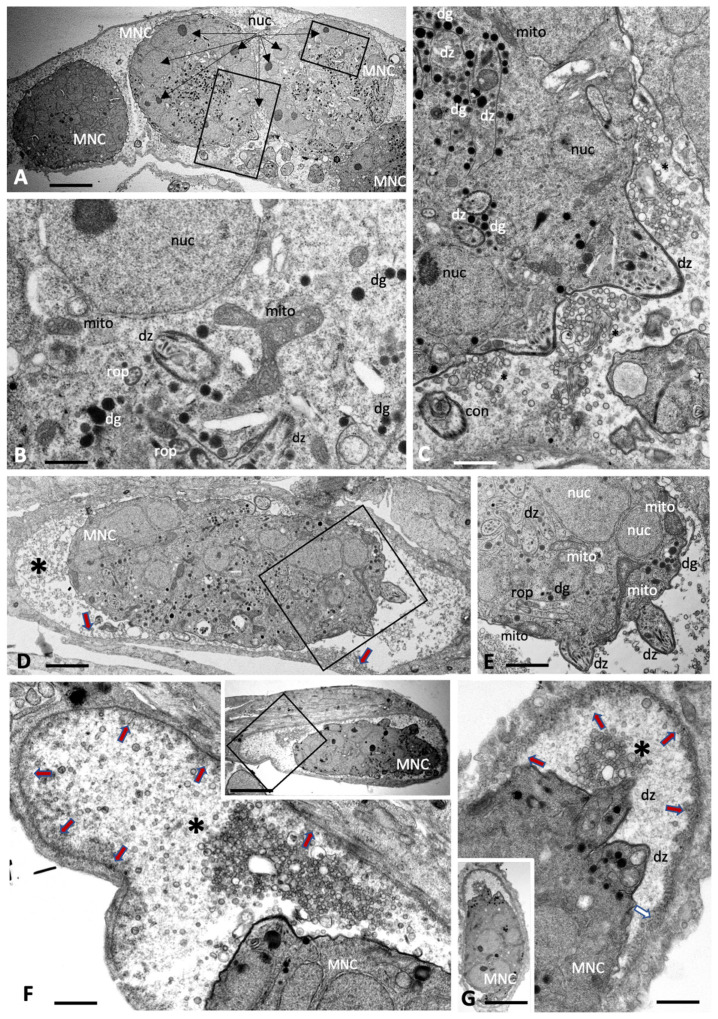 Figure 2
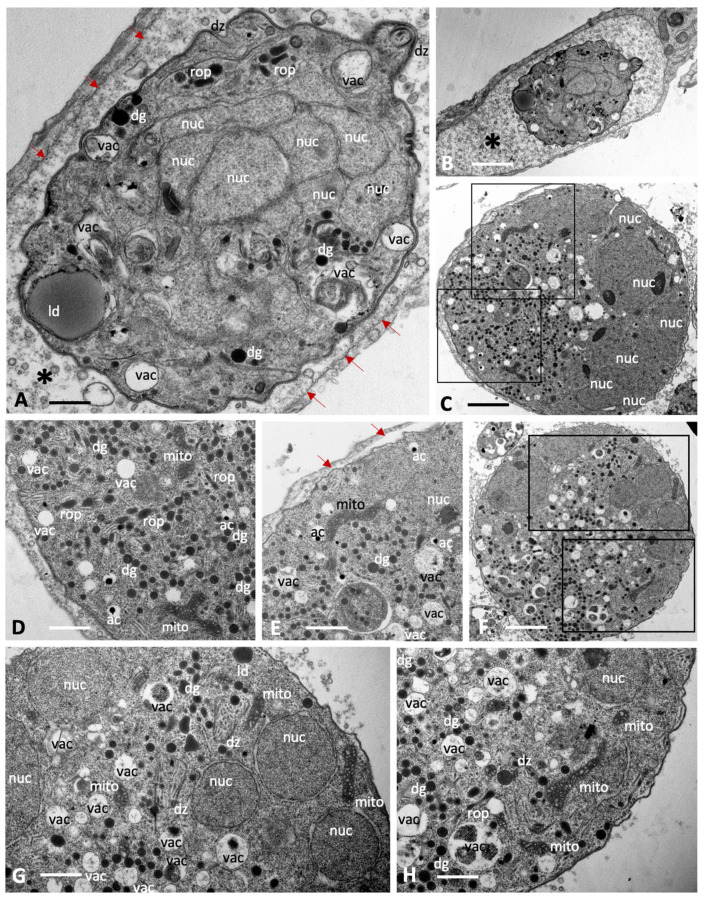 Figure 3
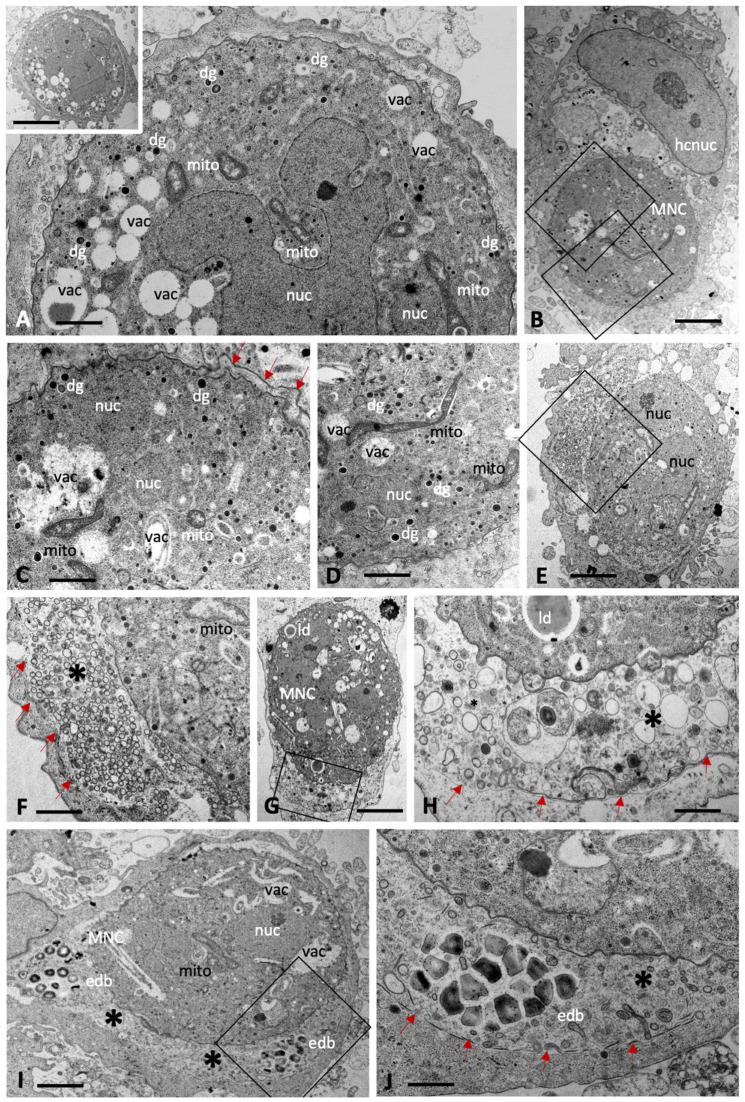 Figure 4
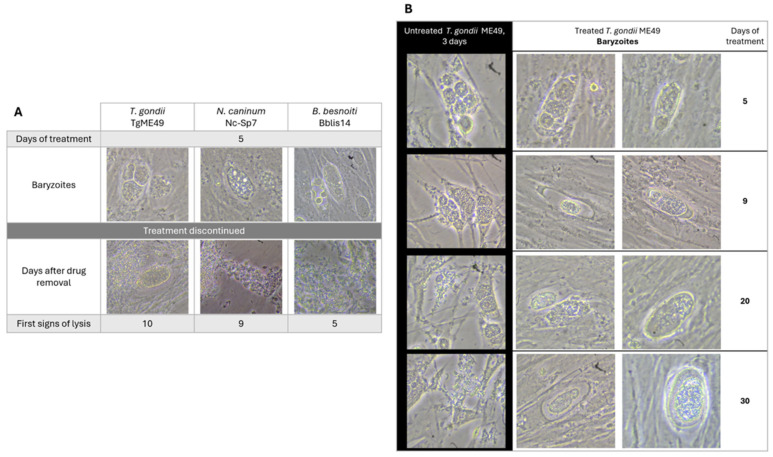 Figure 5
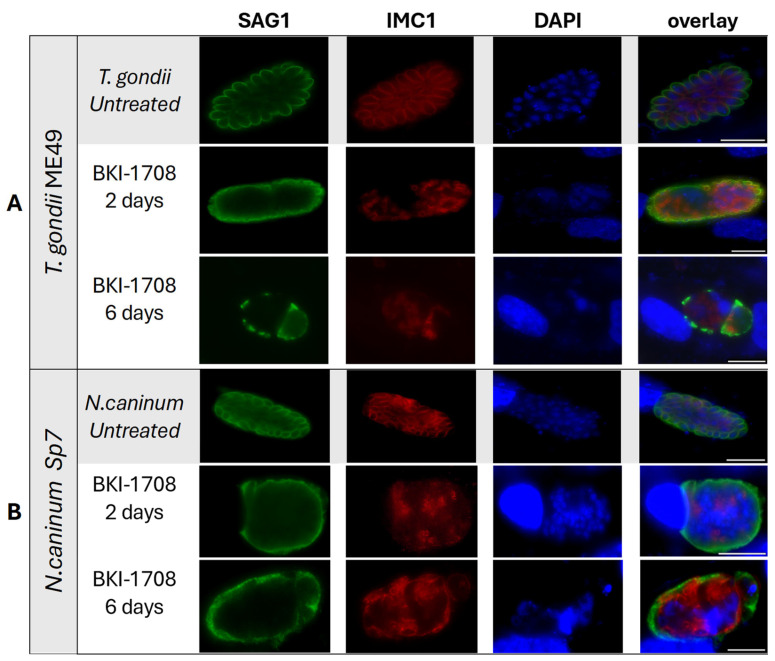 Figure 6
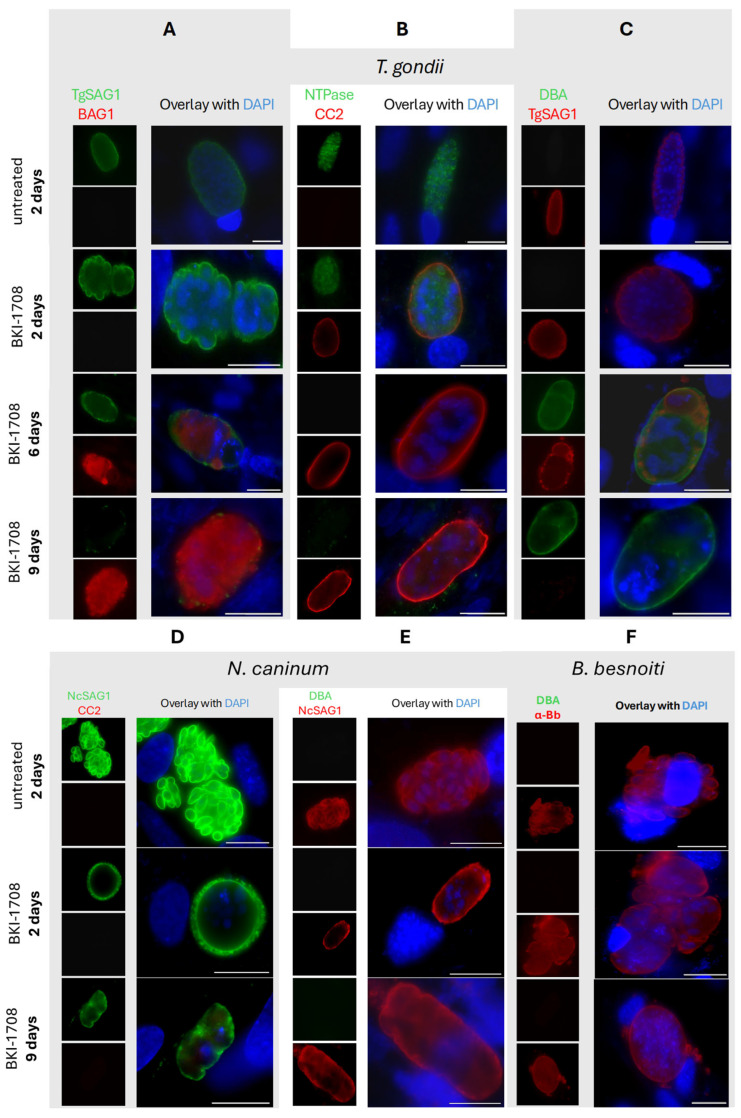 Figure 7
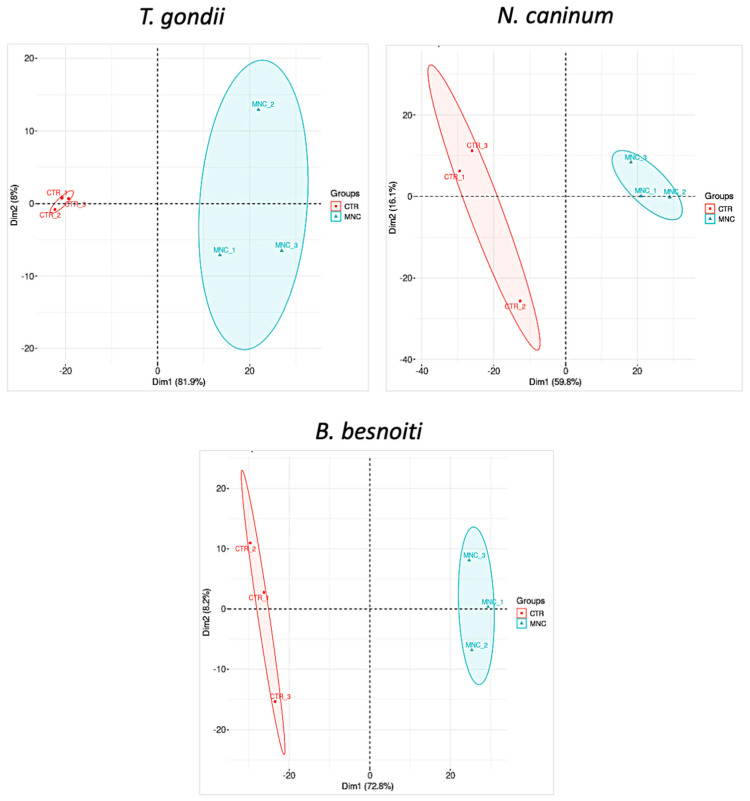 Figure 8
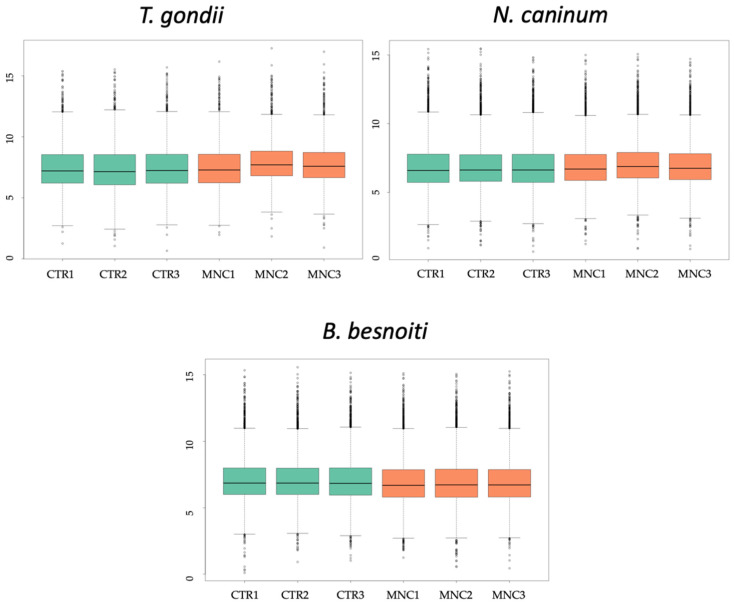 Figure 9
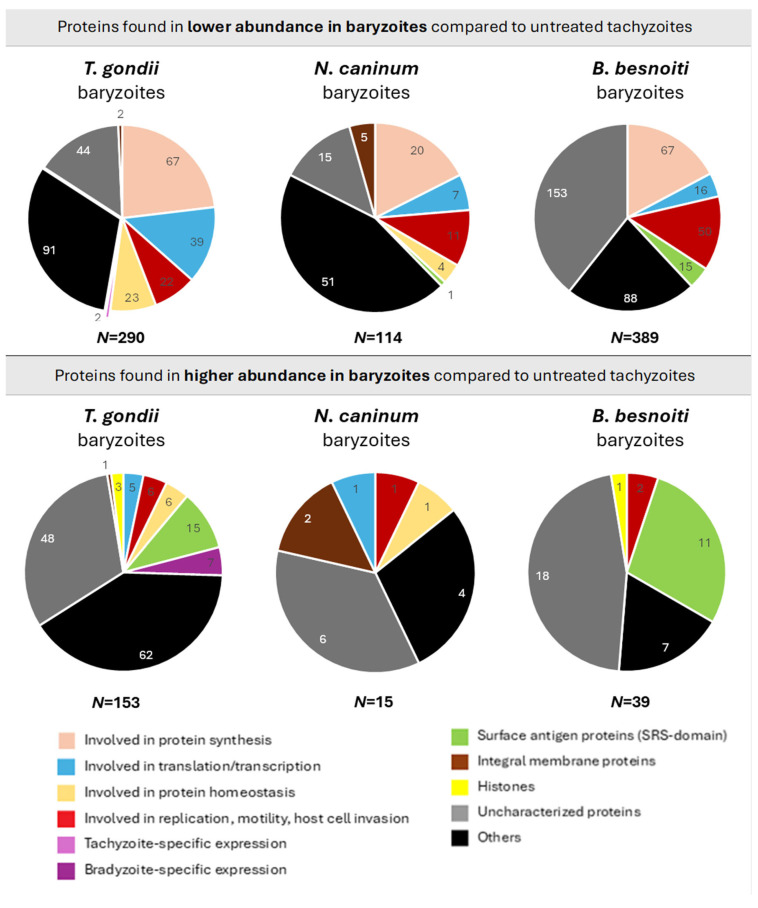 Figure 10
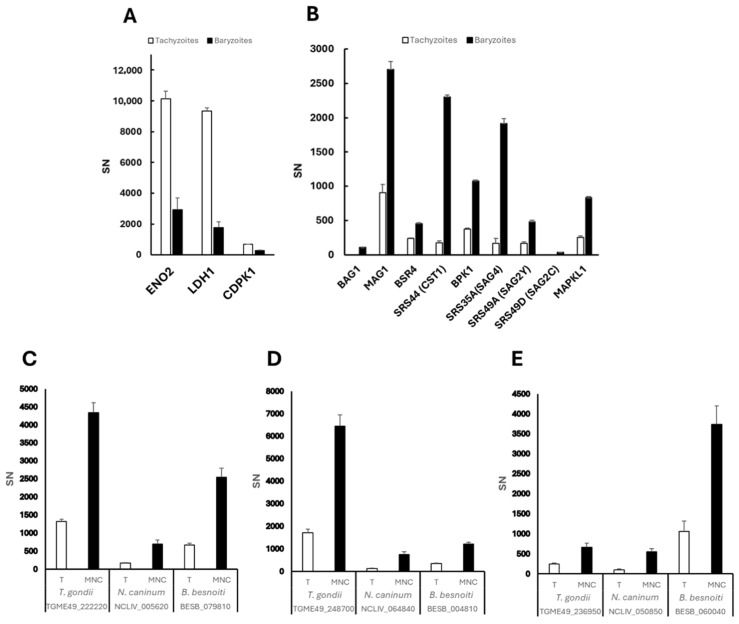 Figure 11
Peer Reviews
No public reviews on file for this paper yet. If you reviewed it on a platform where reviews are public (OpenReview, ICLR, NeurIPS, ICML), you can paste yours below so the community can read it here.
Videos
No videos yet. Explain this paper in a talk, walkthrough, or lecture? Add one.
Taxonomy
TopicsToxoplasma gondii Research Studies · Parasitic Infections and Diagnostics · Legionella and Acanthamoeba research