Molecular Characterization of Endoplasmic Reticulum (ER) Stress-Associated BiP, IRE1, and XBP1 Genes in Diaphorina citri and Their Roles During Candidatus Liberibacter asiaticus Infection
Zhiyou Xuan, Xinying Yang, Tao Peng, Yingzhe Yuan, Caifu Liu, Yali Wang, Aijun Huang, Long Yi, Xuefeng Wang, Mengji Cao, Changyong Zhou

TL;DR
This study explores how ER stress genes in the citrus psyllid insect respond to a bacterial pathogen, revealing new insights into host-pathogen interactions.
Contribution
The study identifies conserved IRE1-mediated XBP1 splicing as a reliable ER stress marker in Diaphorina citri and reveals its role in Candidatus Liberibacter asiaticus infection.
Findings
ER stress in Diaphorina citri is marked by IRE1-mediated XBP1 splicing, a conserved UPR indicator.
CLas infection triggers early UPR activation followed by suppression, with ER stress induction increasing bacterial titers.
IRE1 and XBP1 have opposing effects on CLas proliferation, as revealed by RNAi silencing experiments.
Abstract
Although endoplasmic reticulum (ER) stress and the consequent unfolded protein response (UPR) are well characterized in mammalian systems, their role in plant pathogens transmitted by insect vectors remains poorly understood. In insects, ER stress genes are not well characterized, leading to a shortage of reliable markers or convenient methods to assess ER stress. Furthermore, the interaction between the citrus huanglongbing pathogen, Candidatus Liberibacter asiaticus (CLas), and its insect vector, Diaphorina citri, is unclear. In this study, we characterized three core UPR genes in D. citri and established conserved IRE1-mediated splicing of XBP1 mRNA as a reliable indicator of ER stress. During CLas infection, the UPR was dynamically regulated, showing early activation followed by later suppression. Functional assays demonstrated that ER stress induction increased CLas titers, while…
Genes, proteins, chemicals, diseases, species, mutations and cell lines named across the full text — each resolved to its canonical identifier and authoritative record.
Click any figure to enlarge with its caption.
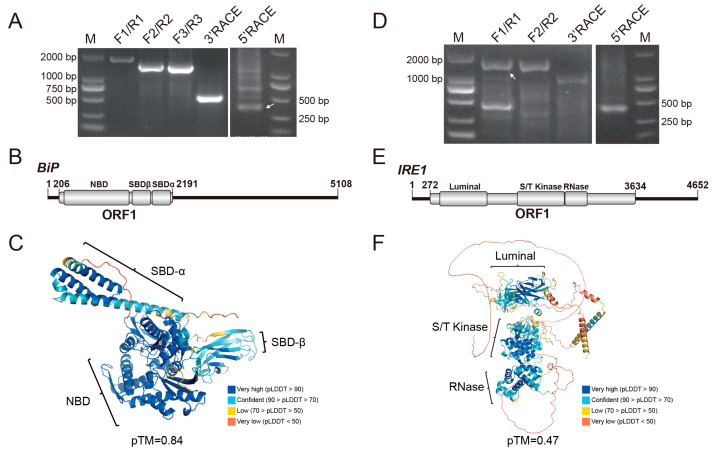 Figure 1
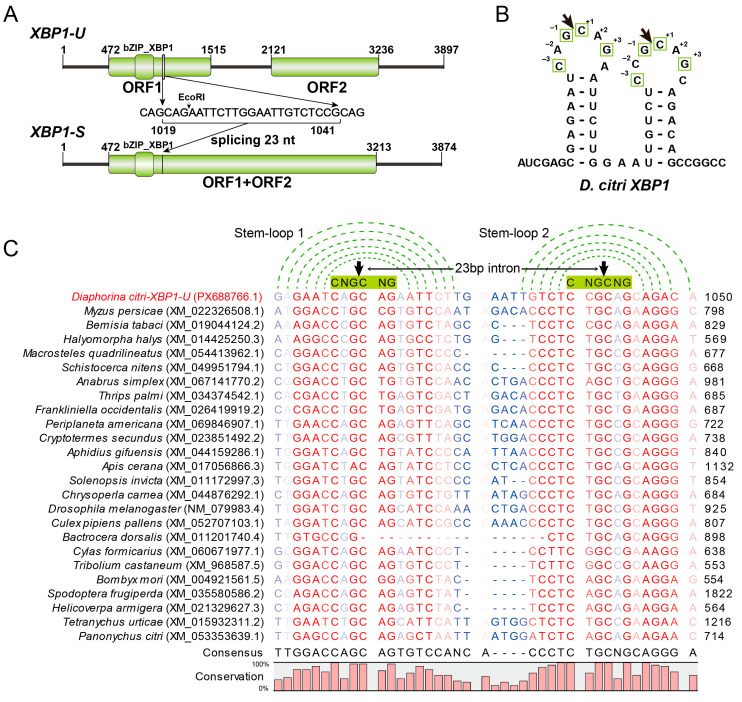 Figure 2
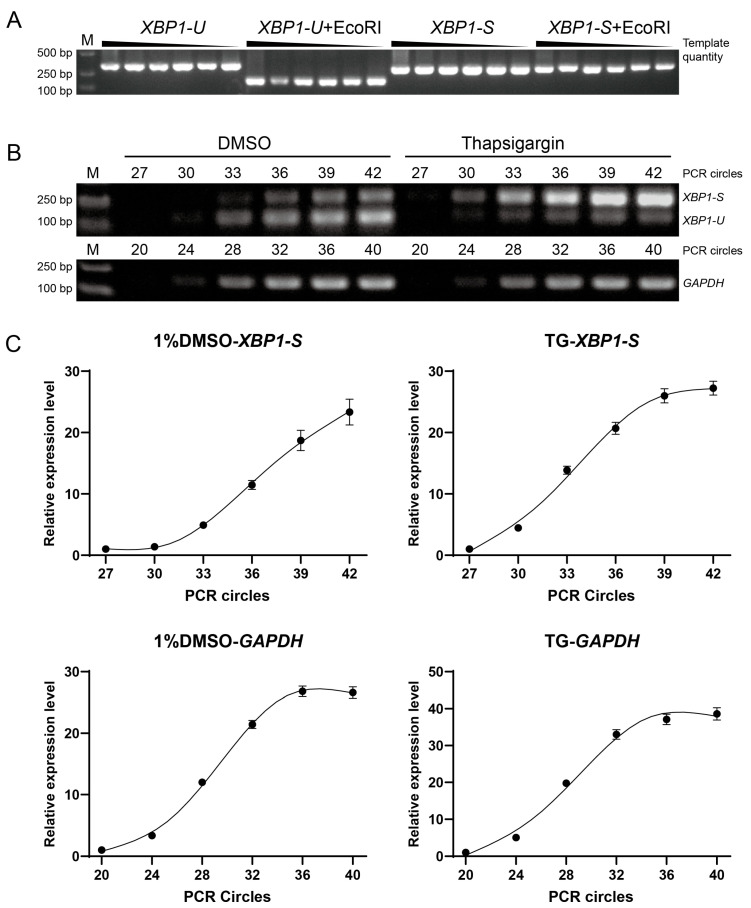 Figure 3
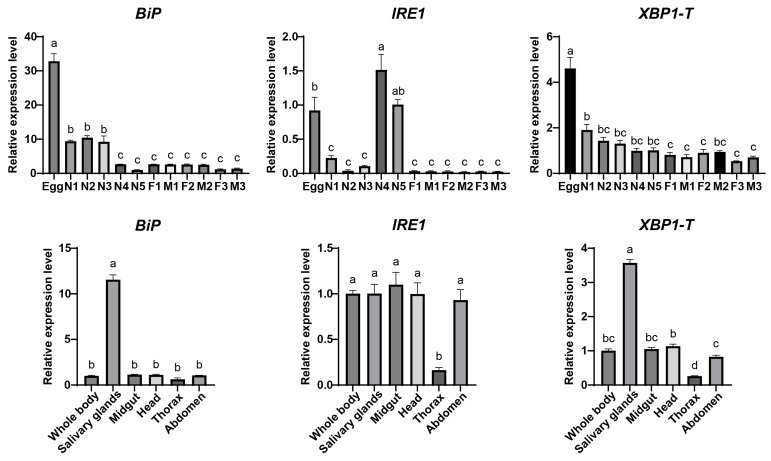 Figure 4
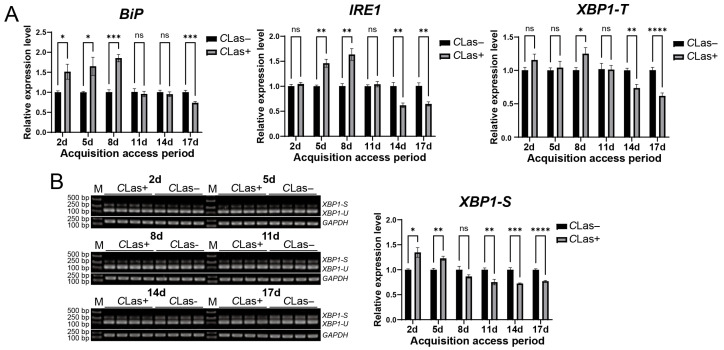 Figure 5
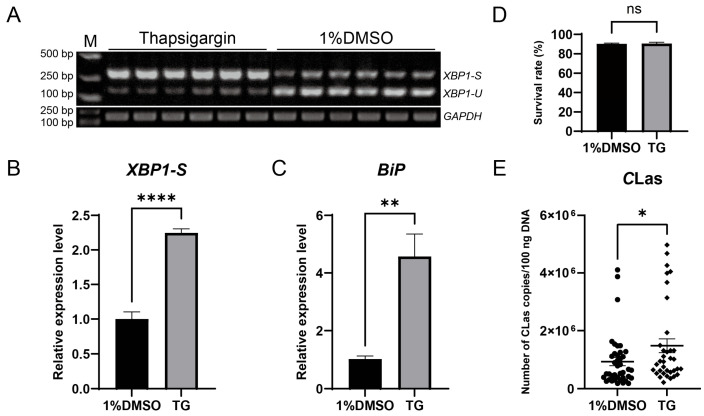 Figure 6
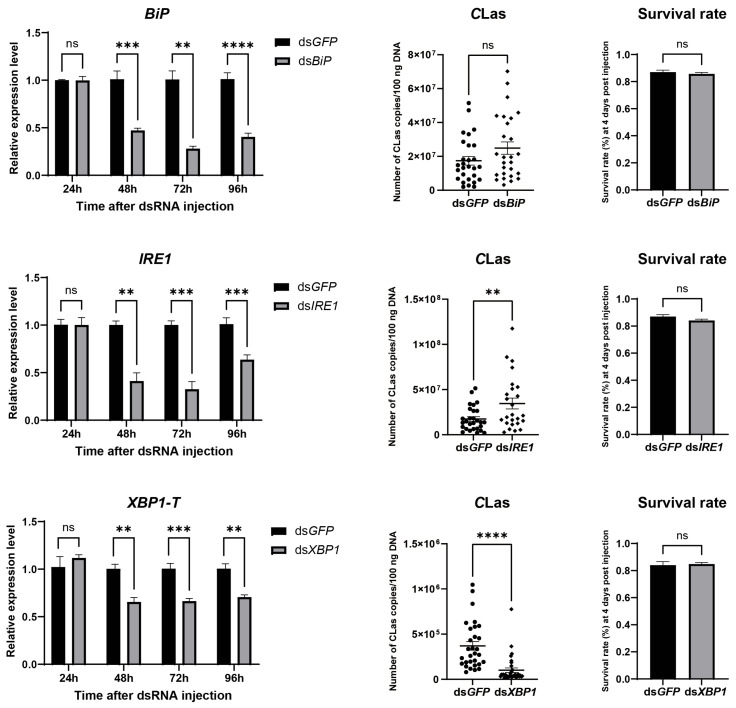 Figure 7
Peer Reviews
No public reviews on file for this paper yet. If you reviewed it on a platform where reviews are public (OpenReview, ICLR, NeurIPS, ICML), you can paste yours below so the community can read it here.
Videos
No videos yet. Explain this paper in a talk, walkthrough, or lecture? Add one.
Taxonomy
TopicsPhytoplasmas and Hemiptera pathogens · Studies on Chitinases and Chitosanases · Invertebrate Immune Response Mechanisms