Cribriform Tumor Burden in Grade Group 4 Prostate Cancer: A Quantitative Threshold Predicting Lymphovascular Invasion and Metastasis
Ilkay Tosun, Onur Sahin, Eyup Veli Kucuk

TL;DR
This study shows that measuring the amount of cribriform tumor burden in prostate cancer helps predict aggressive disease and metastasis better than simple assessments.
Contribution
The study identifies a quantitative threshold (≥25%) of cribriform tumor burden as a novel predictor of lymphovascular invasion and metastasis in Grade Group 4 prostate cancer.
Findings
A CTB threshold of ≥25% was strongly associated with lymphovascular invasion (LVI) and intraductal carcinoma.
High CTB was independently linked to LVI and shorter distant metastasis-free survival.
Quantifying CTB improved risk stratification compared to binary assessments.
Abstract
Background/Objectives: Although the presence and diameter of the cribriform pattern (CP) are established prognostic factors in prostate cancer (PCa), the clinical impact of quantitative cribriform tumor burden (CTB) remains poorly characterized. This study aimed to evaluate the association between CTB and clinicopathological outcomes in Grade Group 4 PCa with large cribriform morphology (LC-GG4). Methods: We retrospectively analyzed patients with pure GG4 prostate cancer exhibiting ≥1 large cribriform gland (>0.25 mm) at radical prostatectomy. CTB was assessed as the percentage of cribriform architecture relative to the total tumor area. Following clinicopathological correlation, receiver operating characteristic (ROC) analysis determined the optimal CTB threshold for predicting lymphovascular invasion (LVI). Distant Metastasis-free survival (dMFS) and biochemical recurrence-free…
Genes, proteins, chemicals, diseases, species, mutations and cell lines named across the full text — each resolved to its canonical identifier and authoritative record.
Click any figure to enlarge with its caption.
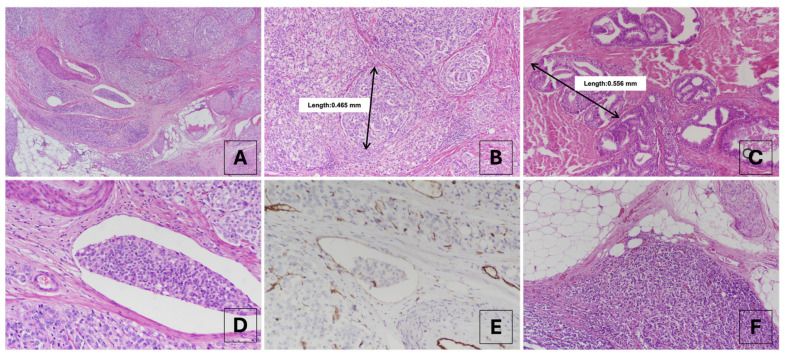 Figure 1
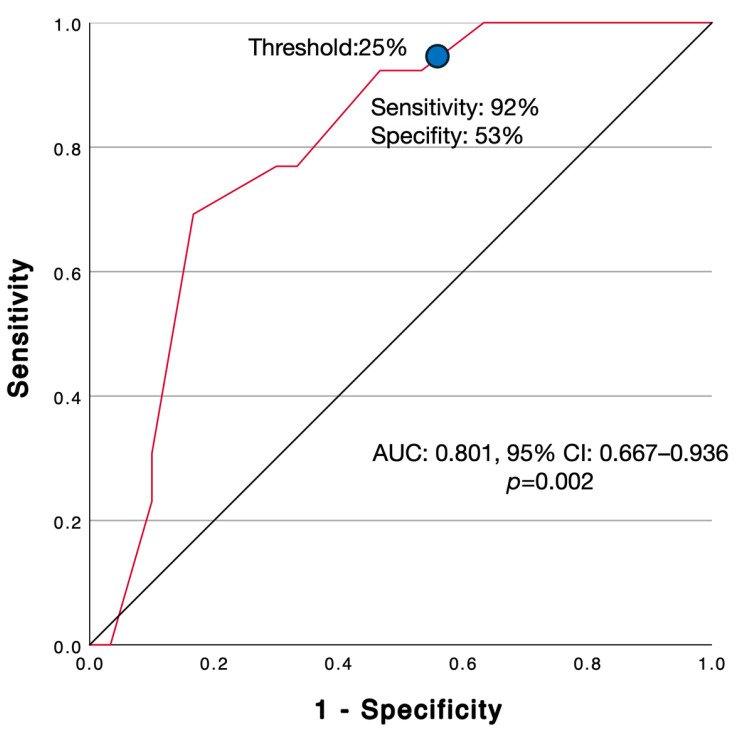 Figure 2
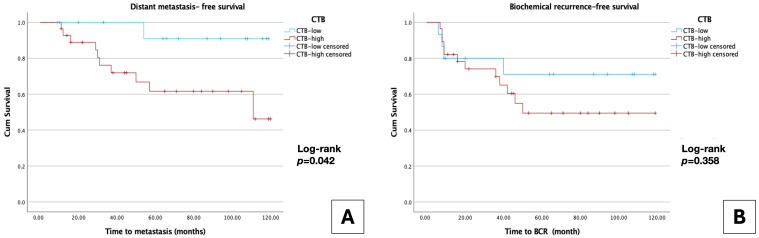 Figure 3
Peer Reviews
No public reviews on file for this paper yet. If you reviewed it on a platform where reviews are public (OpenReview, ICLR, NeurIPS, ICML), you can paste yours below so the community can read it here.
Videos
No videos yet. Explain this paper in a talk, walkthrough, or lecture? Add one.
Taxonomy
TopicsProstate Cancer Diagnosis and Treatment · Prostate Cancer Treatment and Research · Advanced Radiotherapy Techniques