Artificial Intelligence in Venous Thromboembolism Prevention: A Narrative Review of Machine Learning, Deep Learning, and Natural Language Processing
Daniela Nicoleta Crisan, Talida Georgiana Cut, Lucian-Flavius Herlo, Nina Ivanovic, Alexandra Herlo, Luana Alexandrescu, Andreea Sălcudean, Raluca Dumache

TL;DR
This paper reviews how artificial intelligence, including machine learning and deep learning, can improve venous thromboembolism prevention by analyzing health data and clinical notes.
Contribution
The paper provides a comprehensive narrative review of AI applications in venous thromboembolism prevention, emphasizing novel integration of machine learning and natural language processing.
Findings
Supervised machine learning algorithms improve predictive performance by capturing complex relationships in electronic health records.
Deep learning models, such as convolutional neural networks, achieve diagnostic accuracy comparable to expert radiologists in interpreting imaging data.
Natural language processing extracts risk-relevant information from unstructured clinical notes, enhancing risk assessment.
Abstract
Venous thromboembolism (VTE), which includes deep vein thrombosis and pulmonary embolism, is a significant and preventable cause of morbidity and mortality worldwide. Despite the existence of clinical prediction models, biomarker-based risk assessments, and imaging techniques, gaps remain in accurately identifying and managing high-risk patients. In recent years, artificial intelligence has emerged as a transformative tool in healthcare, offering promising applications for enhancing VTE prevention strategies. This narrative review synthesizes current evidence on the use of artificial intelligence (AI) technologies including machine learning (ML), deep learning (DL), and natural language processing (NLP). We explore how supervised ML algorithms, such as random forests, support vector machines, and gradient boosting, improve predictive performance compared to traditional models by…
Genes, proteins, chemicals, diseases, species, mutations and cell lines named across the full text — each resolved to its canonical identifier and authoritative record.
Click any figure to enlarge with its caption.
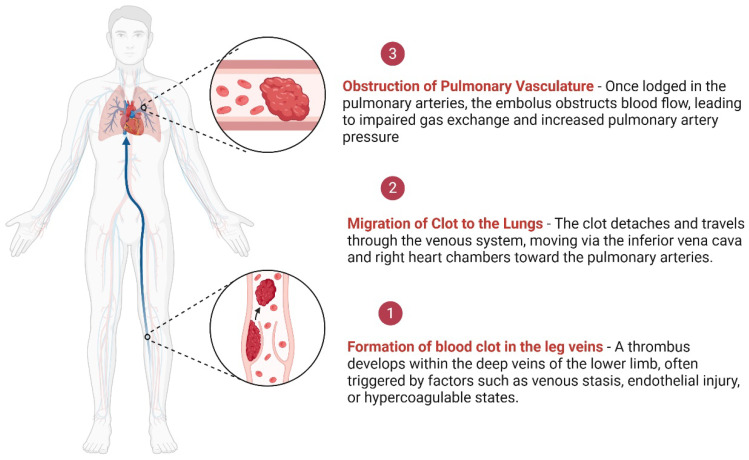 Figure 1
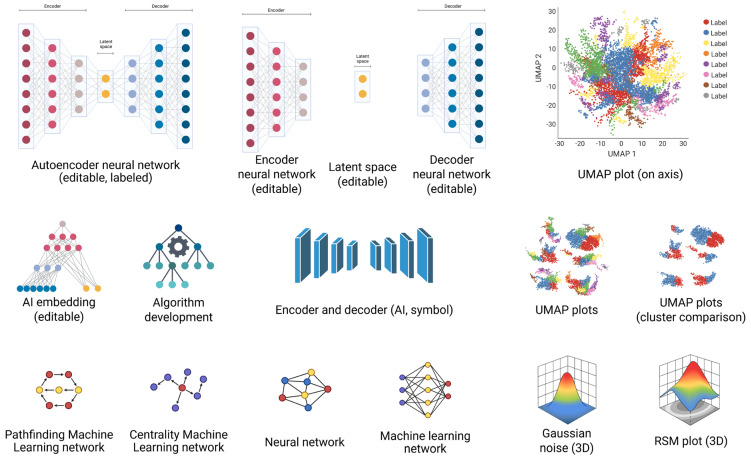 Figure 2
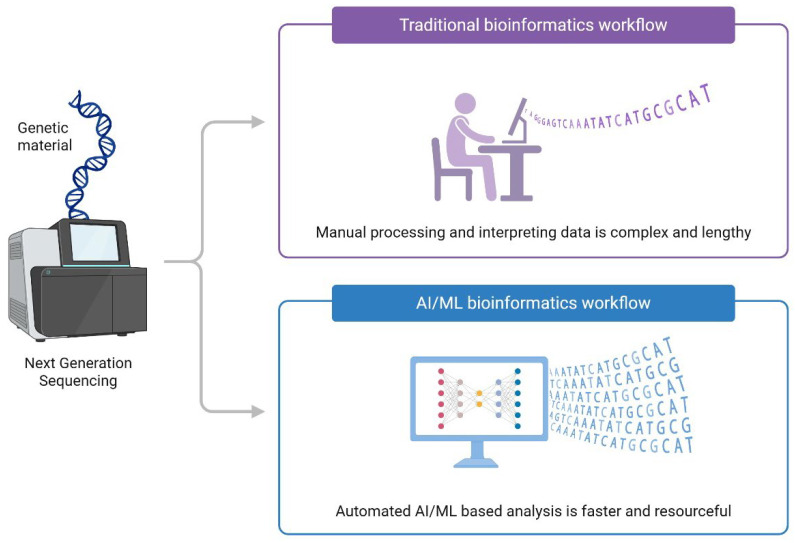 Figure 3
Peer Reviews
No public reviews on file for this paper yet. If you reviewed it on a platform where reviews are public (OpenReview, ICLR, NeurIPS, ICML), you can paste yours below so the community can read it here.
Videos
No videos yet. Explain this paper in a talk, walkthrough, or lecture? Add one.
Taxonomy
TopicsVenous Thromboembolism Diagnosis and Management · Artificial Intelligence in Healthcare and Education · Atrial Fibrillation Management and Outcomes