Feeding Preferences for Sugars and Amino Acids in the Red Imported Fire Ant, Solenopsis invicta Buren
Pan Luo, Qing-Xing Shi, Jin-Huan Lou, Ting Chen, Jie Chen, De-Sen Wang, Ming-Yong Ma, Yan Wu, Da-Xing Yang, Guo-Jun Qi

TL;DR
This study explores what sugars and amino acids red imported fire ants prefer to eat, which could help in creating better baits to control them.
Contribution
A new feeding preference assay system was developed to study ant foraging behavior under near-natural conditions.
Findings
S. invicta workers prefer sucrose and leucine over other tested compounds.
Feeding preferences for sucrose and leucine increase with concentration.
A mixture of sucrose and leucine significantly enhances field attraction compared to single solutions.
Abstract
Associations between ants (Hymenoptera: Formicidae) and honeydew-producing hemipterans are canonical examples of mutualism in ecosystems. Honeydew, rich in sugars and amino acids, serves as a key factor regulating ant foraging behavior. This study focused on the globally invasive pest, the red imported fire ant, Solenopsis invicta Buren. Employing a newly developed feeding preference assay system, laboratory and field experiments were conducted to systematically evaluate the feeding preferences and attraction preference of worker ants for sugars and amino acids, respectively. The results demonstrated that S. invicta workers exhibited significantly stronger feeding preferences for sucrose and leucine over other tested compounds. Furthermore, these preferences for both sucrose and leucine intensified with increasing concentration of each compound. Notably, ants preferred single-component…
Genes, proteins, chemicals, diseases, species, mutations and cell lines named across the full text — each resolved to its canonical identifier and authoritative record.
Click any figure to enlarge with its caption.
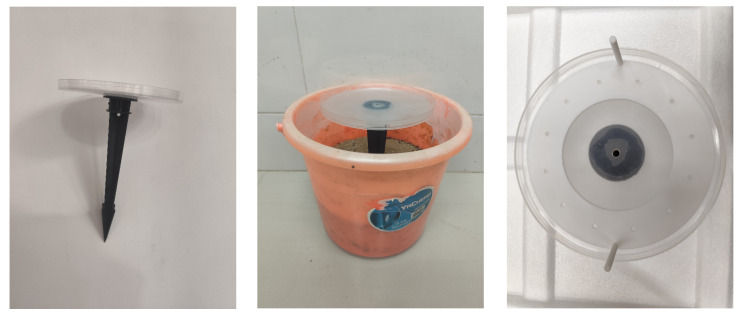 Figure 1
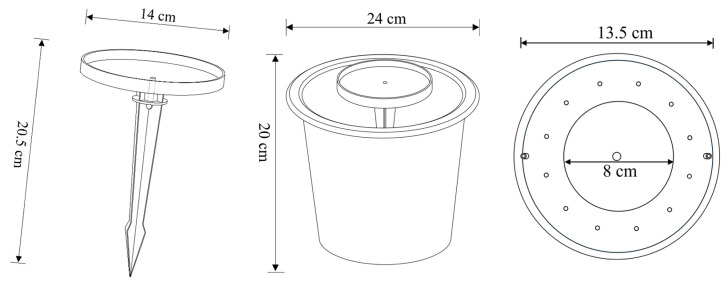 Figure 2
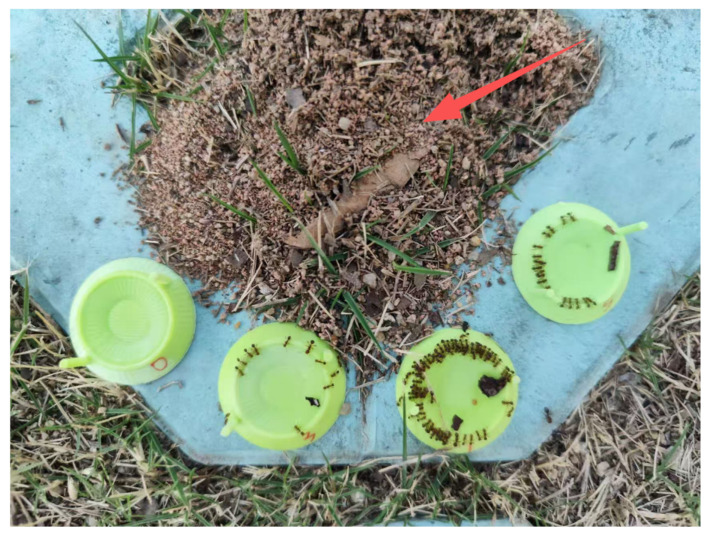 Figure 3
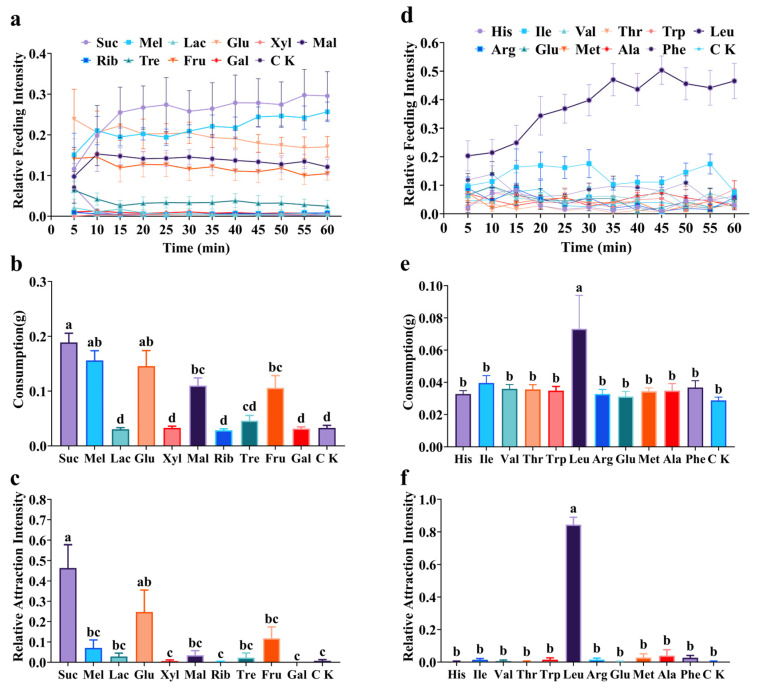 Figure 4
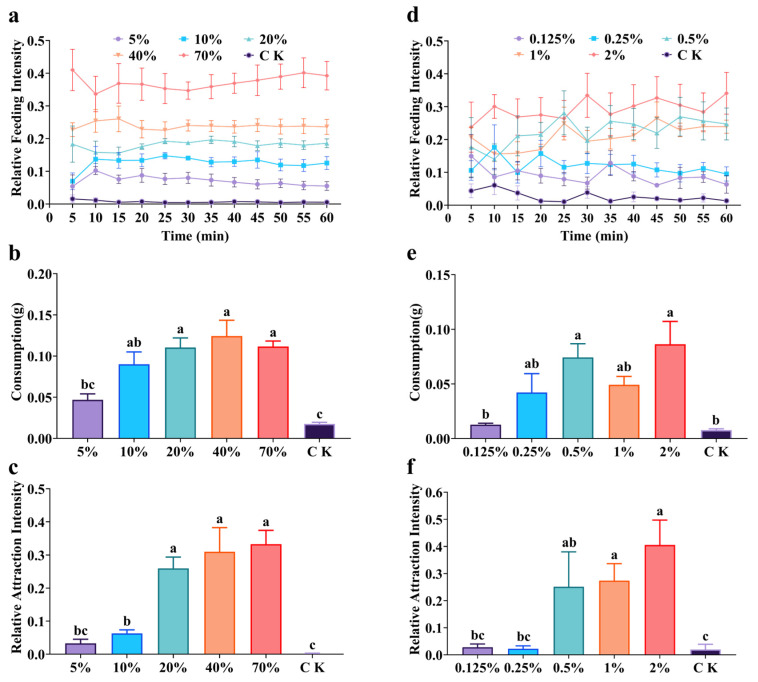 Figure 5
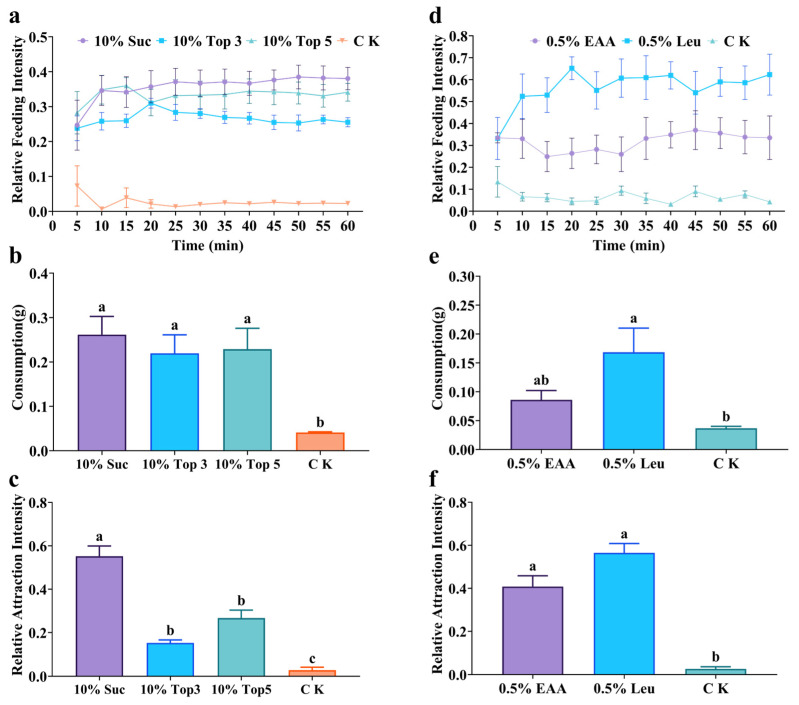 Figure 6
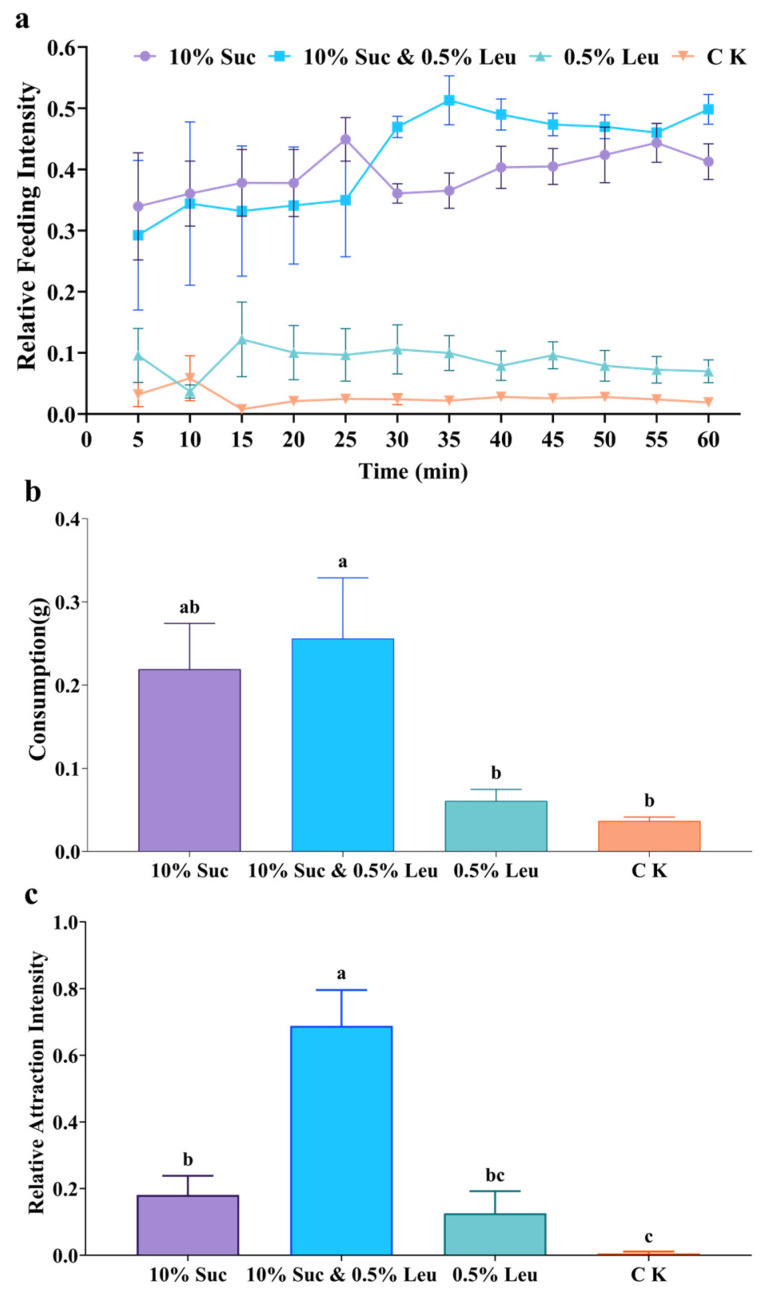 Figure 7
Peer Reviews
No public reviews on file for this paper yet. If you reviewed it on a platform where reviews are public (OpenReview, ICLR, NeurIPS, ICML), you can paste yours below so the community can read it here.
Videos
No videos yet. Explain this paper in a talk, walkthrough, or lecture? Add one.
Taxonomy
TopicsInsect and Arachnid Ecology and Behavior · Neurobiology and Insect Physiology Research · Fossil Insects in Amber