Can Eretmocerus eremicus Assess Oviposition Sites with Varying Host Densities and Predation Risks, and Make Decisions Based on Scent Cues?
Luis Enrique Chavarín-Gómez, Víctor Parra-Tabla, Lizette Cicero, Carla Vanessa Sánchez-Hernández, Paola Andrea Palmeros-Suárez, Ricardo Ramírez-Romero

TL;DR
This study explores how the parasitoid wasp Eretmocerus eremicus uses scent to choose where to lay eggs, focusing on host presence and predation risk.
Contribution
The study reveals that Eretmocerus eremicus responds more to strong scent contrasts than subtle differences in host density or predation risk.
Findings
Eretmocerus eremicus can distinguish between host and non-host patches using scent cues.
The wasps avoided patches with high predation risk but did not respond to smaller risk differences.
They responded more to strong scent contrasts than to subtle scent differences in host density.
Abstract
Parasitoid wasps can help control crop pests, but to do so effectively, they must detect where pests are and avoid places where predators could kill them. We tested whether the parasitoid wasp Eretmocerus eremicus relies on scent cues to select oviposition sites that optimize host encounters while minimizing predation risk. In laboratory choice tests conducted in a wind tunnel under a continuous airflow, we measured which patch the wasps selected, how long they took to decide, and their searching and oviposition behavior after arrival. The wasps clearly distinguished hosts from non-host patches using scent cues, but they did not reliably choose between patches with different host numbers under our assay conditions. They also avoided patches with very high predation risks more than they did safe patches, but they did not consistently respond to smaller differences in risk. Overall, under…
Genes, proteins, chemicals, diseases, species, mutations and cell lines named across the full text — each resolved to its canonical identifier and authoritative record.
Click any figure to enlarge with its caption.
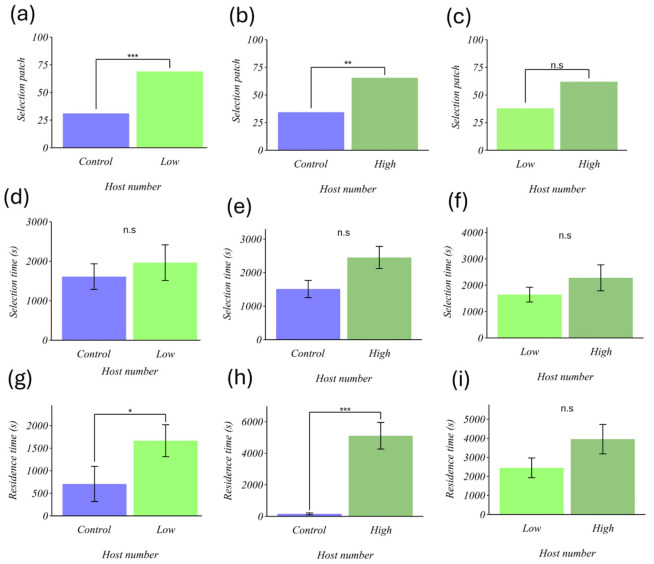 Figure 1
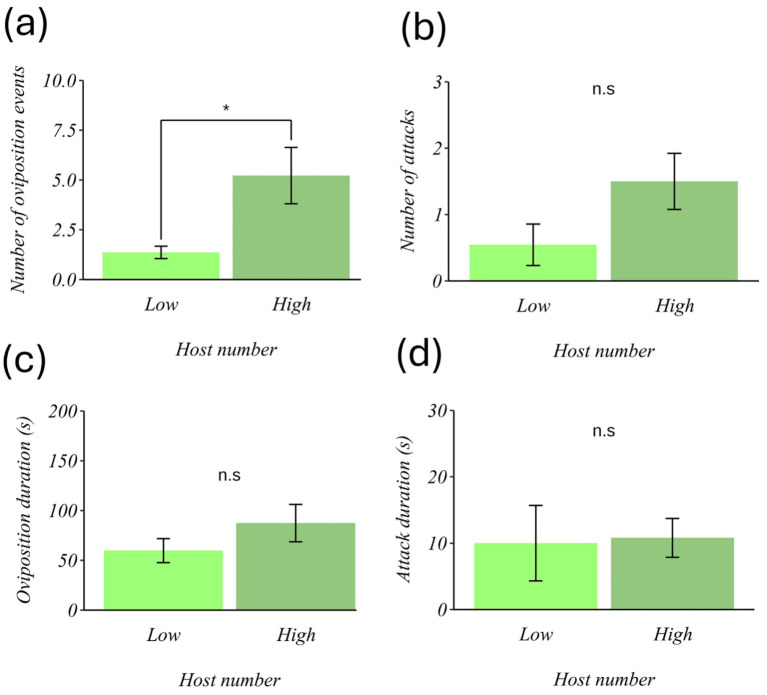 Figure 2
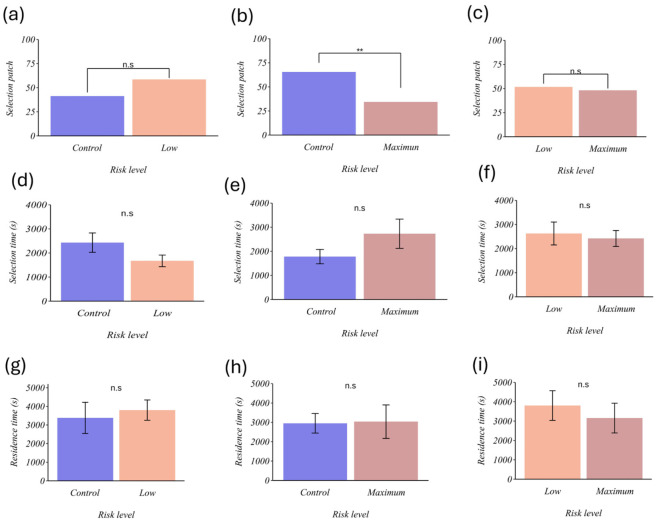 Figure 3
Peer Reviews
No public reviews on file for this paper yet. If you reviewed it on a platform where reviews are public (OpenReview, ICLR, NeurIPS, ICML), you can paste yours below so the community can read it here.
Videos
No videos yet. Explain this paper in a talk, walkthrough, or lecture? Add one.
Taxonomy
TopicsInsect-Plant Interactions and Control · Insect Pheromone Research and Control · Neurobiology and Insect Physiology Research