Revisiting the Genetics of Hypertrophic Cardiomyopathy: From Sarcomeres to Polygenic Modulation and Clinical Translation
Maria Cristina Carella, Marco Maria Dicorato, Paolo Basile, Ilaria Dentamaro, Daniela Santoro, Eugenio Carulli, Michele Davide Latorre, Eduardo Urgesi, Francesco Monitillo, Nicoletta Resta, Gianluca Pontone, Marco Matteo Ciccone, Andrea Igoren Guaricci, Cinzia Forleo

TL;DR
This paper reviews how the genetics of hypertrophic cardiomyopathy is more complex than previously thought, involving multiple genes and factors that influence disease expression and diagnosis.
Contribution
The paper highlights the shift from monogenic to polygenic understanding of HCM and emphasizes the clinical relevance of gene-specific and polygenic factors.
Findings
HCM is now understood to involve multiple genes and polygenic modulation, not just single gene mutations.
Phenotypic variability in HCM is influenced by variant types, gene-specific mechanisms, and modifying factors.
Polygenic risk scores and genome-wide studies help explain disease susceptibility in genotype-negative patients.
Abstract
Hypertrophic cardiomyopathy (HCM), the most common inherited cardiomyopathy, represents a paradigmatic condition for precision cardiovascular medicine. Once regarded as a monogenic autosomal dominant disorder driven by rare sarcomeric variants, HCM is now recognized as a genetically complex disease characterized by incomplete penetrance, variable expressivity, and heterogeneous clinical trajectories. This review summarizes current evidence on the evolving genetic architecture of HCM, emphasizing the predominant role of definitively validated sarcomeric genes, particularly MYBPC3 and MYH7, and the clinical value of gene panel expansion. Phenotypic variability reflects interactions among variant classes, gene-specific mechanisms, and modifying factors. Differences between missense and truncating variants, haploinsufficiency and poison-peptide effects, allelic imbalance, and age-dependent…
Genes, proteins, chemicals, diseases, species, mutations and cell lines named across the full text — each resolved to its canonical identifier and authoritative record.
Click any figure to enlarge with its caption.
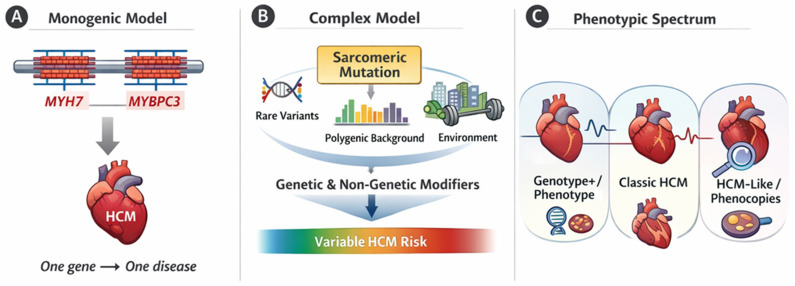 Figure 1
 Figure 2
 Figure 3
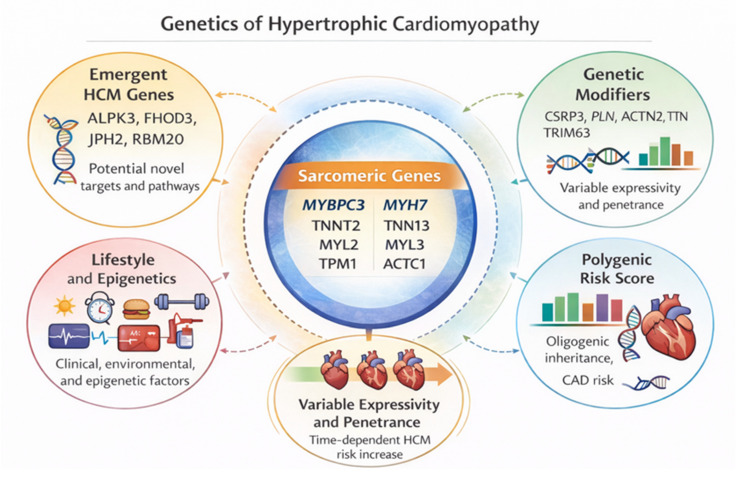 Figure 4
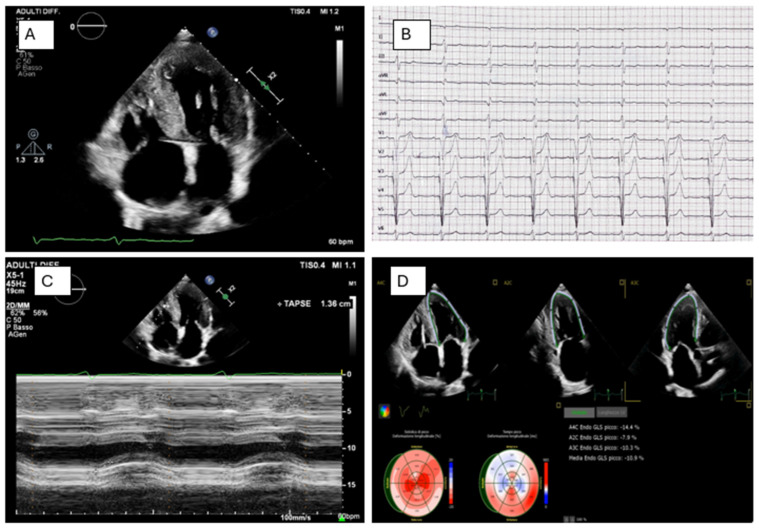 Figure 5
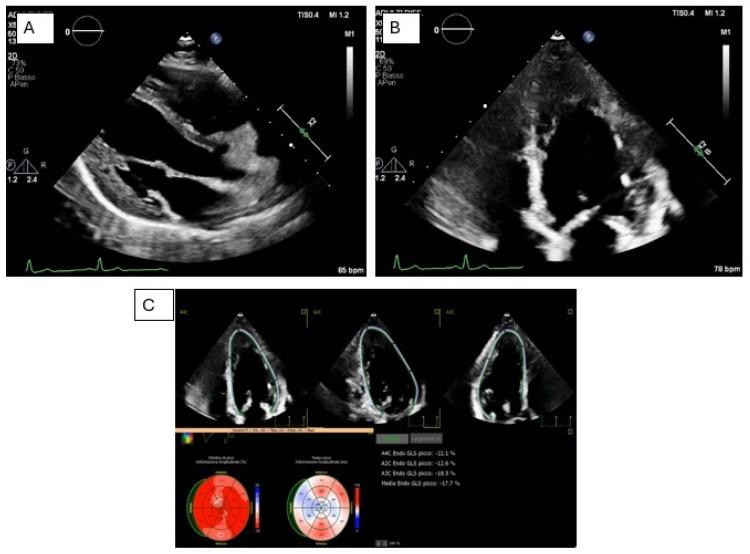 Figure 6
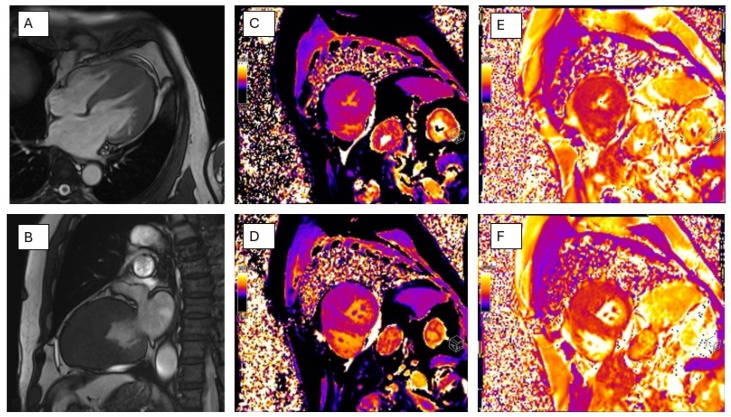 Figure 7
Peer Reviews
No public reviews on file for this paper yet. If you reviewed it on a platform where reviews are public (OpenReview, ICLR, NeurIPS, ICML), you can paste yours below so the community can read it here.
Videos
No videos yet. Explain this paper in a talk, walkthrough, or lecture? Add one.
Taxonomy
TopicsCardiomyopathy and Myosin Studies · Cardiac electrophysiology and arrhythmias · Cardiovascular Effects of Exercise