Anatomy and Ultrastructural Details of the Compound Eyes of the Pear Psyllid, Cacopsylla chinensis (Yang et Li) (Hemiptera: Psyllidae)
Hongfan Ran, Min Li, Yiping Niu, Aihong Ma, Xiaofan Yang

TL;DR
This study reveals the detailed structure of the compound eye in the pear psyllid, which helps understand its vision and behavior for better pest control.
Contribution
The paper provides the first ultrastructural analysis of the compound eye in Cacopsylla chinensis.
Findings
The compound eye of C. chinensis is of the apposition type with a two-tiered rhabdom structure.
The rhabdom is formed by eight retinula cells with distinct distal and proximal regions.
The microvilli of the rhabdom are arranged in two orthogonal directions.
Abstract
The pear psyllid Cacopsylla chinensis (Yang et Li) is an oligophagous pest of pear trees in China, causing significant economic losses through both direct feeding and indirect sooty mold damage. In this study, we examined the detailed structure of the compound eye to evaluate its visual acuity. Using a transmission electron microscope, we found that the psyllid possesses apposition eyes, consisting of a plano-convex cornea, a crystalline cone, eight retinula cells forming a fused rhabdom, and both primary and secondary pigment cells. Interestingly, the rhabdom exhibits a distal region formed by R1–R7 and a proximal region including R1–R6 and R8. Understanding the ultrastructural morphology of compound eyes in C. chinensis is essential in understanding its visual capacity and host-seeking behavior, which will inform the development of effective pest management strategies. The compound…
Genes, proteins, chemicals, diseases, species, mutations and cell lines named across the full text — each resolved to its canonical identifier and authoritative record.
Click any figure to enlarge with its caption.
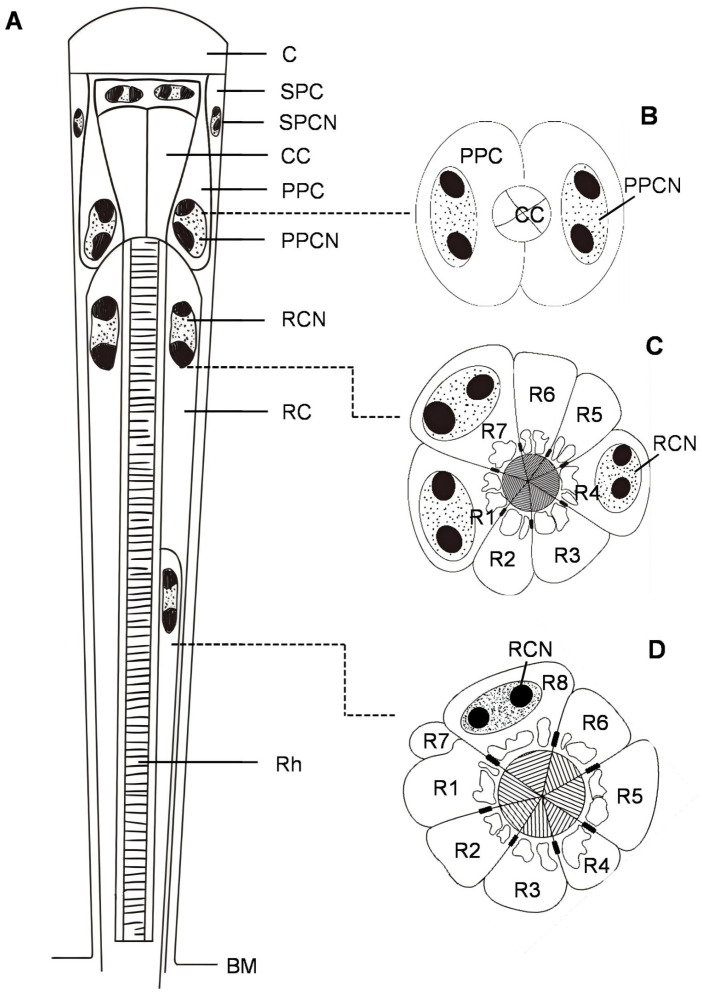 Figure 1
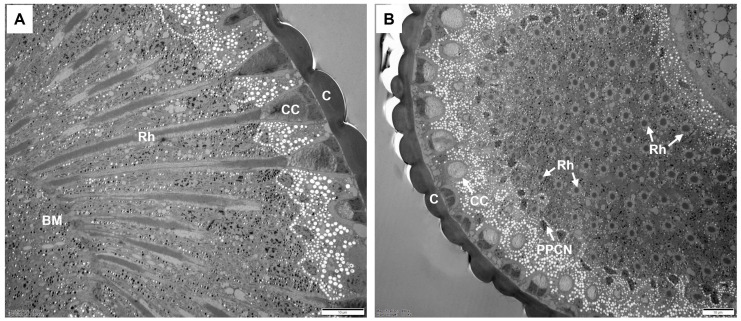 Figure 2
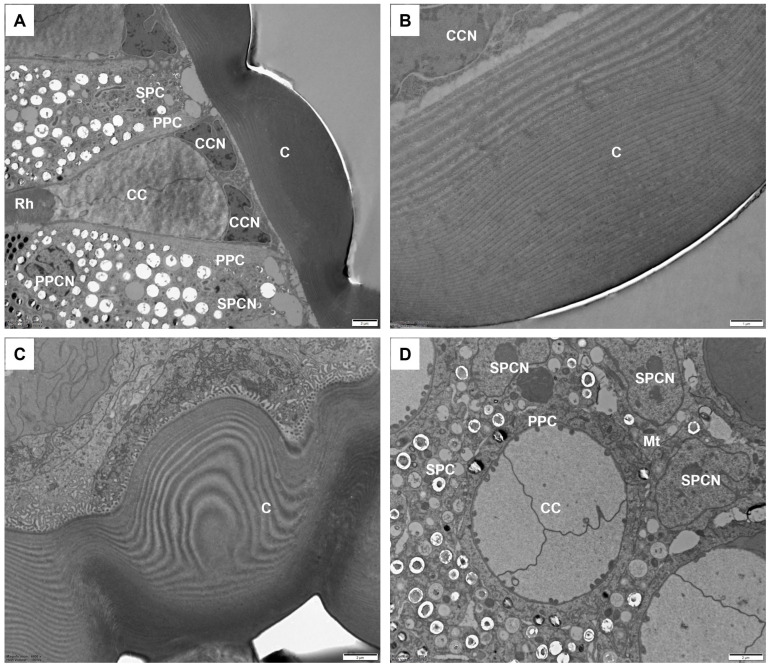 Figure 3
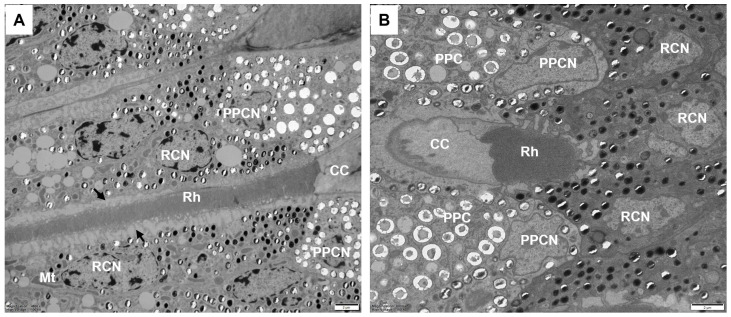 Figure 4
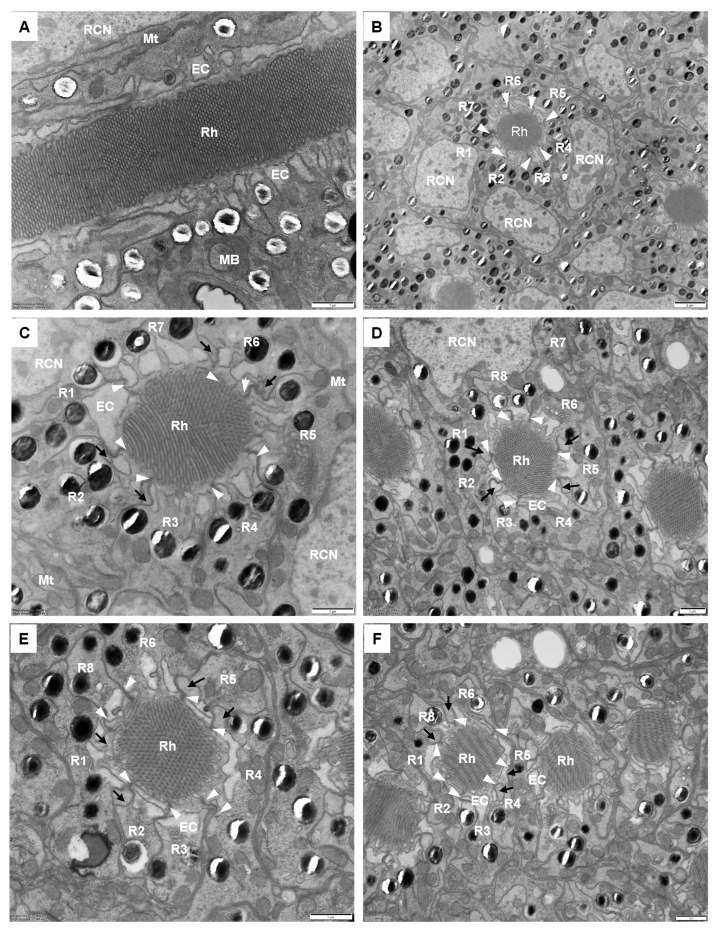 Figure 5
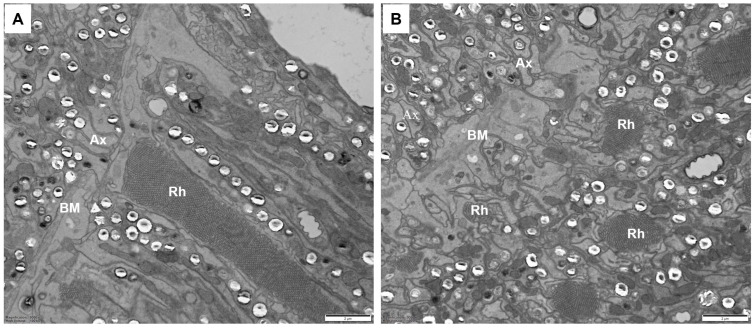 Figure 6
Peer Reviews
No public reviews on file for this paper yet. If you reviewed it on a platform where reviews are public (OpenReview, ICLR, NeurIPS, ICML), you can paste yours below so the community can read it here.
Videos
No videos yet. Explain this paper in a talk, walkthrough, or lecture? Add one.
Taxonomy
TopicsPhytoplasmas and Hemiptera pathogens · Neurobiology and Insect Physiology Research · Hymenoptera taxonomy and phylogeny