Ligand-Dependent and -Independent Functions of Activation Function 1 of Progesterone Receptor in Genome-Wide Gene Regulation and in Cell Proliferation and Apoptosis of Breast Cancer Cells
Pheck Khee Lau, Bernett Lee Teck Kwong, Shi Hao Lee, Chew Leng Lim, Qian Yee Woo, Amanda Rui En Woo, Jace Koh, Valerie C. L. Lin

TL;DR
This study explores how the progesterone receptor's AF1 domain regulates gene activity and cell behavior in breast cancer, revealing the role of methylation in modulating its function.
Contribution
The study identifies specific methylation sites in AF1 and demonstrates their impact on ligand-dependent gene regulation and cell proliferation in breast cancer cells.
Findings
AF1-FFF mutation reduced PR regulation of cell proliferation and apoptosis in response to progestin.
AF1-FFF mutation affected ~60% of PR target genes, including those involved in cell proliferation and signaling pathways.
Impaired PRB-FFF activity correlated with increased chromatin binding and stronger association with SRC-1 coactivator.
Abstract
Progesterone receptor (PR) regulates gene expression through recruiting coregulators and general transcription factors by activation functions AF1 and AF2. AF1 localizes to the non-conserved and disordered N-terminal domain and is believed to facilitate tissue- and gene-specific activity. Our previous proteomic analysis identified three key residues (K464, K481 and R492) in AF1 that are monomethylated. Methylation mimic mutations KKR → FFF created hypoactive PR, whereas the KKR → QQQ mutation generated hyperactive PR in gene reporter assays. The current study used these mutants to determine the roles of AF1 in PR regulation of cellular activities and global gene regulation in breast cancer cells MCF-7. AF1-FFF mutation attenuated PR regulation of cell proliferation and apoptosis in response to progestin, whereas AF1-QQQ mutation enhanced these effects. AF1-FFF mutation attenuated gene…
Genes, proteins, chemicals, diseases, species, mutations and cell lines named across the full text — each resolved to its canonical identifier and authoritative record.
Click any figure to enlarge with its caption.
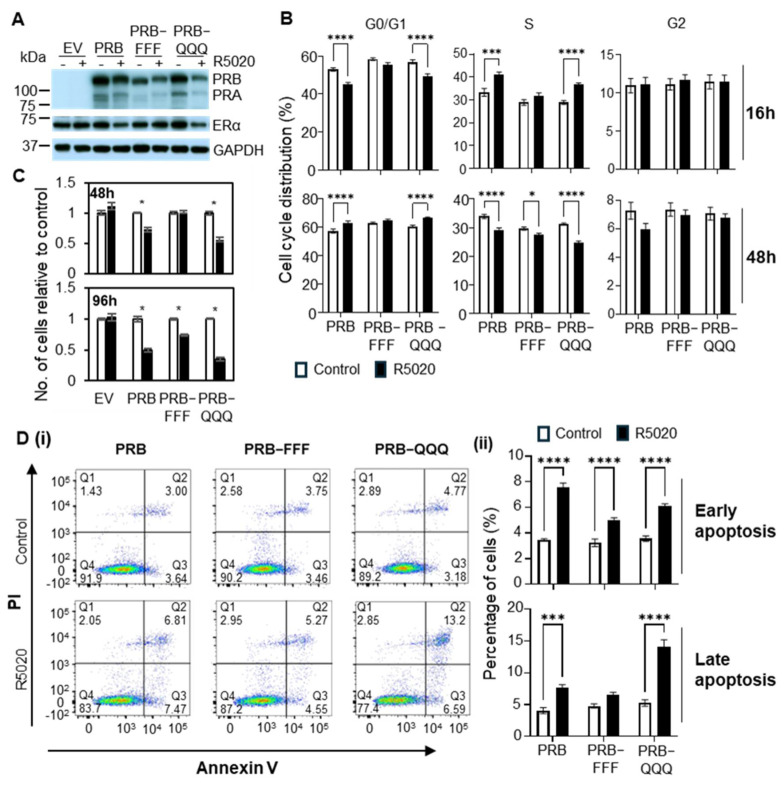 Figure 1
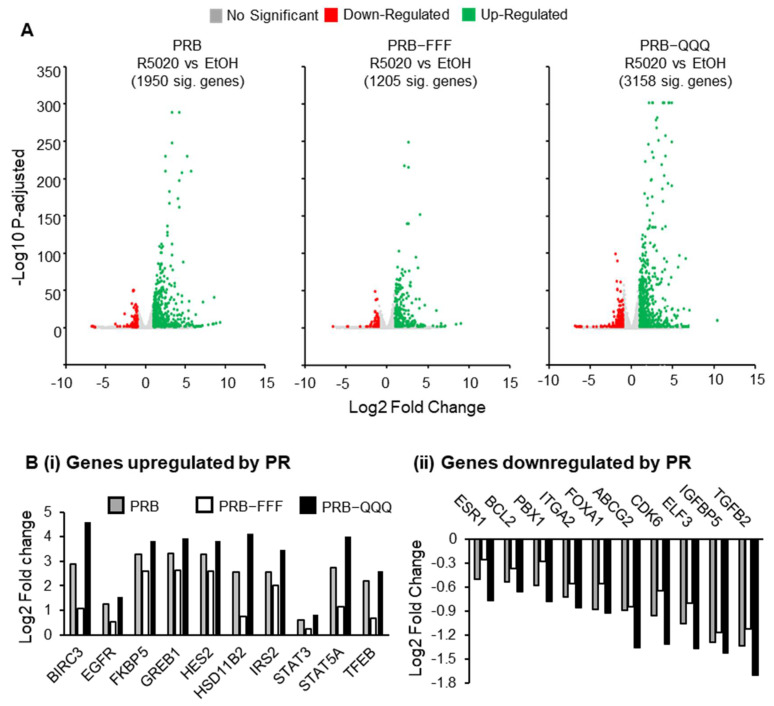 Figure 2
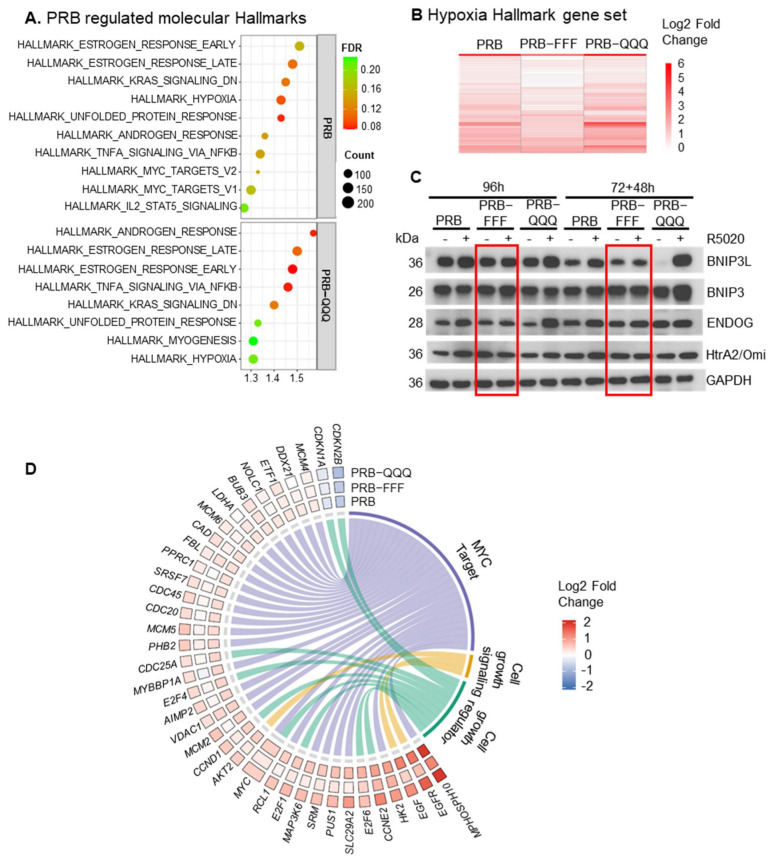 Figure 3
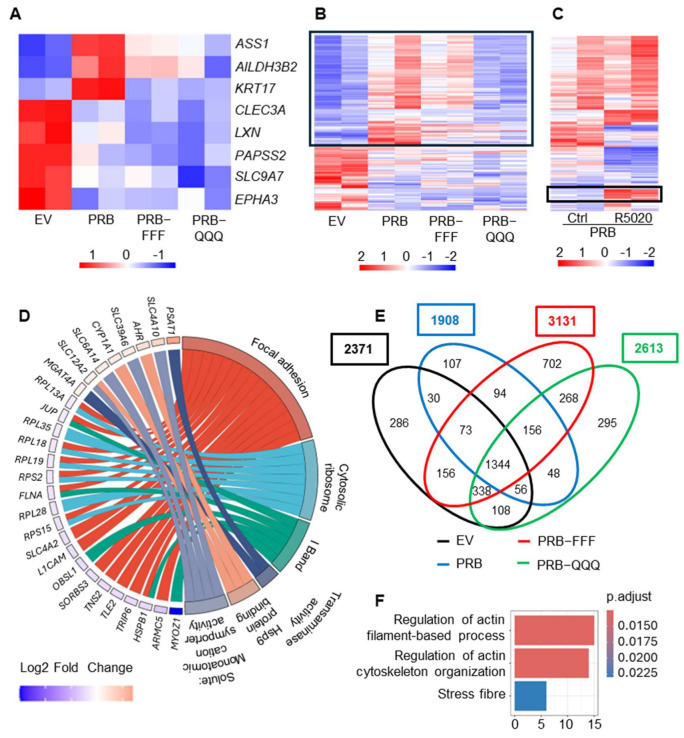 Figure 4
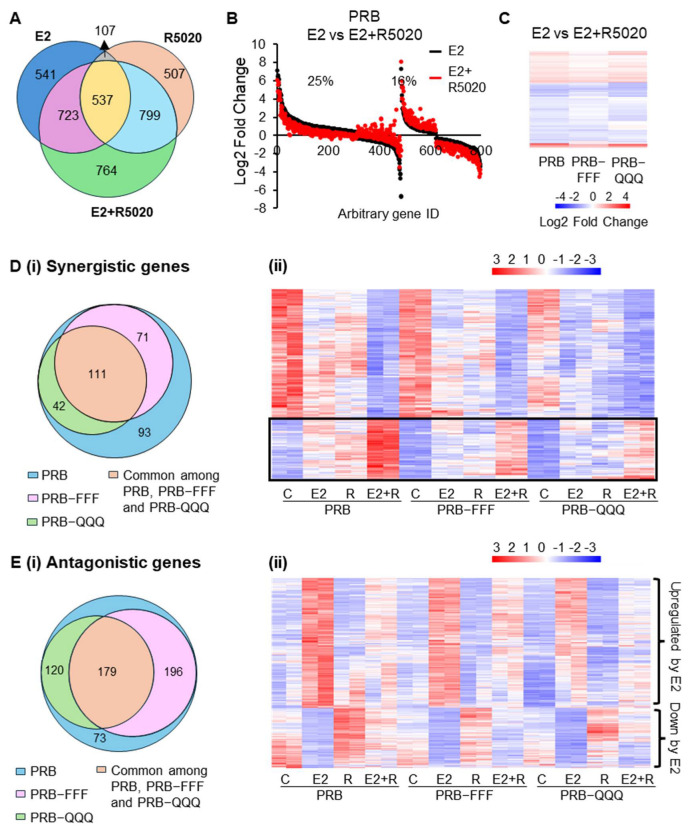 Figure 5
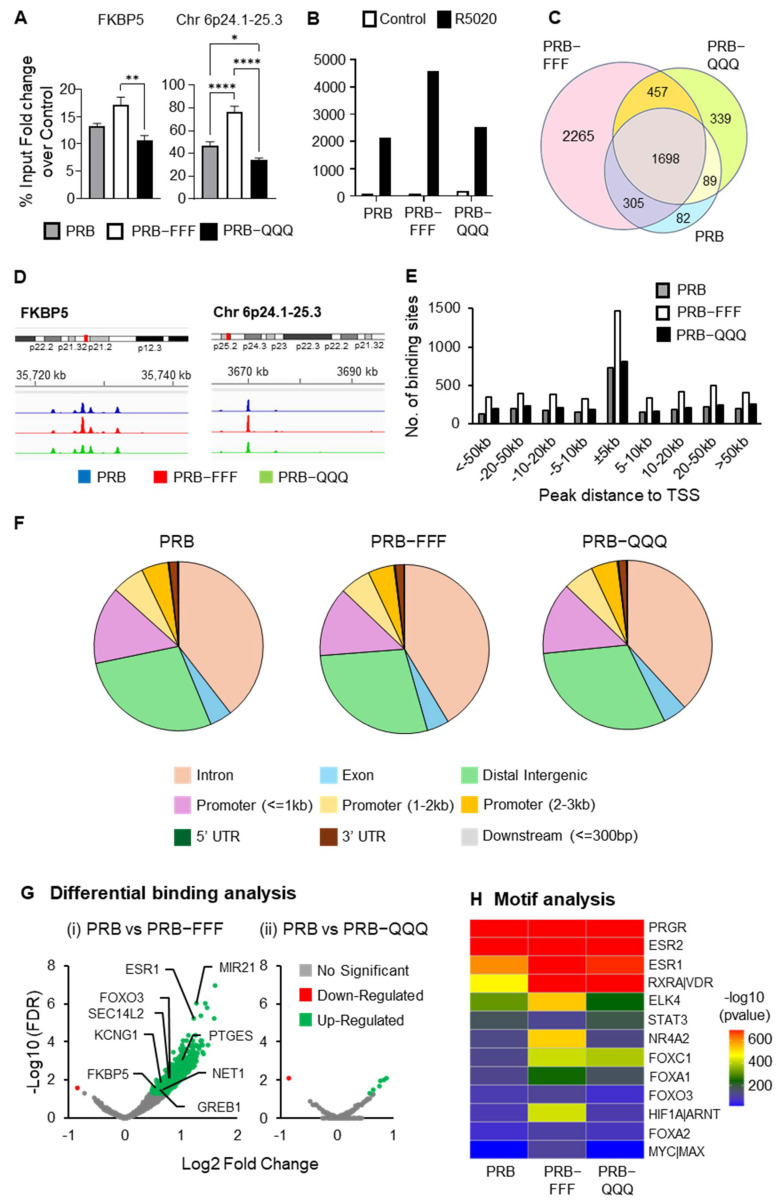 Figure 6
Peer Reviews
No public reviews on file for this paper yet. If you reviewed it on a platform where reviews are public (OpenReview, ICLR, NeurIPS, ICML), you can paste yours below so the community can read it here.
Videos
No videos yet. Explain this paper in a talk, walkthrough, or lecture? Add one.
Taxonomy
TopicsEstrogen and related hormone effects · TGF-β signaling in diseases · Cancer-related gene regulation