Across the Social Network of the Gut: Bacterial, Fungal, and Viral Determinants of Checkpoint Inhibitor Efficacy and Toxicity
Andreea Laura Antohi, Andreea Daria Gheorghiță, Octavian Andronic, Gratiela Gradisteanu Pircalabioru, Andreea-Ramona Treteanu

TL;DR
This review explores how gut bacteria, fungi, and viruses influence cancer immunotherapy outcomes and side effects, highlighting their roles in immune responses and potential for improving treatment.
Contribution
The paper introduces the importance of considering the full gut microbiome, including fungi and viruses, in understanding and improving immune checkpoint inhibitor therapies.
Findings
Fecal microbiota transplants from ICI responders can reverse resistance in non-responders.
Gut fungi and viruses influence ICI effectiveness and toxicity through immune modulation.
Dysbiosis in the gut microbiome is linked to immune-related adverse events like ICI-induced colitis.
Abstract
Recent findings suggest that the gut microbiome significantly influences cancer outcomes, including responses to immune checkpoint inhibitor (ICI) treatments. Although early research focused on gut bacteria, it is now understood that the microbiome includes a bacteriome, virome, and mycobiome, all of which can modulate host immunity. Some commensal bacteria enhance anti-tumor immune responses and improve ICI efficacy, as demonstrated in both mice and patients. Fecal microbiota transplants (FMT) from patients responding to ICI have successfully reversed resistance in certain non-responders. In addition to bacteria, gut fungi and viruses are gaining attention as further factors influencing ICI effectiveness and toxicity. Recent multi-omics studies across cancer cohorts show that fungal and viral populations in the gut vary between ICI responders and non-responders. Commensal fungi may…
Genes, proteins, chemicals, diseases, species, mutations and cell lines named across the full text — each resolved to its canonical identifier and authoritative record.
Click any figure to enlarge with its caption.
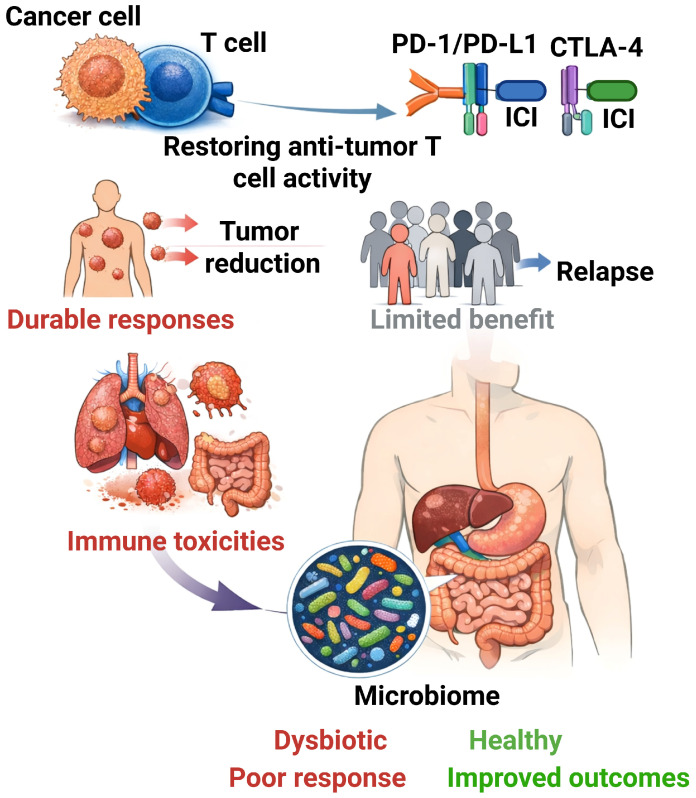 Figure 1
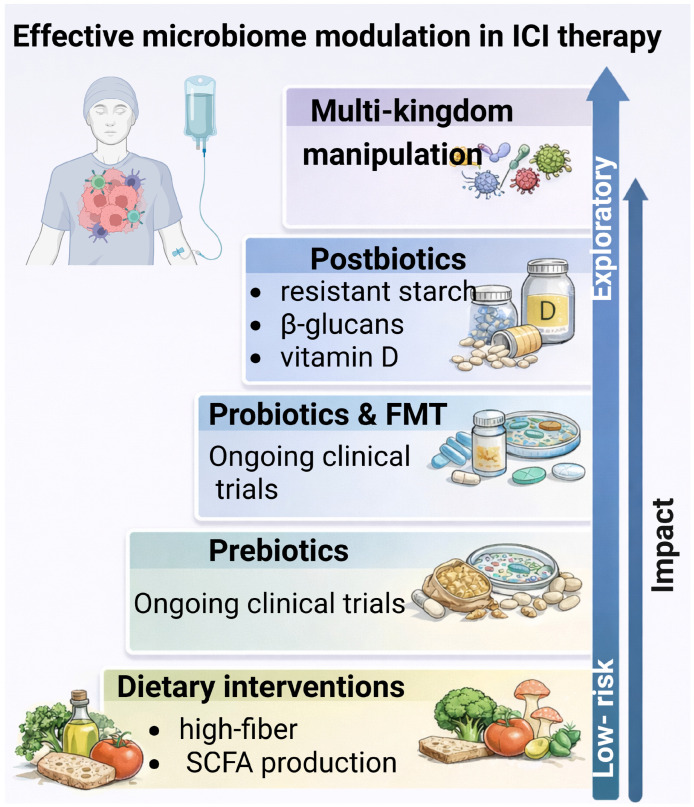 Figure 2
Peer Reviews
No public reviews on file for this paper yet. If you reviewed it on a platform where reviews are public (OpenReview, ICLR, NeurIPS, ICML), you can paste yours below so the community can read it here.
Videos
No videos yet. Explain this paper in a talk, walkthrough, or lecture? Add one.
Taxonomy
TopicsGut microbiota and health · Cancer Research and Treatments · Clostridium difficile and Clostridium perfringens research