Digital Cognitive Behavioural Therapy for Insomnia Delivered Within a Crenotherapy Setting: Results from a Multicentre Proof-of-Concept Randomised Controlled Trial
Julie Lenoir, Marie Mengarduque, Julien Coelho, Pierre-Alexis Geoffroy, Émilie Denéchère, Bruno Aouizerate, Nematollah Jaafari, Pierre Philip, Jacques Taillard, Olivier Dubois, Jean-Arthur Micoulaud-Franchi

TL;DR
This study tested whether adding a spa treatment to digital insomnia therapy helps more than the therapy alone, finding it may benefit younger people and those with anxiety.
Contribution
The study explores the integration of digital CBT-I with crenotherapy, identifying potential subgroup benefits for younger individuals and those with anxiety.
Findings
Both groups improved in insomnia severity and psychological symptoms, but no overall benefit from crenotherapy.
Younger participants (<60) in the crenotherapy group showed greater insomnia symptom improvement.
Crenotherapy-delivered dCBT-I led to greater anxiety reduction in participants with baseline anxiety symptoms.
Abstract
Background/Objectives: Insomnia disorder is highly prevalent and disabling, yet access to cognitive behavioural therapy for insomnia (CBT-I), the recommended first-line treatment, remains limited. Digital CBT-I (dCBT-I) offers scalable alternative; however, treatment outcomes vary according to intervention format and delivery context. This study evaluated whether delivering dCBT-I within a structured, medically supervised crenotherapy context improved insomnia symptom severity compared with stand-alone dCBT-I. Methods: In this multicentre proof-of-concept randomised controlled trial, 66 adults with insomnia disorder were allocated to receive either stand-alone dCBT-I (n = 38) or dCBT-I delivered within a 3-week standardised crenotherapy programme (medically supervised thermal spa treatment; n = 28). The primary outcome was change in Insomnia Severity Index (ISI) scores from pre- to…
Genes, proteins, chemicals, diseases, species, mutations and cell lines named across the full text — each resolved to its canonical identifier and authoritative record.
Click any figure to enlarge with its caption.
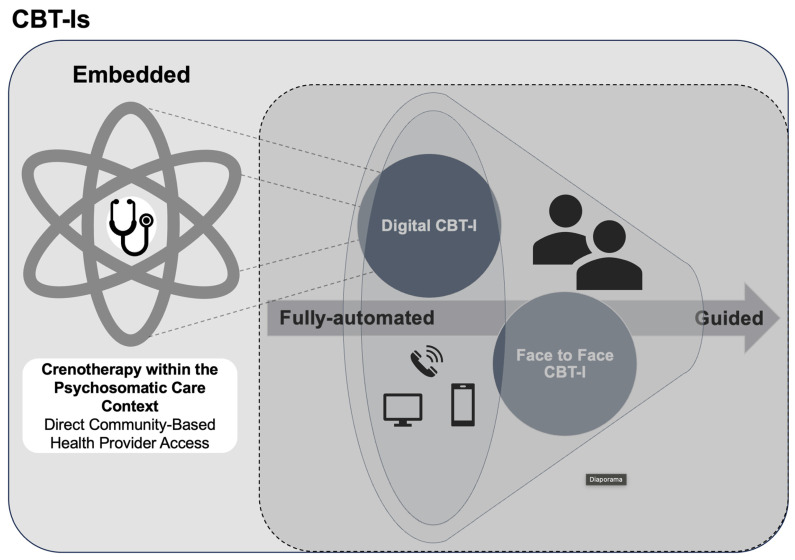 Figure 1
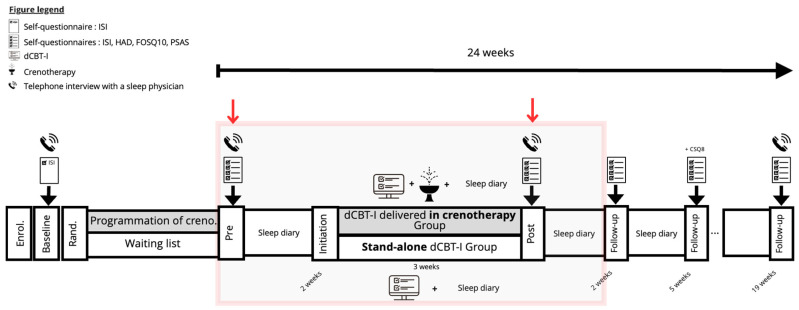 Figure 2
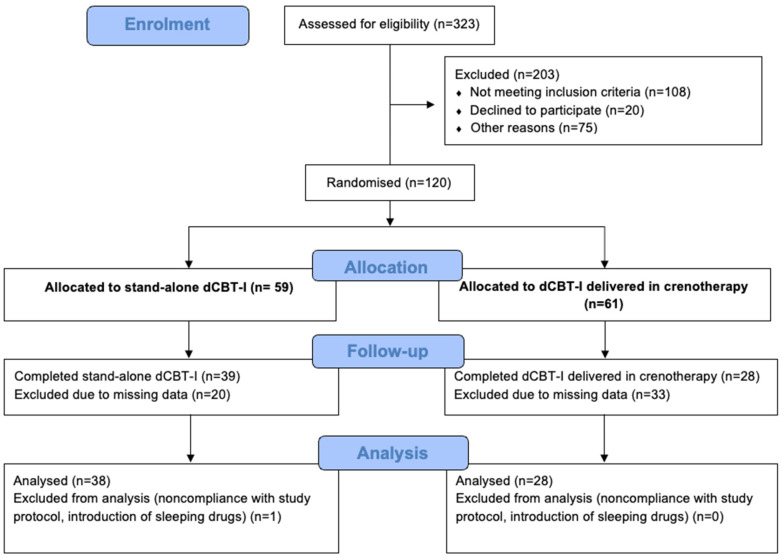 Figure 3
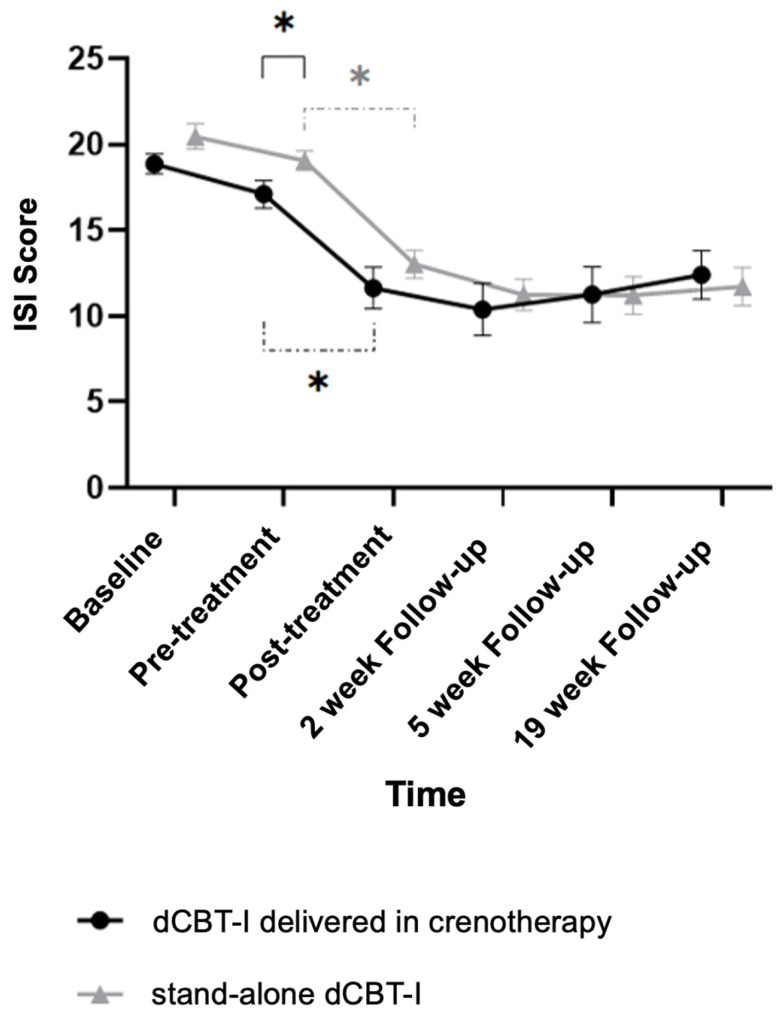 Figure 4
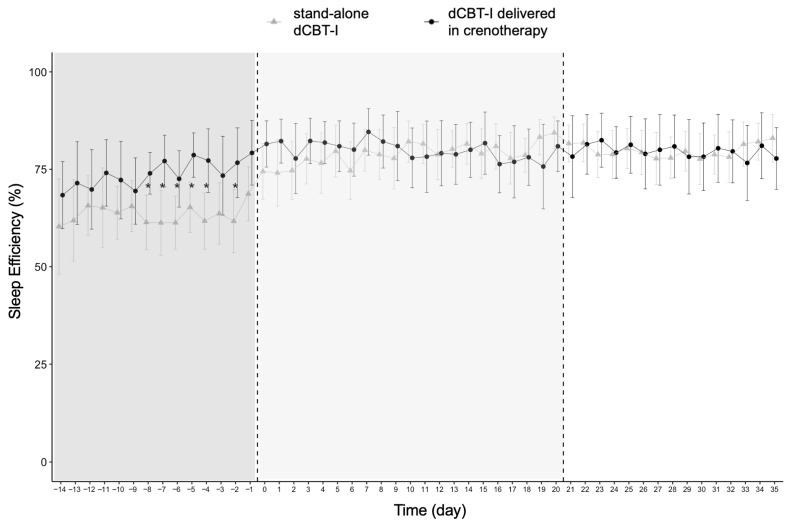 Figure 5
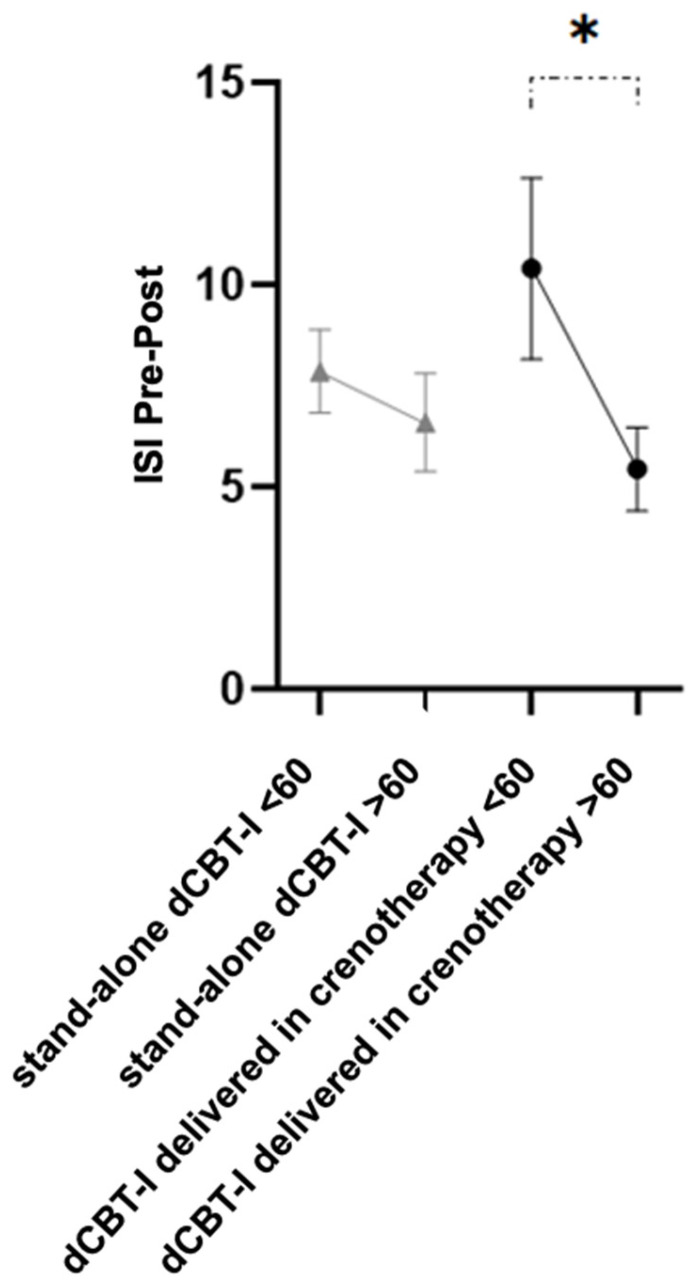 Figure 6
Peer Reviews
No public reviews on file for this paper yet. If you reviewed it on a platform where reviews are public (OpenReview, ICLR, NeurIPS, ICML), you can paste yours below so the community can read it here.
Videos
No videos yet. Explain this paper in a talk, walkthrough, or lecture? Add one.
Taxonomy
TopicsSleep and related disorders · Digital Mental Health Interventions · Sleep and Wakefulness Research