A Study on the Stability and Carbohydrate Metabolic Traits of Starter Cultures in Response to Continuous Subculturing
Yangyang Yu, Jianjun Yang, Ran Wang, Lele Zhang, Kai Zhou, Baolei Li, Baochao Hou, Yue Sang, Haihong Feng, Yan Zhang, Jian He, Xiaoxia Li

TL;DR
This study examines how starter cultures used in fermentation maintain stability and metabolic traits over many generations of subculturing.
Contribution
The study provides new insights into the physiological and genetic stability of key starter cultures during long-term subculturing.
Findings
Strains showed intact cellular morphology and improved growth and fermentation performance after 2000 generations.
S. thermophilus mainly used mono- and disaccharides, while L. bulgaricus metabolized diverse substrates and effectively catabolized ribose.
All strains exhibited genomic stability with fewer than 21 SNPs per isolate.
Abstract
The industrial application of starter cultures requires stable physiological and genetic performance. In this study, Streptococcus salivarius subsp. thermophilus and Lactobacillus delbrueckii subsp. bulgaricus were continuously subcultured. Physiological stability was assessed through colony morphology, fermentation activity, and growth profiling. Genetic stability was evaluated through comparative genomics of carbohydrate metabolism networks and single-nucleotide polymorphism (SNP) analysis. The results showed that after 2000 generations, the cellular morphology of the strains remained intact. Additionally, the strains exhibited enhanced growth performance and fermentation capability. The Gompertz model revealed that adapted S. thermophilus A37 and L. bulgaricus B29 exhibited shortened lag phases, increased maximum specific growth rates, and high stationary-phase cell densities.…
Genes, proteins, chemicals, diseases, species, mutations and cell lines named across the full text — each resolved to its canonical identifier and authoritative record.
Click any figure to enlarge with its caption.
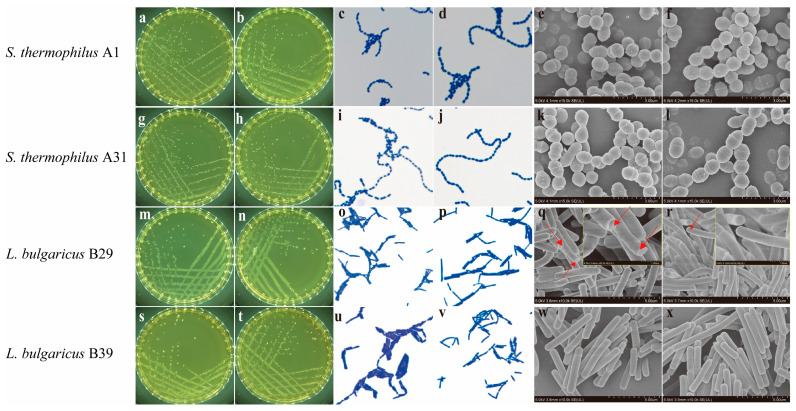 Figure 1
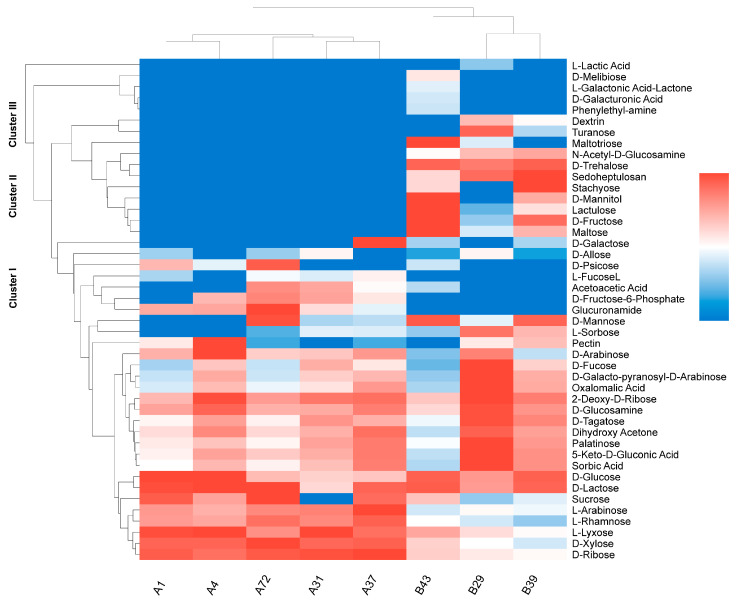 Figure 2
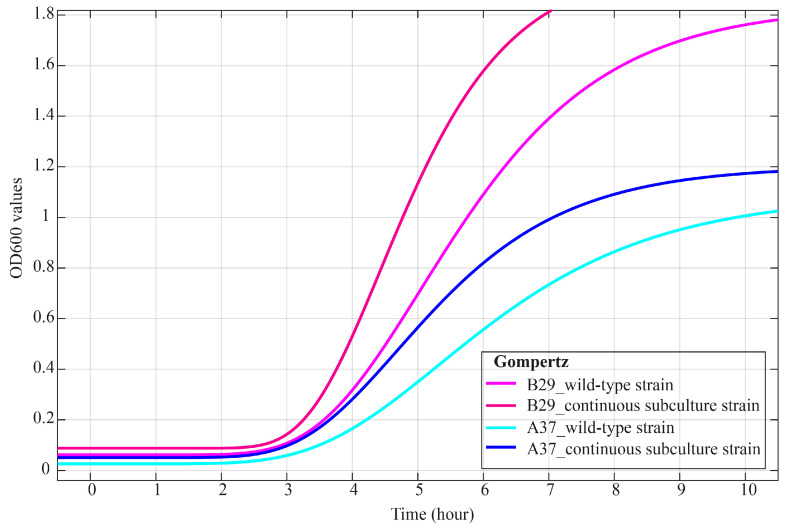 Figure 3
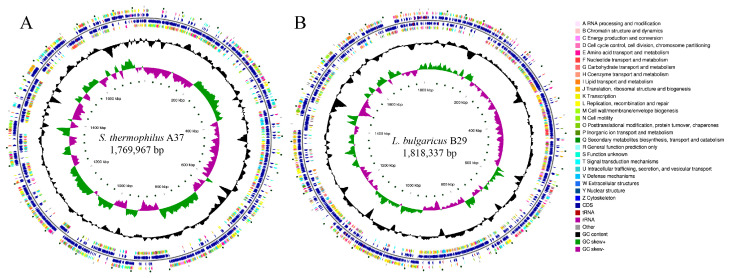 Figure 4
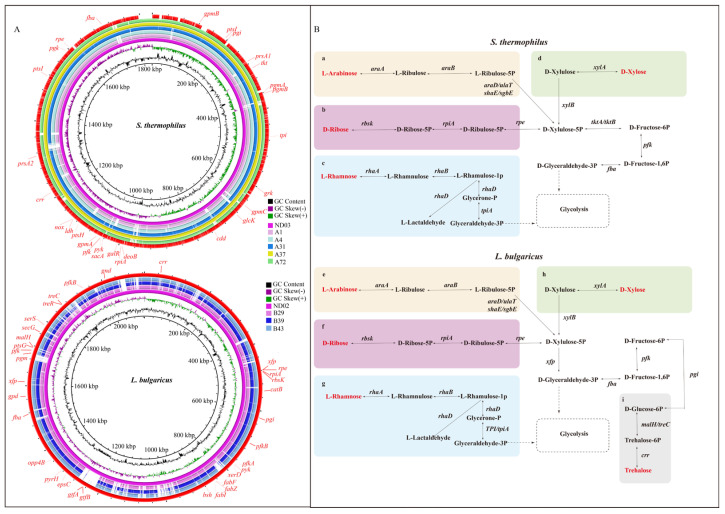 Figure 5
Peer Reviews
No public reviews on file for this paper yet. If you reviewed it on a platform where reviews are public (OpenReview, ICLR, NeurIPS, ICML), you can paste yours below so the community can read it here.
Videos
No videos yet. Explain this paper in a talk, walkthrough, or lecture? Add one.
Taxonomy
TopicsProbiotics and Fermented Foods · Enzyme Production and Characterization · Oral microbiology and periodontitis research