Olfactory Susceptive Difference in Gregarious and Solitary Locusts
Weichan Cui, Dafeng Chen, Liushu Dong, Xianhui Wang

TL;DR
The study explores how the sense of smell in locusts changes when they switch between living alone and forming swarms, revealing new insights into their behavior and potential control methods.
Contribution
The research provides a detailed multi-level analysis of olfactory system plasticity in locusts during phase transitions.
Findings
Solitary male locusts have the highest number of antennal sensilla, with basiconica sensilla being most abundant.
Solitary males show the greatest electroantennogram (EAG) sensitivity to phase- and sex-specific volatile compounds.
Solitary males exhibit significant upregulation of Or genes across all sex-phase combinations.
Abstract
The migratory locust, Locusta migratoria, is a devastating agricultural pest that forms destructive swarms. Its olfactory system exhibits plasticity in response to population density, playing a key role in aggregation and large-scale crop damage. In this study, we performed a comprehensive, multi-level comparison of the peripheral olfactory system between solitary and gregarious locusts, exploring the specific mechanisms underlying changes in the peripheral olfactory system of locusts during density-dependent phase transitions. Our findings provide insights into the biological basis of locust swarm formation and the adaptive strategies of locust peripheral olfactory systems to changing environments. The migratory locust, Locusta migratoria, possesses a highly specialized olfactory system that exhibits remarkable density-dependent plasticity, which plays a crucial role in the formation…
Genes, proteins, chemicals, diseases, species, mutations and cell lines named across the full text — each resolved to its canonical identifier and authoritative record.
Click any figure to enlarge with its caption.
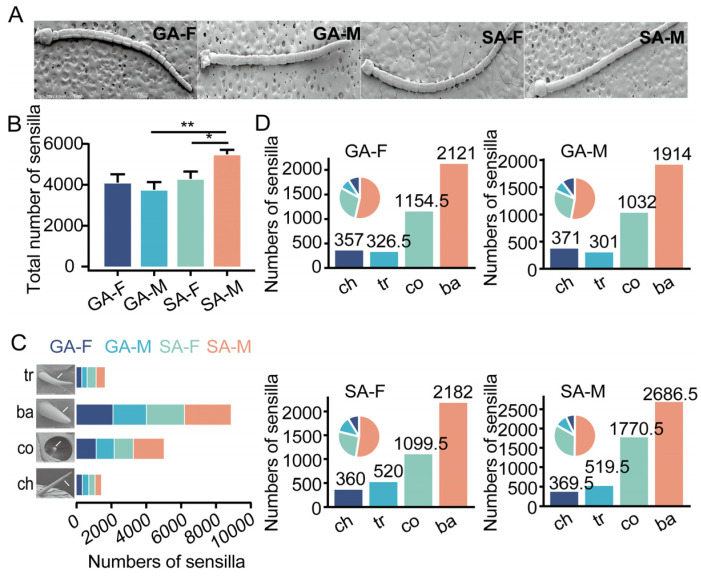 Figure 1
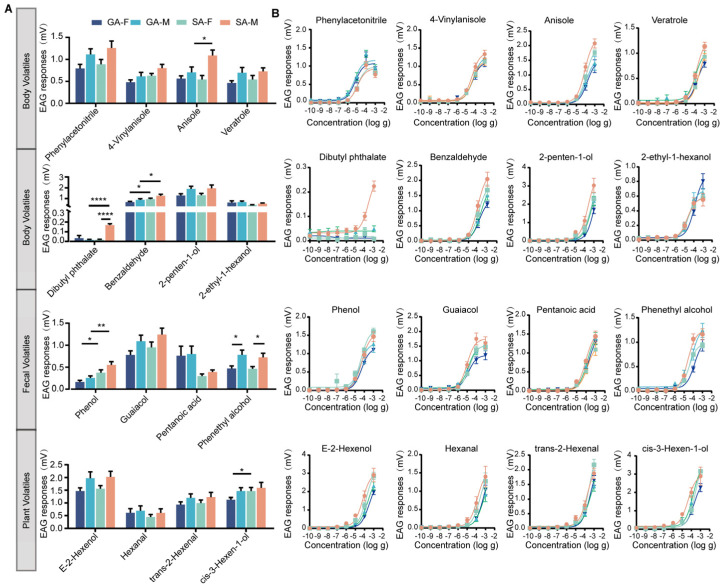 Figure 2
 Figure 3
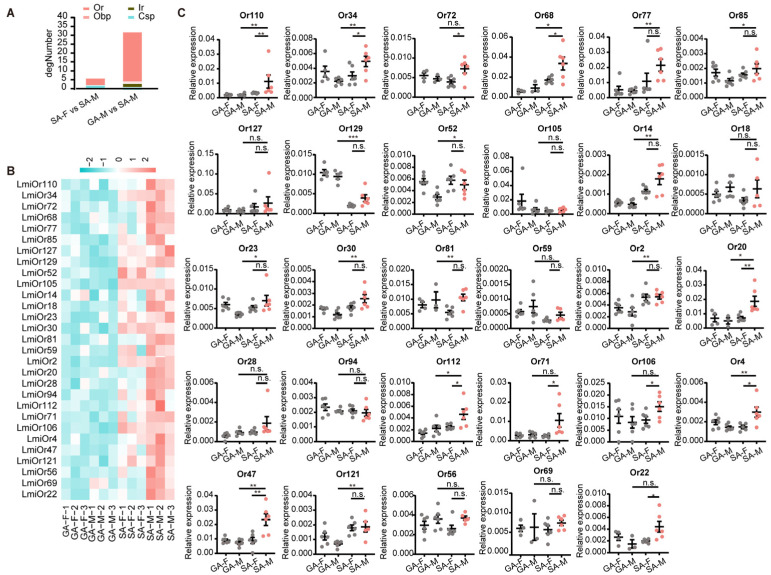 Figure 4
Peer Reviews
No public reviews on file for this paper yet. If you reviewed it on a platform where reviews are public (OpenReview, ICLR, NeurIPS, ICML), you can paste yours below so the community can read it here.
Videos
No videos yet. Explain this paper in a talk, walkthrough, or lecture? Add one.
Taxonomy
TopicsNeurobiology and Insect Physiology Research · Insect-Plant Interactions and Control · Insect Pheromone Research and Control