Identification and Characterization of a Red-Light Sensor FphA in Aspergillus flavus
Kunzhi Jia, Qianhua Zeng, Shuqi Huang, Fufa Tong, Jingwen Huang, Shihua Wang

TL;DR
This study identifies a red-light sensor in the fungus Aspergillus flavus and shows its role in toxin production and infection.
Contribution
The discovery of FphA as a red-light sensor in A. flavus and its role in aflatoxin B1 biosynthesis and pathogenicity.
Findings
FphA knockout strains showed increased aflatoxin B1 production and reduced conidia and sclerotia development.
The FphAΔRR deletion mutant replicated ΔfphA phenotypes, highlighting the importance of the RR domain.
FphA influences spore formation, sclerotia development, aflatoxin biosynthesis, and peanut infection in A. flavus.
Abstract
Aspergillus flavus (A. flavus) is a common contaminant of food and feed due to the production of aflatoxin B1, which is susceptible to environmental signals. Nevertheless, how red light plays a role in A. flavus remains unclear. Here, we identified the uncharacterized hypothetical protein G4B84_010091 as a red-light sensor, defined as fungal phytochrome A (FphA), in A. flavus. The fphA knockout strain (ΔfphA) and complementary strain (fphA-com) were successfully constructed to characterize the function of FphA. Our results indicated that aflatoxin B1 biosynthesis was promoted, while the development of conidia and sclerotia as well as the infection of peanuts were impaired in ΔfphA when compared with WT or fphA-com. The FphAΔRR domain deletion mutant exhibited all the phenotypes observed in the ΔfphA strain, indicating that the RR domain is indispensable for the function of FphA. In…
Genes, proteins, chemicals, diseases, species, mutations and cell lines named across the full text — each resolved to its canonical identifier and authoritative record.
Click any figure to enlarge with its caption.
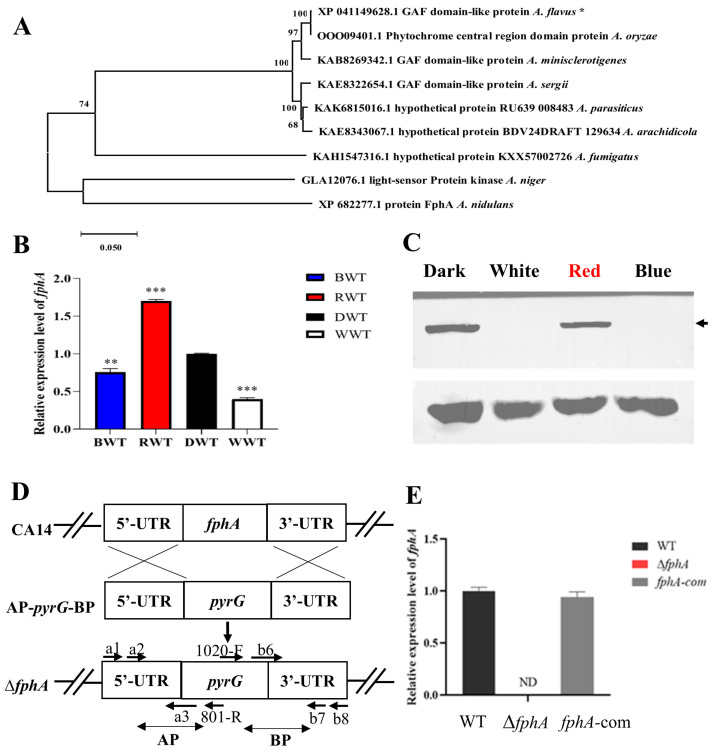 Figure 1
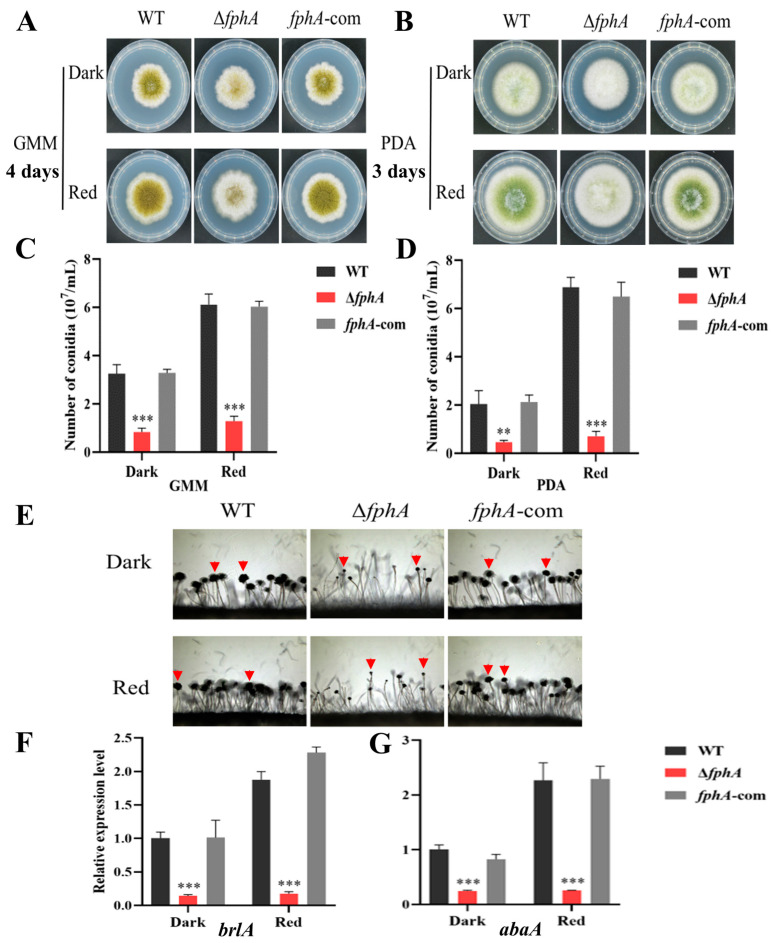 Figure 2
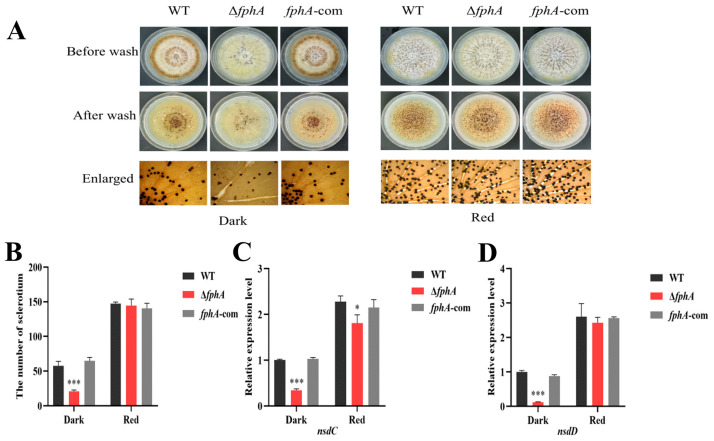 Figure 3
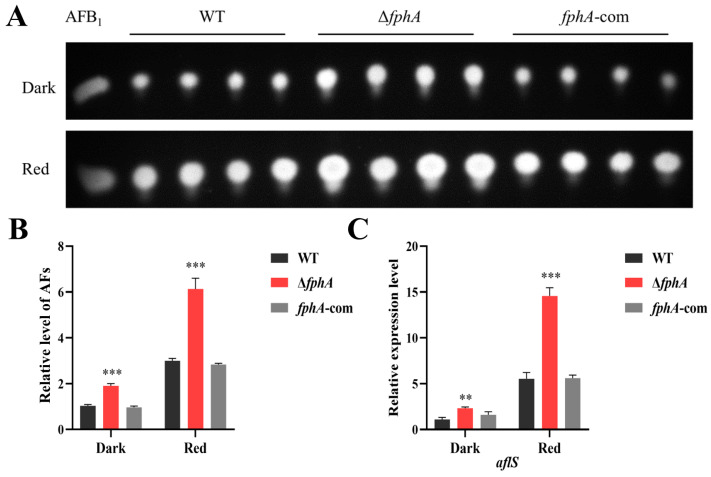 Figure 4
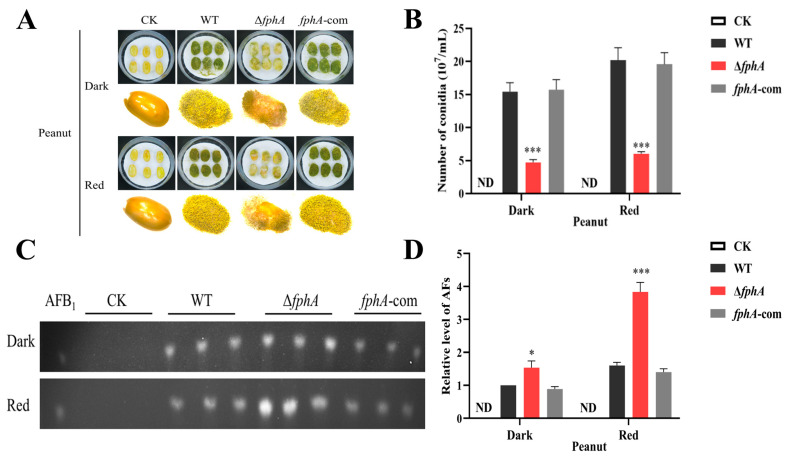 Figure 5
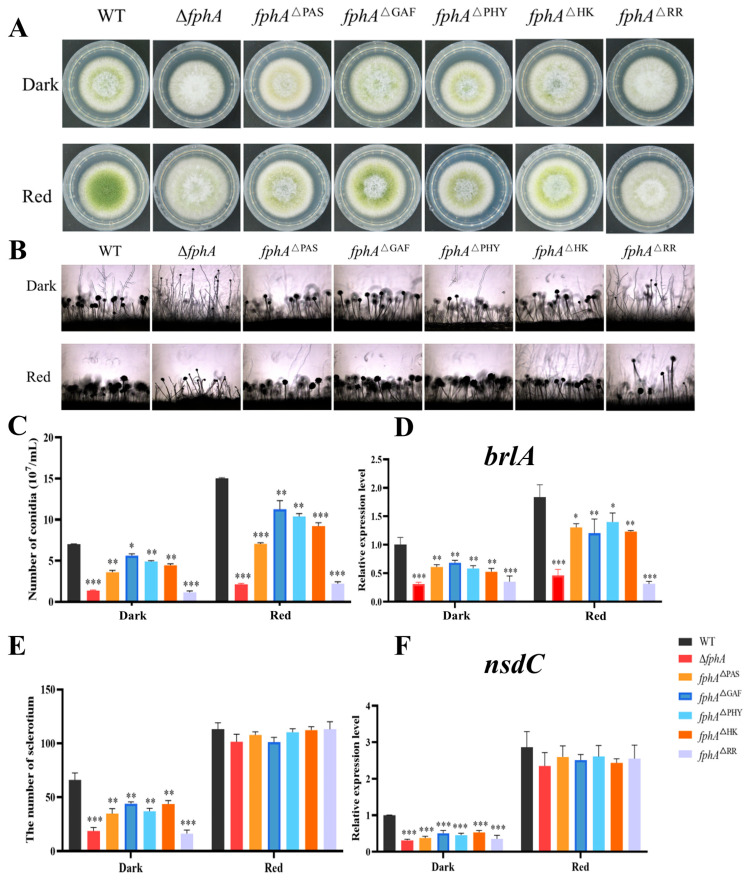 Figure 6
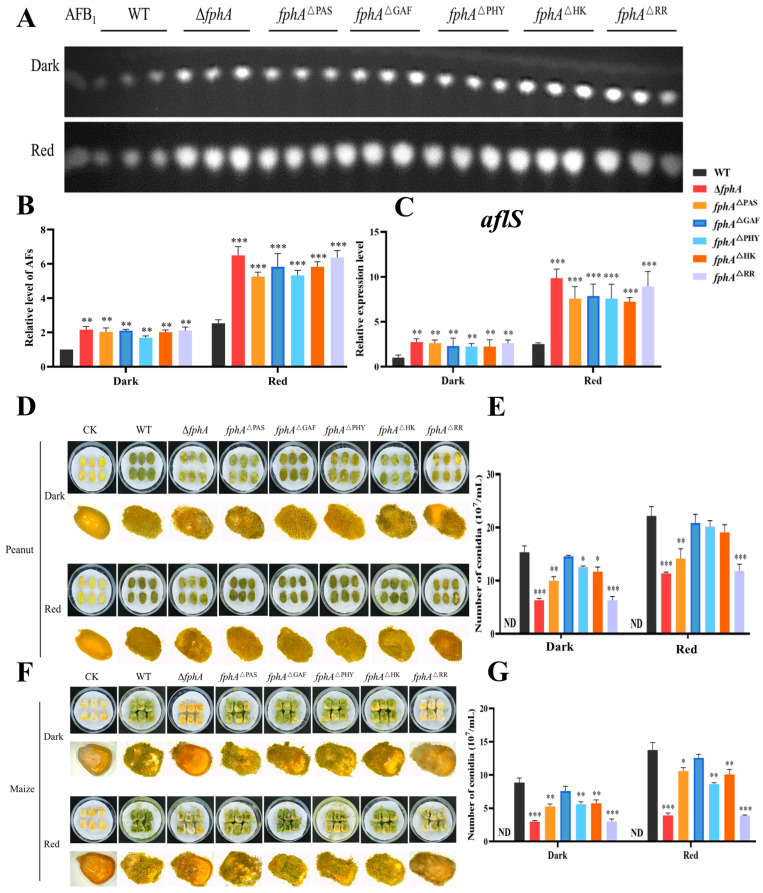 Figure 7
Peer Reviews
No public reviews on file for this paper yet. If you reviewed it on a platform where reviews are public (OpenReview, ICLR, NeurIPS, ICML), you can paste yours below so the community can read it here.
Videos
No videos yet. Explain this paper in a talk, walkthrough, or lecture? Add one.
Taxonomy
TopicsFungal and yeast genetics research · Light effects on plants · Mycotoxins in Agriculture and Food