Back Muscle Strength Is Associated with Self-Reported Morning-Erection Frequency in Apparently Healthy Japanese Male University Students: A Cross-Sectional Study
Yoshiaki Endo, Takazo Tanaka, Kosuke Kojo, Chiaki Matsumoto, Masahiro Kurobe, Hiroyuki Nishiyama, Tatsuya Takayama, Jun Miyazaki

TL;DR
Stronger back muscles in young Japanese men are linked to more frequent morning erections, suggesting a possible connection between physical health and sexual function.
Contribution
This study identifies back muscle strength as a novel, independent predictor of morning-erection frequency in healthy young men.
Findings
Back muscle strength is independently associated with higher morning-erection frequency after adjusting for BMI and handgrip strength.
Over 59% of participants reported low morning-erection frequency, indicating potential early adult sexual health concerns.
Clustering analysis showed a higher proportion of high morning-erection frequency in the group with higher BMI and strength.
Abstract
What are the main findings? Back muscle strength, unlike handgrip strength or body mass index, is independently associated with increased morning-erection frequency in apparently healthy young men.Over 50% of healthy Japanese male university students report infrequent morning erections, suggesting that low nocturnal erectile indicators may be prevalent even in early adulthood. Back muscle strength, unlike handgrip strength or body mass index, is independently associated with increased morning-erection frequency in apparently healthy young men. Over 50% of healthy Japanese male university students report infrequent morning erections, suggesting that low nocturnal erectile indicators may be prevalent even in early adulthood. What are the implications of the main findings? The frequency of morning erections serves as an intercourse-independent, low-burden indicator that could be useful…
Genes, proteins, chemicals, diseases, species, mutations and cell lines named across the full text — each resolved to its canonical identifier and authoritative record.
Click any figure to enlarge with its caption.
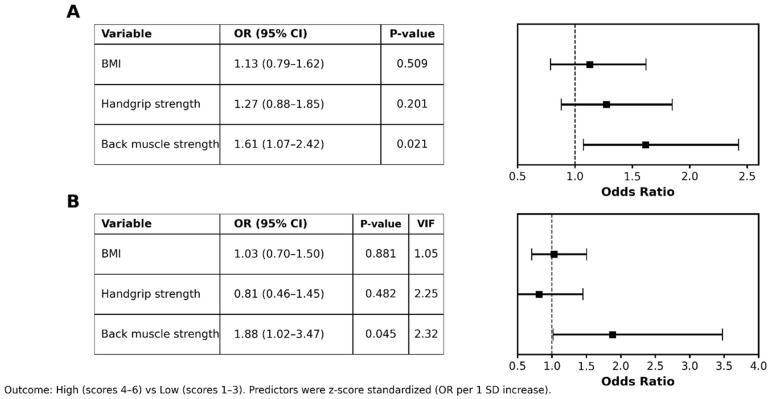 Figure 1
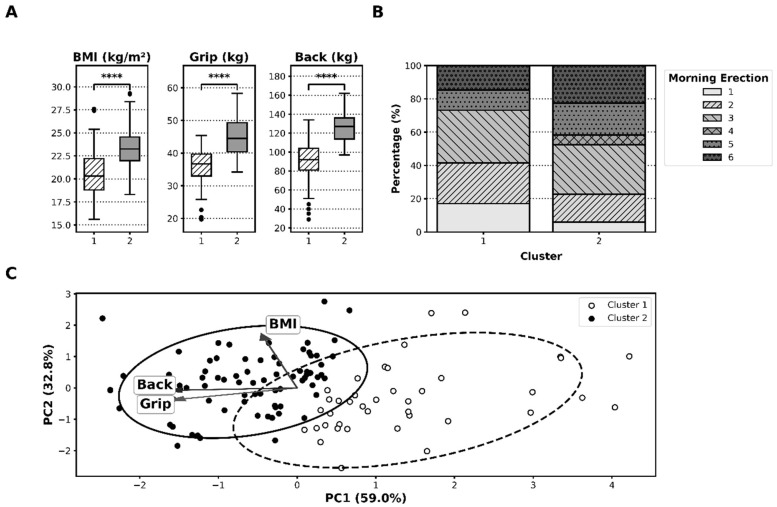 Figure 2
Peer Reviews
No public reviews on file for this paper yet. If you reviewed it on a platform where reviews are public (OpenReview, ICLR, NeurIPS, ICML), you can paste yours below so the community can read it here.
Videos
No videos yet. Explain this paper in a talk, walkthrough, or lecture? Add one.
Taxonomy
TopicsSexual function and dysfunction studies · Hormonal and reproductive studies · Muscle metabolism and nutrition