Does Size Matter? Evaluating the Impact of Intermediate Screw Length in Short-Segment Fixation of Thoracolumbar A3–A4 Fractures
Andrea Perna, Andrea Franchini, Luca Ricciardi, Francesco Maruccia, Luca Macchiarola, Felice Barletta, Franco Gorgoglione, Giuseppe Rovere

TL;DR
This study found that the length of intermediate screws used in spinal surgery for thoracolumbar fractures does not significantly affect patient outcomes after 12 months.
Contribution
The study provides evidence that screw length selection in short-segment spinal fixation can be based on anatomy and surgeon preference rather than expected clinical performance differences.
Findings
Both groups showed significant postoperative improvement in radiographic alignment and clinical outcomes.
No significant differences were found between groups in kyphotic correction, pain reduction, or disability scores at 12 months.
Screw length did not impact complication rates, operative time, or length of hospital stay.
Abstract
Background: Short-segment posterior fixation with intermediate pedicle screws is widely used for thoracolumbar junction (TLJ) burst fractures. However, the optimal penetration depth of intermediate screws remains controversial. The aim of this study was to evaluate whether intermediate screw penetration depth influences radiographic alignment and functional outcomes at 12 months following short-segment posterior fixation of AO Spine A3–A4 thoracolumbar burst fractures. Methods: This retrospective cohort study included 105 patients with AO Spine A3–A4 TLJ burst fractures treated between 1 January 2019 and 31 December 2022. All patients underwent short-segment posterior stabilization with intermediate screws at the fracture level. Penetration depth was categorized as either <50% (Group A) or ≥50% (Group B) of vertebral body depth. Radiographic parameters (kyphotic deformity, segmental…
Genes, proteins, chemicals, diseases, species, mutations and cell lines named across the full text — each resolved to its canonical identifier and authoritative record.
Click any figure to enlarge with its caption.
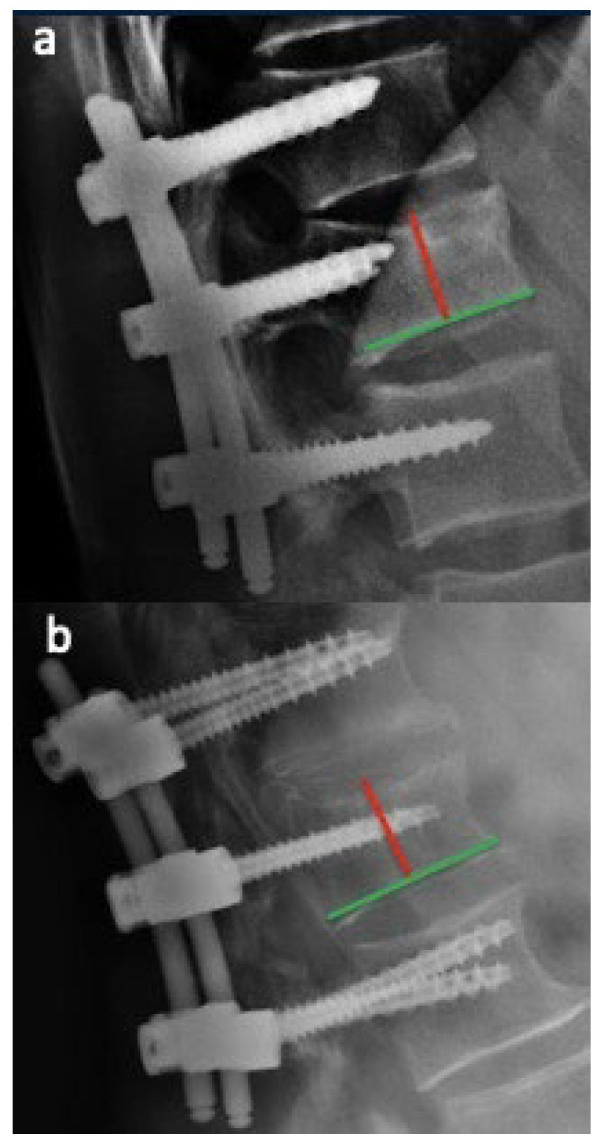 Figure 1
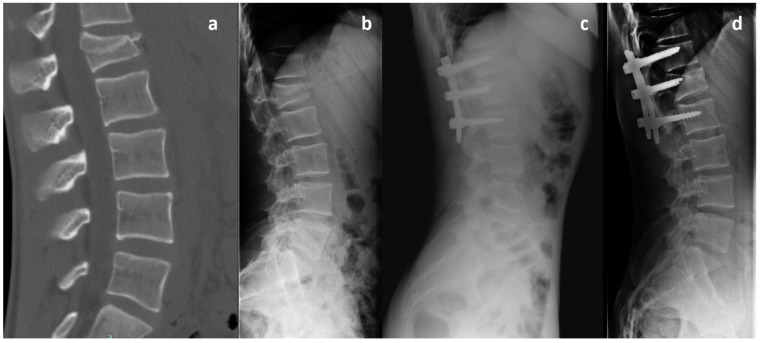 Figure 2
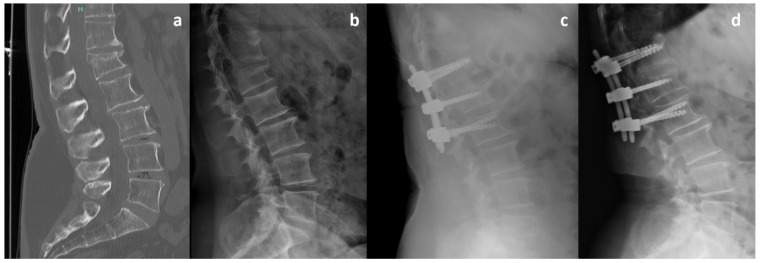 Figure 3
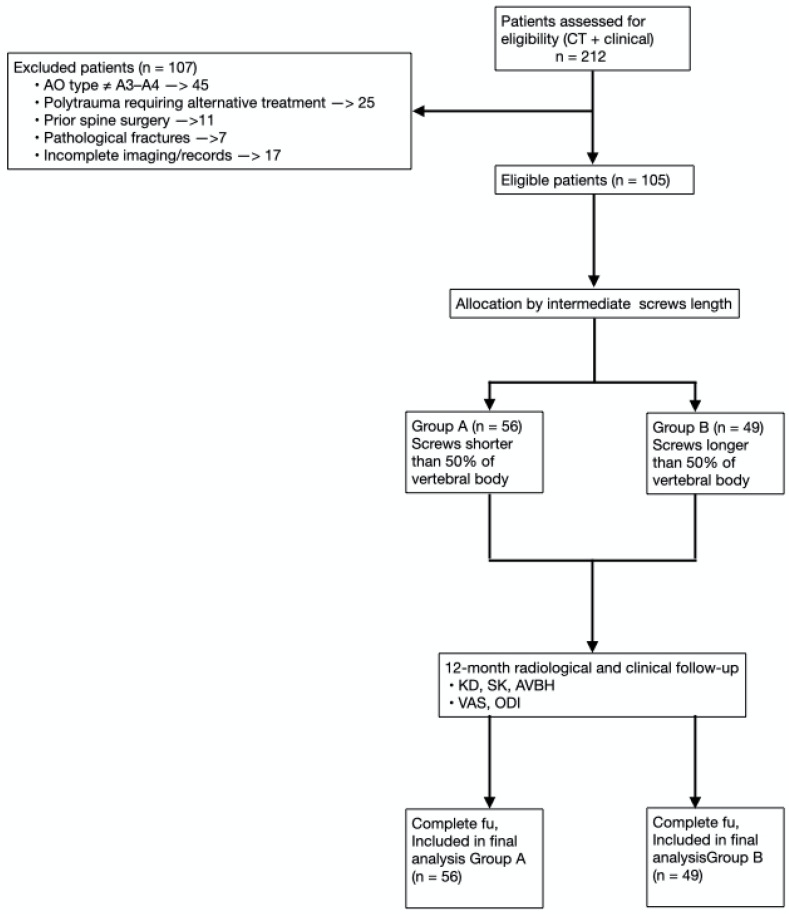 Figure 4
Peer Reviews
No public reviews on file for this paper yet. If you reviewed it on a platform where reviews are public (OpenReview, ICLR, NeurIPS, ICML), you can paste yours below so the community can read it here.
Videos
No videos yet. Explain this paper in a talk, walkthrough, or lecture? Add one.
Taxonomy
TopicsSpinal Fractures and Fixation Techniques · Scoliosis diagnosis and treatment · Cervical and Thoracic Myelopathy